
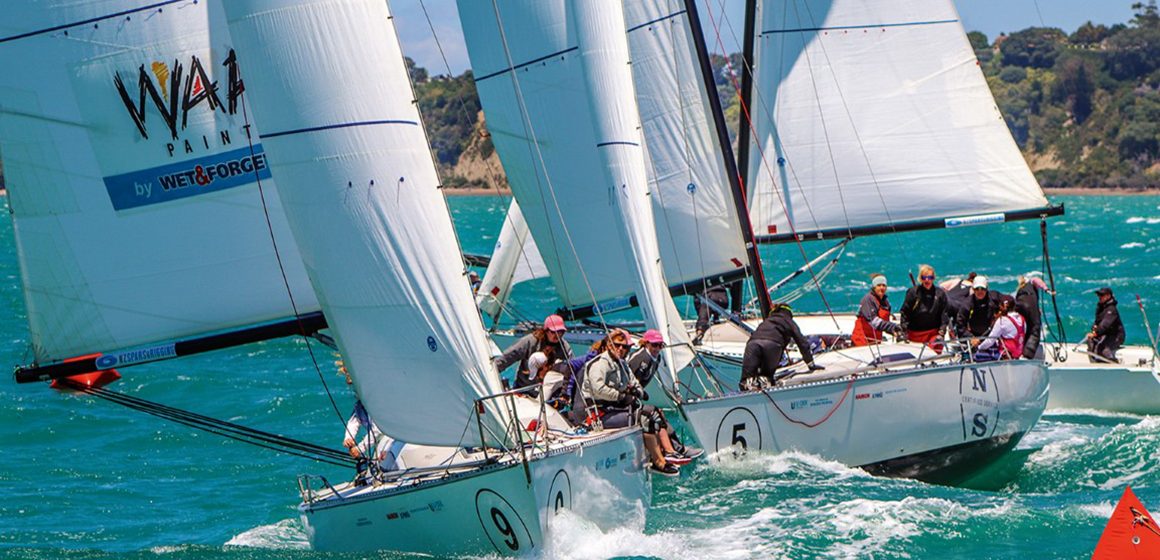
DIXON WEARS NATIONAL CROWN – AGAIN
Karleen Dixon – with her crew of Sara Tucker, Paula Satterthwaite, Jennifer Jameson, Raynor Haagh, Miranda Addy and Kylie Jameson – is the 2020 Barfoot & Thompson NZ Women’s National Keelboat Champion.
Dixon prevailed after two days of full-on racing in Auckland in winds consistently blowing upwards of 20 knots, making for intense conditions for the 10 teams.
With the wild conditions there were a few wipeouts, man overboards and other hairy moments, but for the vast majority of the racing all teams showed exceptional strength and boat-handing skills.
Finishing in second place for the fourth year in a row was Melinda Henshaw, while defending champion Sally Garrett was third.
Dixon won the first race of the regatta and never looked back, going on to clinch six out of the 10 races sailed and win the regatta by a massive 11-point margin. This is Dixon’s sixth Barfoot & Thompson NZ Women’s National Keelboat Championship title, a fantastic run which dates back to the early 2000s.
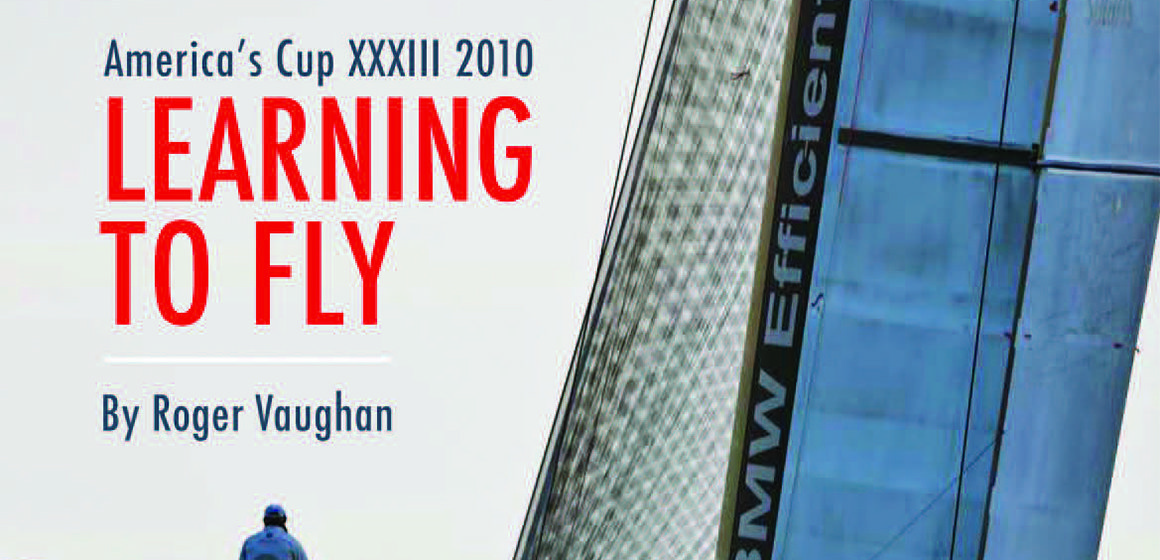
LEARNING TO FLY
PHOTOGRAPHY BY GILES MARTIN-RAGET AVAILABLE THROUGH AMAZON
WITH THE 36TH AMERICA’S Cup kicking off in March 2021 with revolutionary foiling monohulls, Learning to Fly is a fascinating insight into how the America’s Cup transitioned from monohulls to multihulls and then back to monohulls again.
Written by well-known American sailing writer and commentator Roger Vaughan, with photography by Giles Martin-Raget, this book tells the story of the 33rd America’s Cup and its lead-up from the perspective of Larry Ellison’s BMW Oracle Racing team.
Sailed off the coast of Valencia, Spain, the 2010 event was the first America’s Cup contested between multihulls, though in a travesty the Cup was defended by a multihull in San Diego in 1988.
The back story of Ellison’s involvement, first in sailing and then in the America’s Cup, and his long and fruitful involvement with New Zealand sailors and boatbuilders is enlightening: Ellison loves Kiwis and hugely admires our sailors.
Because this book is about the America’s Cup, it’s full of intrigue, rule breaking, deal making and legal challenges. The behind the scenes detail is immense.
There are many larger-than-life characters, including Aussies Glen Ashby and Jim Spithill – Ellison is a fan of both – and Kiwis Russell Coutts and Brad Butterworth.
The development of Oracle’s maxi trimaran for the 33rd edition was groundbreaking, aided and abetted by Kiwis, including ex-TNZ, ex-Alinghi super-designer Mike Drummond and US-based Kiwi boat builder Tim Smyth.
As the event got closer there were more legal updates, venue changes, sail, mast and rigging redesigns, the addition of a BMW engine to trim Oracle’s sails, and so much more. This book covers it all.
Rig loads on such a huge multi-hull were immense and failures frequent. Eventually, an expensive wingsail was agreed upon, constructed by Core Builders, then fitted and tested. The match was only months away.
In February 2010 BMW Oracle Racing’s 115-foot trimaran USA 17 faced off against Alinghi’s smaller catamaran in Valencia. Each race is covered in detail in an historic but ultimately one-sided struggle.
The era of super-fast America’s Cup racing had begun.
– John Eichelsheim
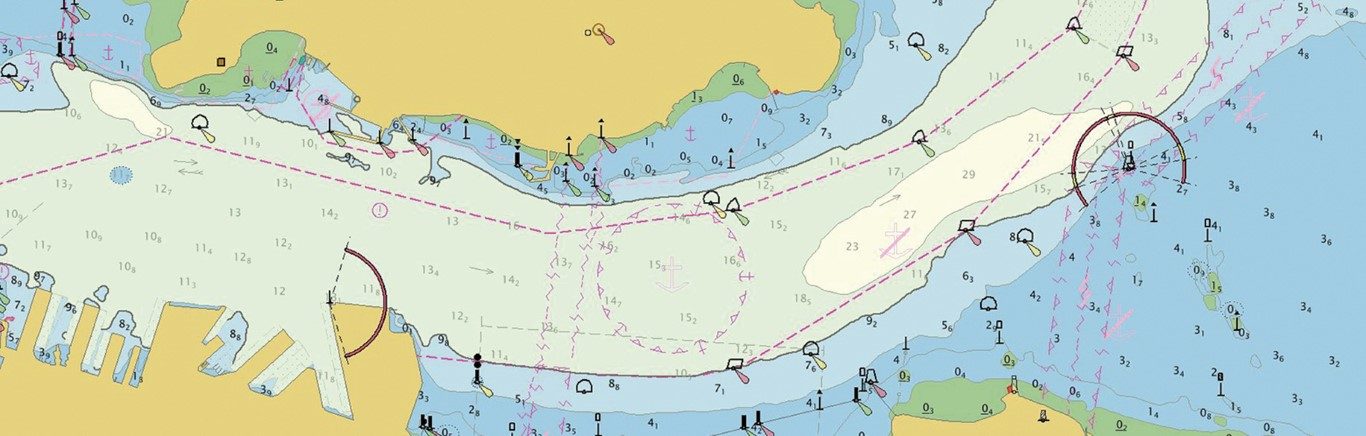
SAFER SAILING WITH FREE CHARTS
Land Information New Zealand (LINZ) has launched a free electronic navigational charts (ENC) service to help keep boaties safe this summer.
To use the new subscription service you’ll need a navigation system that’s configurable and compatible with International Hydrographic Organization (IHO) S-63 encryption. Once subscribed, users receive regular updates from official LINZ data.
LINZ CEO Gaye Searancke says the service was developed in response to the growing use of electronic charts and plotters for navigation. “It gives recreational and commercial mariners the very best and most up-to-date data available to sail safely in New Zealand waters.”
Boaties can choose between six regions covering the North and South Islands, with specific chart packs for the Auckland area, Bay of Islands, Cook Strait and the inland water of Lakes Wakatipu and Taupō. LINZ and Maritime NZ worked together on the project.
“Free access to navigational charts makes New Zealand water’s safer for boaties and commercial shipping,” says Matt Dean, Maritime NZ Principal Nautical Advisor. “I encourage everyone who can use electronic charts to take advantage of this excellent offer.”
Ports of Auckland Senior Pilot Captain John Barker was involved in the service’s trial and now has 12 pilots using it on their Portable Piloting Units. “The subscription and downloading process is very simple, logical and user-friendly.”
For more information about the NZ ENC Service visit www.encservice.linz.govt.nz
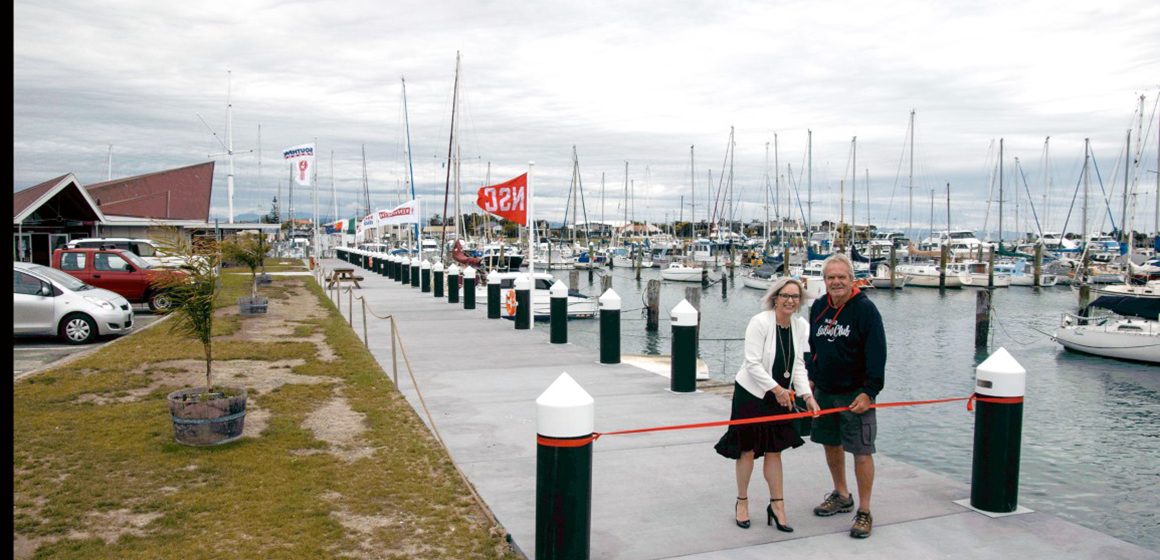
NAPIER’S HANDSOME MAKEOVER
Napier Sailing Club is looking a lot smarter these days following the recent development of a new breastwork and wharf.
The structure – comprising a walkway and jetty – stretches past the clubhouse and is a pleasant addition to the Ahuriri walkway.
Construction began in November 2019 to replace the old timber structure which after 40 years had become a safety issue. Built by the Lattey Group, the work required 8m steel piles at 2.5m centres, with tilt slab concrete sections fitted behind to form the wall. Concrete slabs were laid to form the walkway.
Each of the piles has been sponsored by a club member. Their names are engraved on small plaques and, collectively, these read like a Who’s Who of the Napier Sailing Club.
Napier Council contributed significantly to the project, as did the Eastern Central Community Trust. Club members also pitched in financially. At the opening ceremony Commodore Rob Hengst paid tribute to Paul (Red) Redman who stewarded the project on behalf of the club.
The facility was officially opened by Napier Mayor Kirsten Wise.
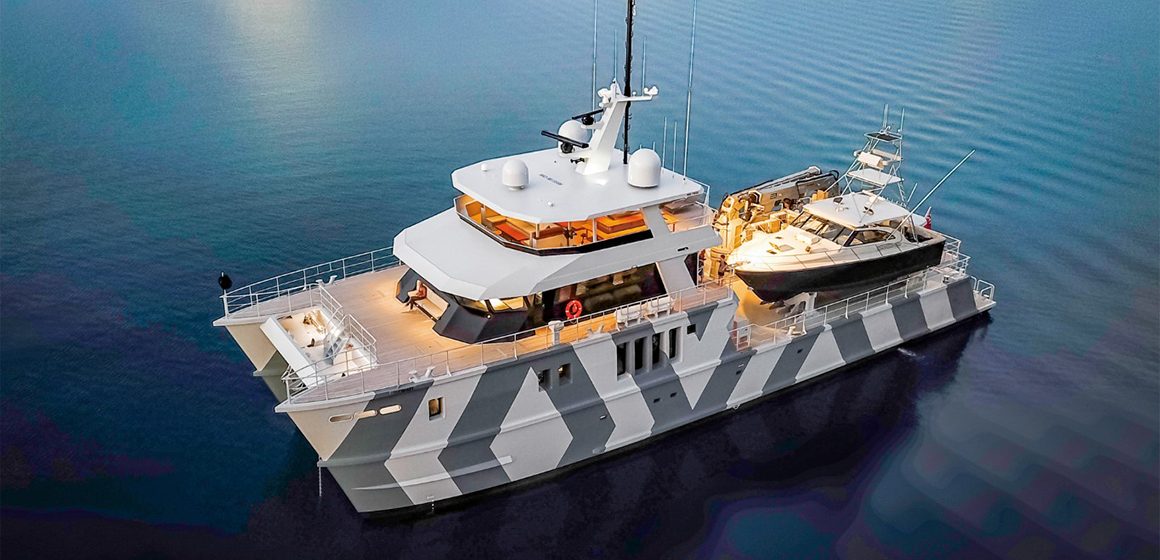
BEAST SCOOPS SUPERYACHT AWARD
The 37m Tauranga-built motoryacht The Beast was judged the best displacement motor yacht at the prestigious 2020 Boat International World Superyacht Awards in November, in the below 499 GT category.
The event appraises luxury yachts from around the world and recognises ingenuity and craftsmanship, and its judging panel comprises current and former superyacht owners.
Designed by Auckland’s LOMOcean, The Beast was completed late 2019 after a two-year build at Tauranga’s Profab Engineering.
While her grey camouflage paintwork suggests a small warship, the vessel boasts deck spaces tailored for leisurely outdoor living, and she features a luxurious interior.
As an enthusiastic sport fisherman, the owner’s key requirement called for the ability to carry, and safely launch, a 13m, 19-tonne sport fishing vessel. The judges were impressed by the launching system, with its safe, two-point lift provided by a pair of large knuckle-cranes.
The Beast will be available for charter in the Pacific islands during 2021.
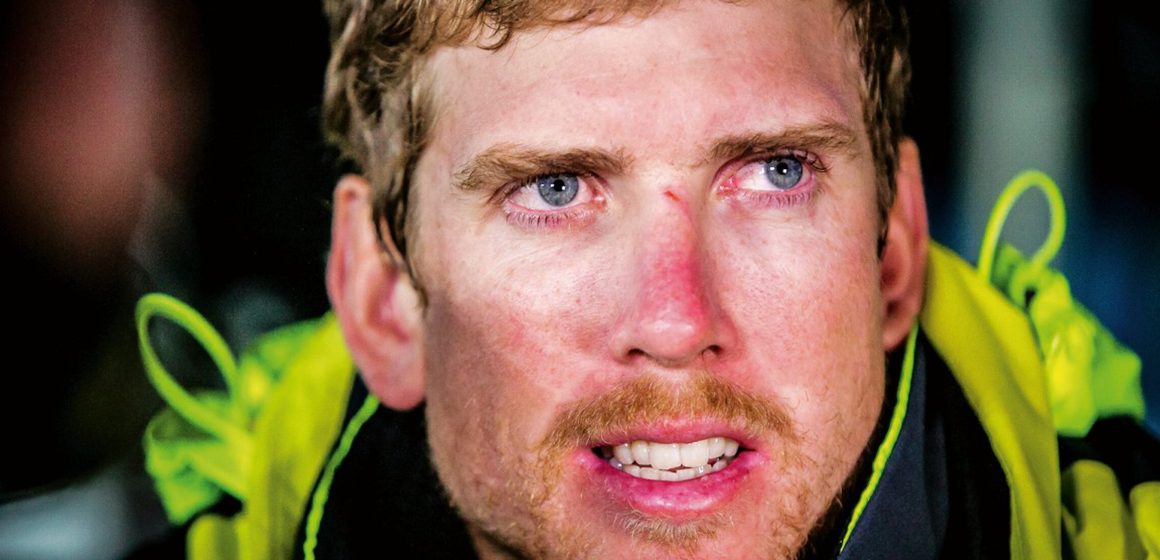
MAGNUS OLSSON AWARD FOR BURLING
Kiwi sailor Peter Burling is the 2020 winner of the prestigious Magnus Olsson Prize, awarded annually by Sweden’s Mange Olsson Foundation to an individual who has made an indelible contribution to the world of sailing.
Previous recipients include Torben Grael, Sir Ben Ainslie, Stan Honey, Santiago Lange, Grant Dalton and Carolijn Brouwer.
Burling (29) is by far the youngest winner of the prize. The Mange Olsson Memorial Foundation was created to continue the essence of enthusiasm, passion, and determination that Mange (Magnus) brought to the sport of sailing.
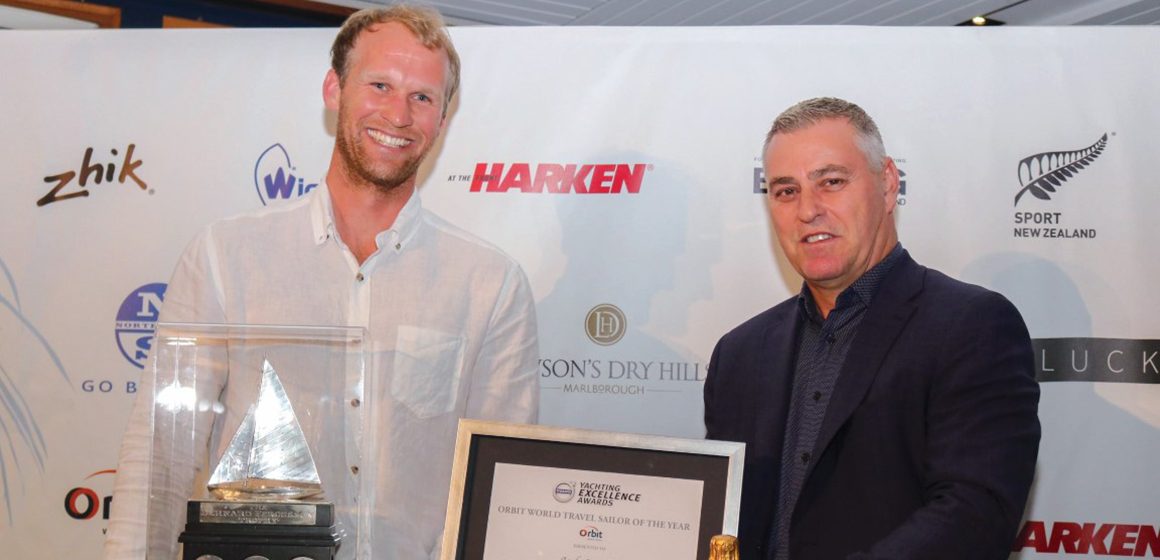
EXCELLENT JUNIOR
Josh Junior created history by becoming the first Kiwi to win the Finn Gold Cup (World Championships) and took the top gong at the recent Volvo Yachting Excellence Awards.
Junior triumphed at last year’s Finn Gold Cup in Melbourne. Along with the Orbit World Travel Sailor of the Year Award, he was also named the Zhik Male Sailor of the Year.
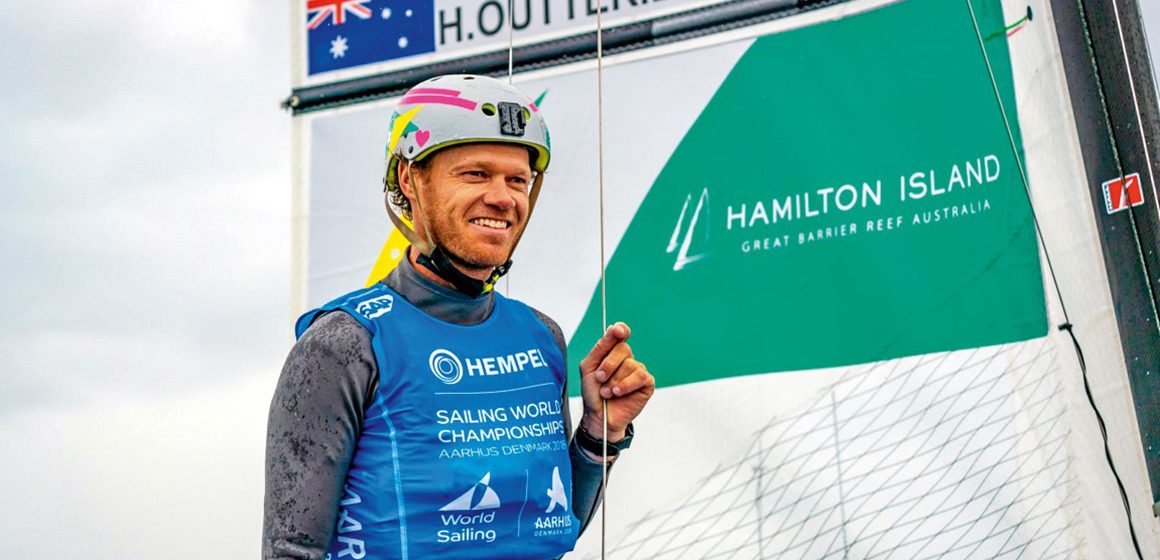
OUTTERIDGE IS NACRA 17 PRESIDENT
Australian sailor and gold medalist Nathan Outteridge has been appointed interim President of the International Nacra 17 Class Association.
He takes over from Marcus Spillane (IRL) who was recently elected as Vice President of World Sailing.
Nathan is a multiple Youth World Champion, 49er Class gold and silver medalist, Moth Class World Champion, America’s Cup helmsman and current helmsman of SailGP Team Japan. He also campaigned for the Tokyo Olympics in the Nacra 17, twice finishing second at the World Championships, but was not selected to the Tokyo Olympic team by Australia.
Tokyo will be the Nacra 17’s second Olympic cycle. Nathan’s primary focus will be to improve safety through better maintenance practices, preparation at regattas and testing of design features.
The Nacra 17 Class remains compelling viewing for Olympic fans, with dynamic racing and high speeds in foiling catamarans. It was one of the first Olympic classes to showcase mixed gender crews competing together and this has since been embraced by the IOC, leading to many more mixed events on the Olympic slate.
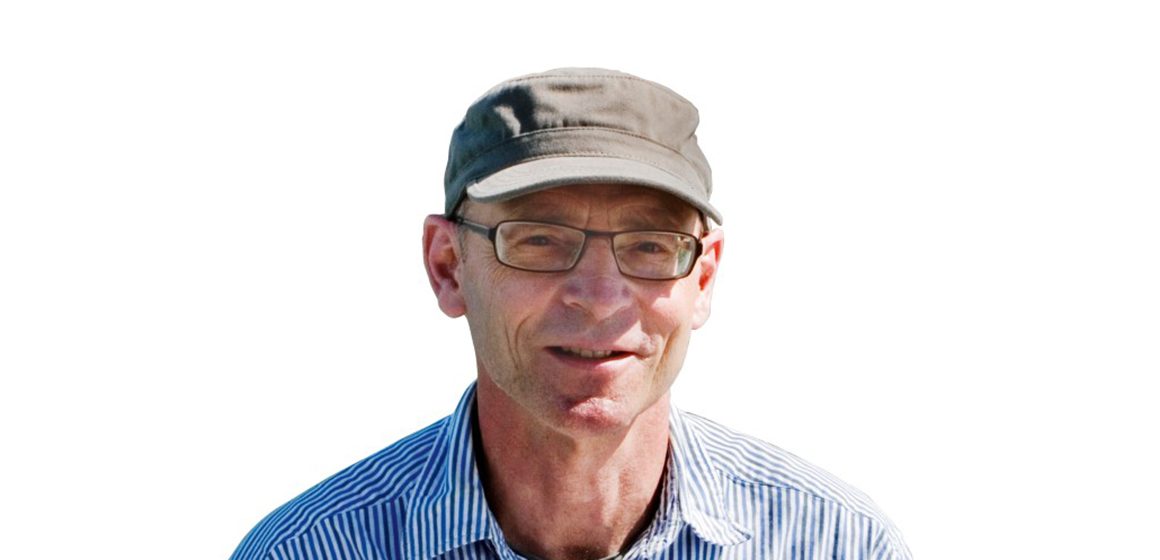
MACFARLANE TURNS 20
This issue marks my 20th year as a columnist for Boating New Zealand.
During the column’s first few years I reviewed more than 130 secondhand New Zealand production boats, most built between 1960 and 1990. With hindsight, this era is now recognised as the golden age of New Zealand production boatbuilding.
In around 2005 I became aware that the knowledge, history and experiences of the designers, boatbuilders and sailors of this golden era was in danger of being lost as the people involved began crossing the final bar.
Since then the column’s focused on recording these people’s life stories to ensure they are not lost. My perennial problem every month has been condensing a book’s worth of material into a magazine article, but as most of these people have avoided the limelight, an accurate article is hopefully better than nothing.
I remain eternally grateful to all those who have allowed me into their lives, trusting me to tell their stories. It’s been a real privilege.
Likewise, nothing appears in print without the help of a great number of people. I thank my past and current editors, especially Lawrence Schäffler, for all their support and encouragement. Eternal thanks to all the talented people behind the scenes who take our raw material and make it look so professional in print. I’d also like to acknowledge my fellow contributors, especially Harold Kidd and the late Len Gilbert, who’ve often assisted with wise words of wisdom.
Lastly, massive thanks to the owners of the magazine, Brett Patterson and Tim Porter, who I’ve now worked with for 20 years. Without them, there would be no Boating New Zealand.
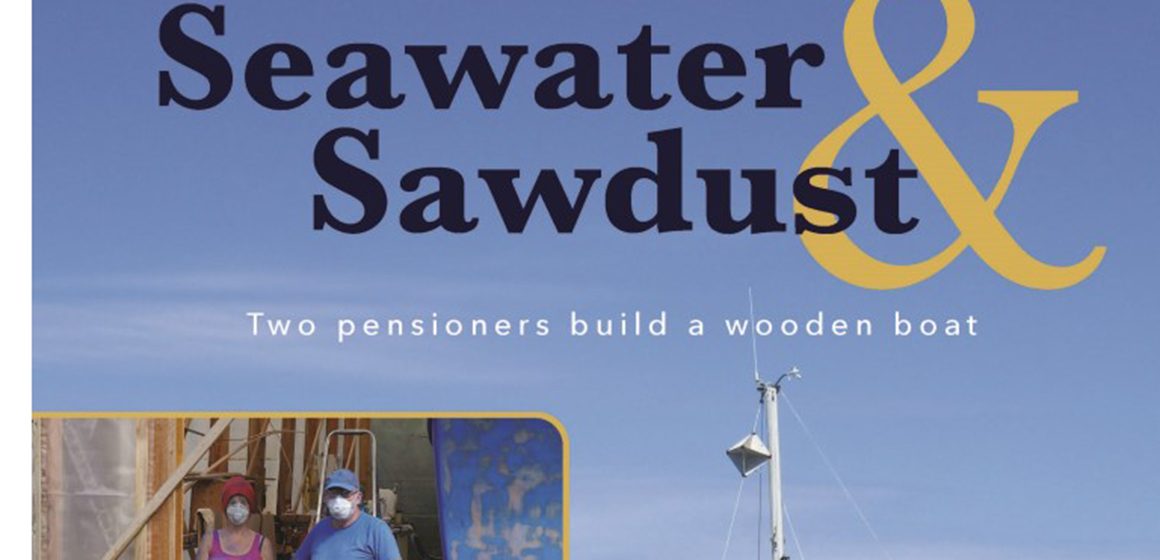
SEAWATER & SAWDUST
This book details the intriguing journey of two British pensioners who designed and built from scratch a 30-foot wooden motorboat.
With a combined age of more than 120 years, Tom and Lorraine Owen set about the custom build of their wooden motorboat Thea in March 2015. Seawater & Sawdust follows their journey from inception and planning to building and on to launch in December 2016, documenting their celebrations and milestones as well as their mistakes and mishaps.
The couple of 37 years were no beginners at boatbuilding; they’d built their first boat together when they were in their 30s and a second in their 40s. Even so, tackling a project of this size in retirement was ambitious, to say the least.
Suffering a subdural haematoma from an airborne scrap of timber (Tom) and undergoing a full hip replacement (Lorraine) mid-build, Team Owen was dealt its fair share of obstacles and interruptions along the way. But they exceeded all expectations with an exceptional end result.
Thea became the last boat to be built and launched at the historic Philips Shipyard in Dartmouth, England, now Noss on Dart Marina, and she’s carried Tom and Lorraine some 1,500 nautical miles in the three summers since.
About transitioning to motor from sail, Lorraine has this to say: “We had some qualms about taking the plunge over to the ‘dark side’ because there can be a divide between the owners of sailboats and the owners of motorboats.
“Perhaps because Thea is such a classic design we have not found this to be the case, much to our relief. I’m pretty sure that we’ve extended our cruising life by making the change now – before we were pushed!”
Self-published by Tom & Lorraine, Seawater & Sawdust (A$44.99 hardback, A$35.99 paperback) the book is also available as an eBook edition. It can be found at all reputable book and eBook websites worldwide.
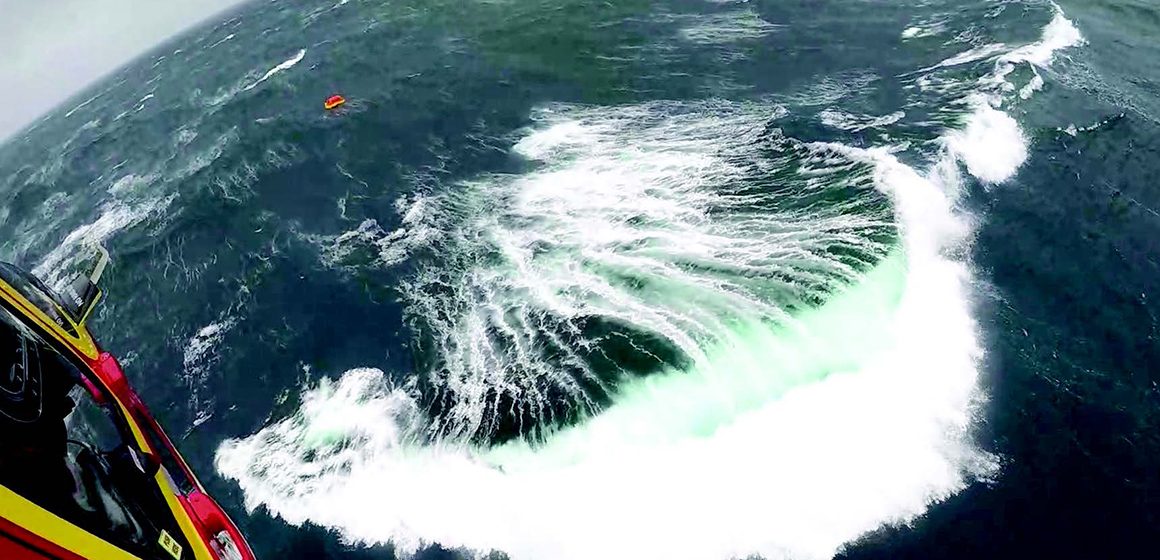
THE FINAL VOYAGE OF THE ESSENCE
A book has been published about the sinking of the Tauranga-based yacht Essence in a storm off the Northland coast in October 2019 in which the skipper, Stuart Pedersen, died.
Written by Bruce Goodwin, one of the three survivors of the tragedy, it is an expanded version of the story which we serialised in the August and September 2020 editions of Boating NZ under the headline Anatomy of a Rescue.
Any profits from sales of the book will be donated to the Bay of Plenty Sailing Academy Trust, of which Stuart Pedersen had been the chairman, and for which Bruce Goodwin is a volunteer instructor. The academy provides sail training to children and teenagers, many from disadvantaged backgrounds, who otherwise could not afford it.
Says Bruce: “I initially started to write down my account of, and reflections on, the sinking because I thought it might help me get through the psychological and emotional turmoil that followed.
“Then I realised that, although I considered myself an experienced ocean sailor, I learned a lot of lessons from the event which might be useful to other sailors. So, with the encouragement of some sailing mates, I decided to make them available in book form.
“If in the process we can honour Stuart’s memory by helping the academy to continue the fantastic mission which he did so much to support, so much the better.”
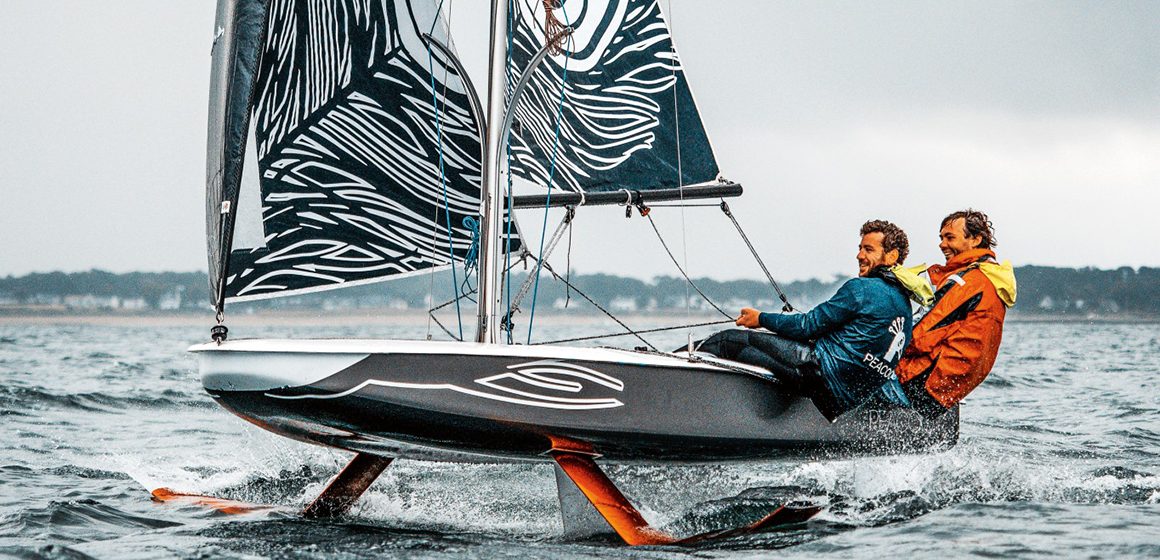
FOILING PEACOQ’
The Peacoq’ – says its French designer Patrick Billot – is a foiling dinghy created for recreational sailors rather than the world’s yacht racing elite.
Billot’s fascination germinated after watching the America’s Cup cats in action, and he felt the ‘fun’ should be extended to all sailors – “to allow every sailing fan to get into exciting foiling sensations and feelings.”
His new company – Foily – produces two double-handed models: the sailing school Peacoq’ 14, and a more high-end version fully-equipped with Harken gear.
Both models, he says, have three distinct characteristics – easy sailing, stability and sensation.
Built at France’s Sisco Composites (using a vacuum process) the Peacoq’ weighs in at 130kg, can be beach-launched with a standard dolly, with all appendages tucked safely away until needed.


