
MOTORBIKE REINCARNATION
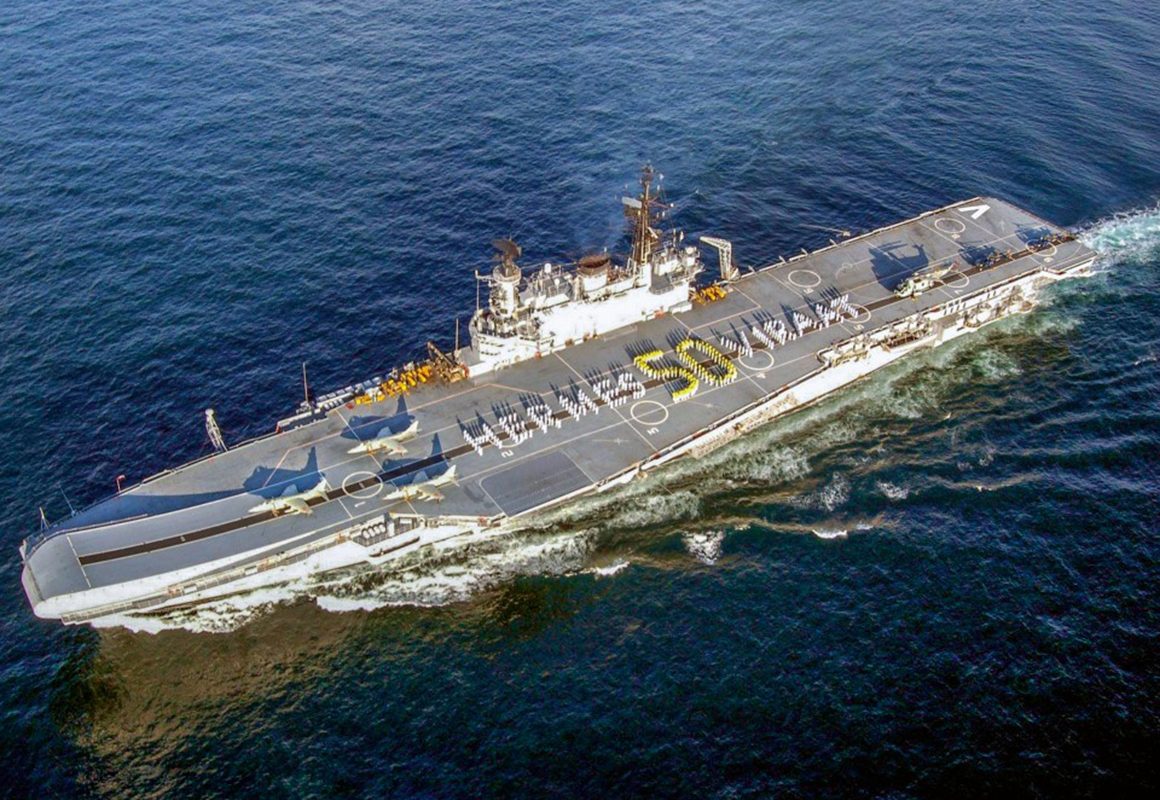
Once the world’s longest-serving aircraft carrier, Britain’s HMS Hermes has come to an ignoble end. She’s lying on an Indian beach being broken up for scrap, her steel destined for motorbike production.
Though she was considered the Royal Navy’s flagship during the Falklands war in the early 80s, that role was a brief starburst in a career beset by problems. It didn’t even start well.
Construction began in 1944 but WWII ended before she was completed, so the work ground to a halt. The forlorn hull sat in the dockyard in Barrow-in-Furness until 1953, when it was launched unceremoniously to make way for other shipbuilding projects. The unfortunate carrier carried a cruel nickname – HMS Elephant.
Though the build was finally completed in 1957 she only began active service two years later. In a 1966 review the Royal Navy decided she was surplus to its requirements and tried to sell her to Australia. But the Aussies concluded she would be too expensive.
She was refitted twice in the 1960s and 70s before the Navy once again decided (in 1981) that she was surplus to requirements. But just as the scrapyard plans were being finalised Argentina invaded the Falklands and Maggie Thatcher quickly dispatched her to the South Atlantic. She returned to a hero’s welcome.
That glory was short-lived and in 1986 she was sold to the Indian navy and renamed INS Viraat, serving that country for three decades before being decommissioned in 2017. After lying abandoned in Mumbai for three years, she was sold for £5.1million to the Shree Ram Group – it owns Asia’s largest ship scrapyard in Alang.
Poor old Hermes will live on as thousands of motorbikes.
CRUISING TO NOWHERE
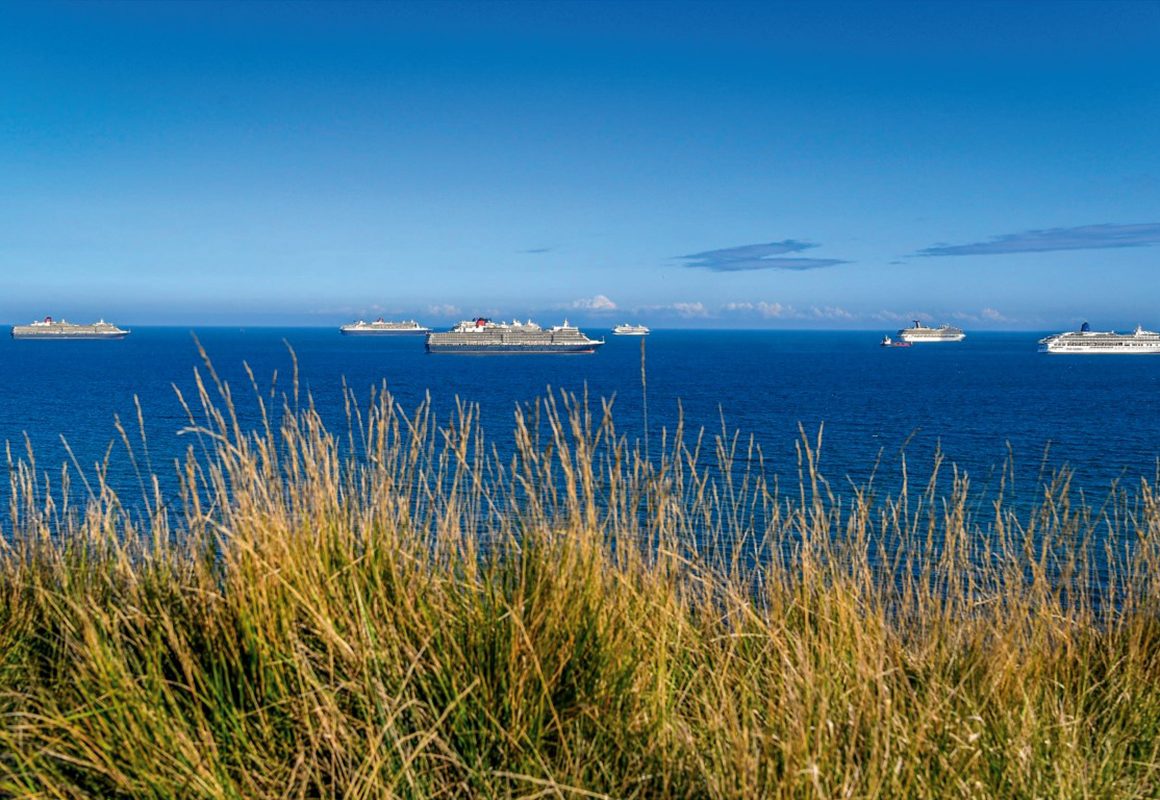
The best place to get a sense of the inactivity is the English Channel, now home to a growing fleet of idle cruisers. But as the old adage goes, when one door shuts another opens.
With commendable entrepreneurial flair local resident Paul Derham has begun offering boat tours to anyone interested in getting a closer look at the fleet. A cruise ship veteran of some 27 years, Derham knows the industry and the ships well – he’s the perfect tour guide.
He now runs two ferries from Mudeford in England’s Dorset region, and has adapted his normal schedule (no doubt also suffering from the impact of Covid-19) to include the 2.5-hour ‘cruise ship tour’. It appears to have become a raging success.
This recent image shows some of the world’s cruise ships anchored off the coast of Weymouth – among them Queen Victoria, Queen Mary 2, Queen Elizabeth, Marella Discovery, Carnival Valor and Aurora.
SHRINKING WATERWAYS
Some of the world’s most significant commercial waterways are coming under growing pressure as climate change impacts negatively on water supply, river levels and shipping.
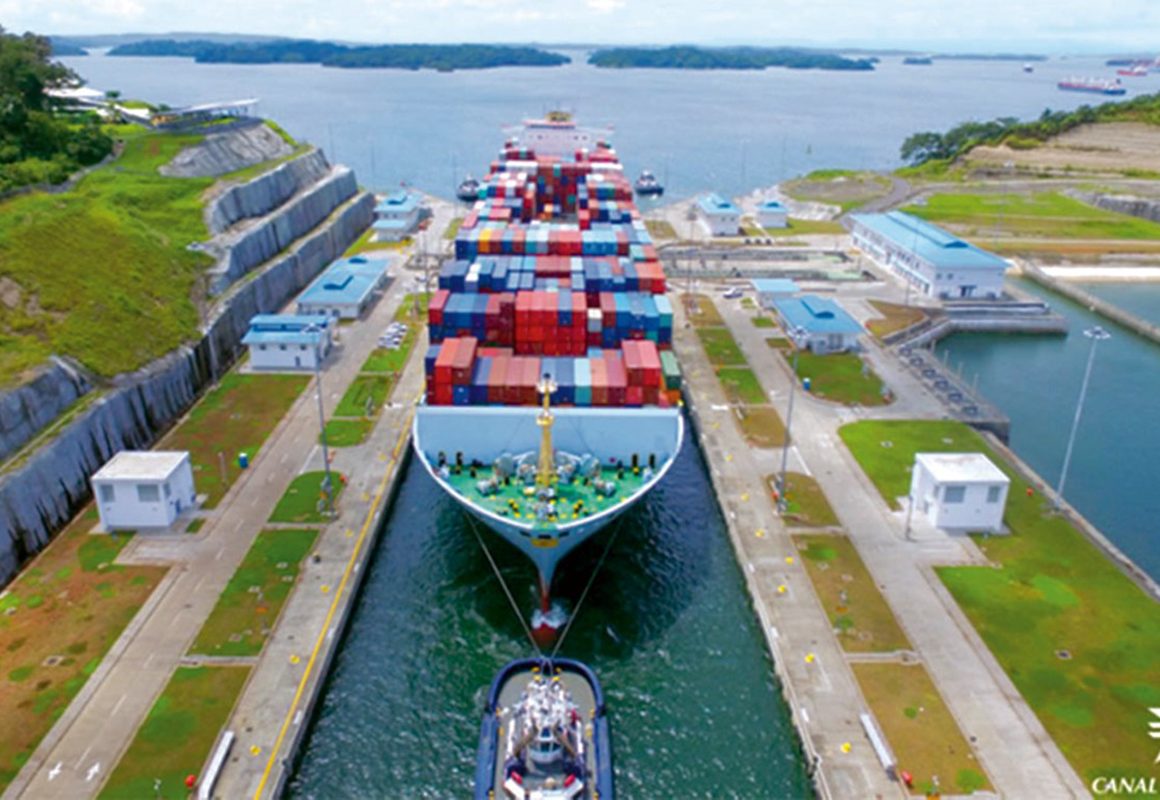
A mere four years after upgrading the canal to accommodate bigger ships, the Panama Canal Authority (ACP) has now invited bids from international engineering consortiums for a massive new project: a water management system to improve the canal’s operation and at the same time secure the nation’s drinking water supply.
Water supply issues have become a problem for the canal. When rainfall is limited and nearby lake levels fall, the ACP is forced to implement draft restrictions to keep the canal running, reducing the cargo tonnage vessels can carry.
Last year was the region’s fifth-driest in 70 years. Low rainfall reduces water levels at Gatun and Alhajuela lakes, the main water sources for both the canal and Panama’s population. With canal levels projected to drop below operational safety limits, ACP implemented a ‘freshwater charge’ designed to cut consumption.
But ACP understandably wants a more permanent solution. Its proposed water management system will guarantee supplies for both the canal and the population for at least 50 years. “Securing sustained, operational water levels is paramount for the long-term viability of the Panama Canal,” says administrator Ricaurte Vásquez.
And in Germany...
Authorities responsible for the operation of the Rhine, one of Europe’s most important waterways, are evaluating options to guarantee it remains navigable – including the possibility of reengineering parts of the river.
The move comes after low water levels brought a dramatic reduction in shipping on stretches of the river in 2018. Some 30% of Germany’s coal, iron ore and natural gas is transported along the river – the 2018 hiccup resulted in a contraction in the country’s economy.
The impact of longer and drier summers is exacerbated by far less melt water from alpine glaciers, further reducing river levels.
Mooted strategies to facilitate navigation include altering the way the current flows in specific parts of the river (to prevent scouring and sedimentation), changing the design of the ubiquitous barges (so they can operate in shallower water) and even the introduction of new locks. This latter option is likely to face an uphill battle from environmentalists.
UNDERWATER TREASURES
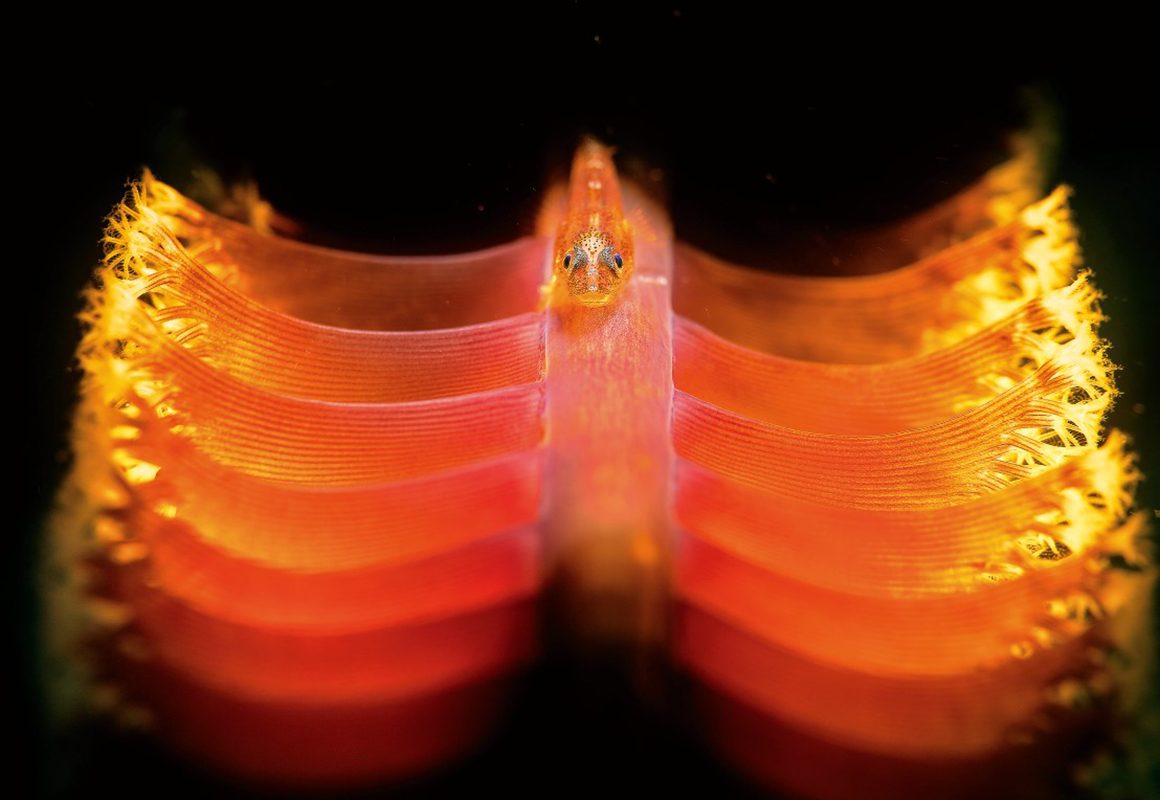
This photo of a goby hiding in soft coral – titled Red Carpet – was among the winners of the recent Ocean Art Safe Under the Sea underwater photography contest, organised by the Underwater Photography Guide in the US.
Despite the adversity we all face today, the organisers noted, the Safe Under the Sea contest brought people from around the world together to share the beauty of our oceans, and help the World Health Organistion (WHO) and the Centers for Disease Control and Prevention (CDC) in their fight to improve the health of the planet and its people.
The Underwater Photography Guide was able to donate 25% of the proceeds, translating to thousands of dollars, to WHO and CDC in their fight against Covid-19.
Yatwai So took the shot of the goby off the coast of Batangas in the Philippines. The image scored second place in the competition’s ‘macro’ category. “The goby,” said Yatwai, “looked like a VIP walking along the luxury red carpet.”
Other winning images include raw, dramatic underwater moments with magnificent creatures, rare marine life behaviour, stunning portraits of miniature worlds, curious pinnipeds, eerie shipwrecks, strange critters, and many photos that showcase the prevailing beauty of our underwater world. The judges evaluated thousands of entries from 79 countries.
The Best of Show winning image conveys a special message of hope for the future of our planet’s unique biodiversity. The photo – Releasing Hope – captured by photographer Edwar Herreno, shows marine biologist, Eduardo Espinosa releasing a tagged hammerhead pup in the Galapagos Islands, part of a unique shark nursery.
Underwater Photography Guide publisher, Scott Gietler commented: “The images from this special competition, especially the winning conservation image, represent hope. Hope for our oceans, hope for our travel and dive industries ravaged by Coronavirus, and hope that our nations can come together.”
U-BOAT PENS BECOME ART
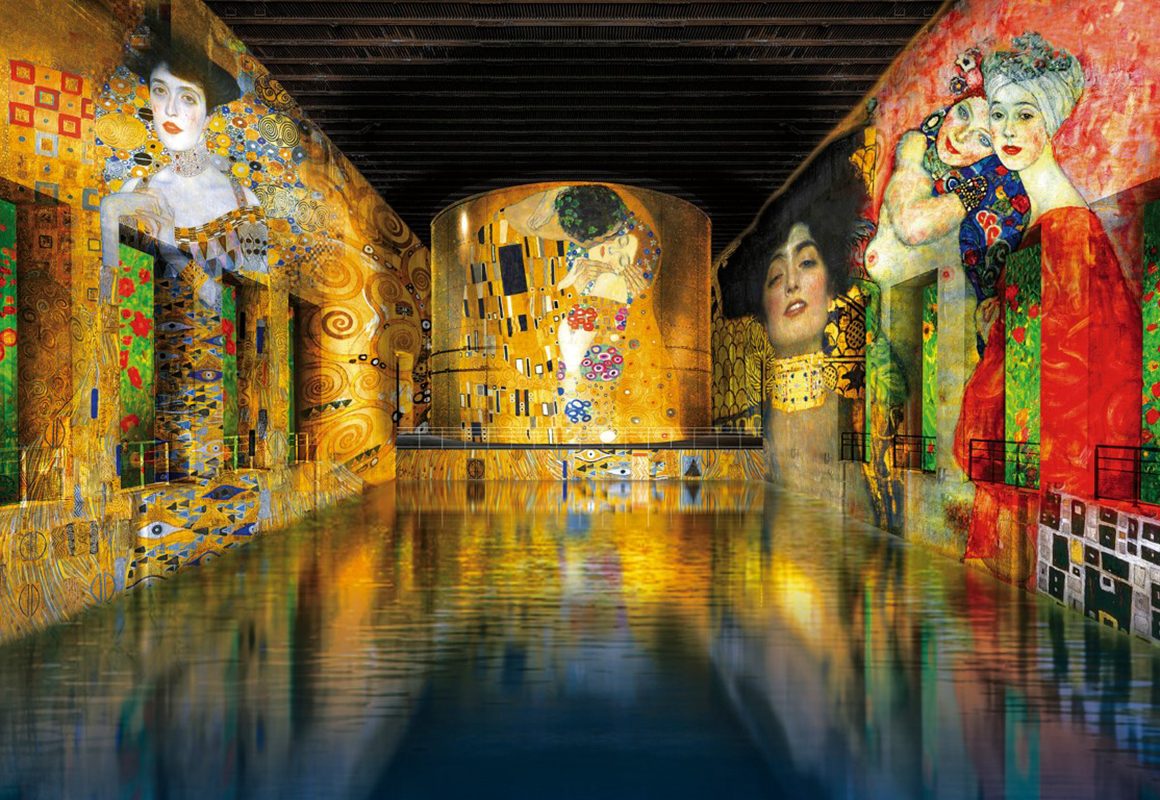
A WWII GERMAN SUBMARINE BASE NEAR BORDEAUX, FRANCE HAS BEEN TRANSFORMED INTO A VIBRANT ART CENTRE, DISPLAYING THE WORKS OF LATE 19TH CENTURY PAINTERS AS NEVER BEFORE.
Established in June this year, the Bassins de Lumières is the brainchild of Culturespaces – a French company specialising in creating digital art centres and immersive exhibitions – and the former U-boat base presented the perfect venue.
Digital versions of famous paintings are projected on to the walls of the base’s vast concrete chambers (110m long by 12m high) – and they’re also reflected in the water. This adds a new dimension to experiencing art – particularly as the paintings are viewed against a backing soundtrack from the works of composers such as Wagner, Beethoven and Mahler. Visitors view the paintings from gangways above the water and along the quays of the pens.
The U-boat base was built in 1941 to accommodate 15 submarines. Constructed in super-strong concrete it survived the Allies’ best bombing efforts. It was finally closed down when Bordeaux was liberated in August 1944, but over the decades the base has been used as a metallurgy plant, a venue for festivals and, on occasion, as a film set.
Culturespaces’ installation uses 90 video-projectors and 100km of fibre-optic cable. The company had previously established two similar venues – the Carrières de Lumières in Les Baux-deProvence (created in a Roman-era limestone quarry) and the Atelier des Lumières in Paris. The Bassins de Lumières is the biggest by far – three times the size of the facility in Les Baux-de-Provence.
The centre will exhibit work from a range of artists from all eras, but for the inaugural exhibition elected to display works from Gustav Klimt and Paul Klee. It runs until January next year.
HALL OF FAME FOR PJ
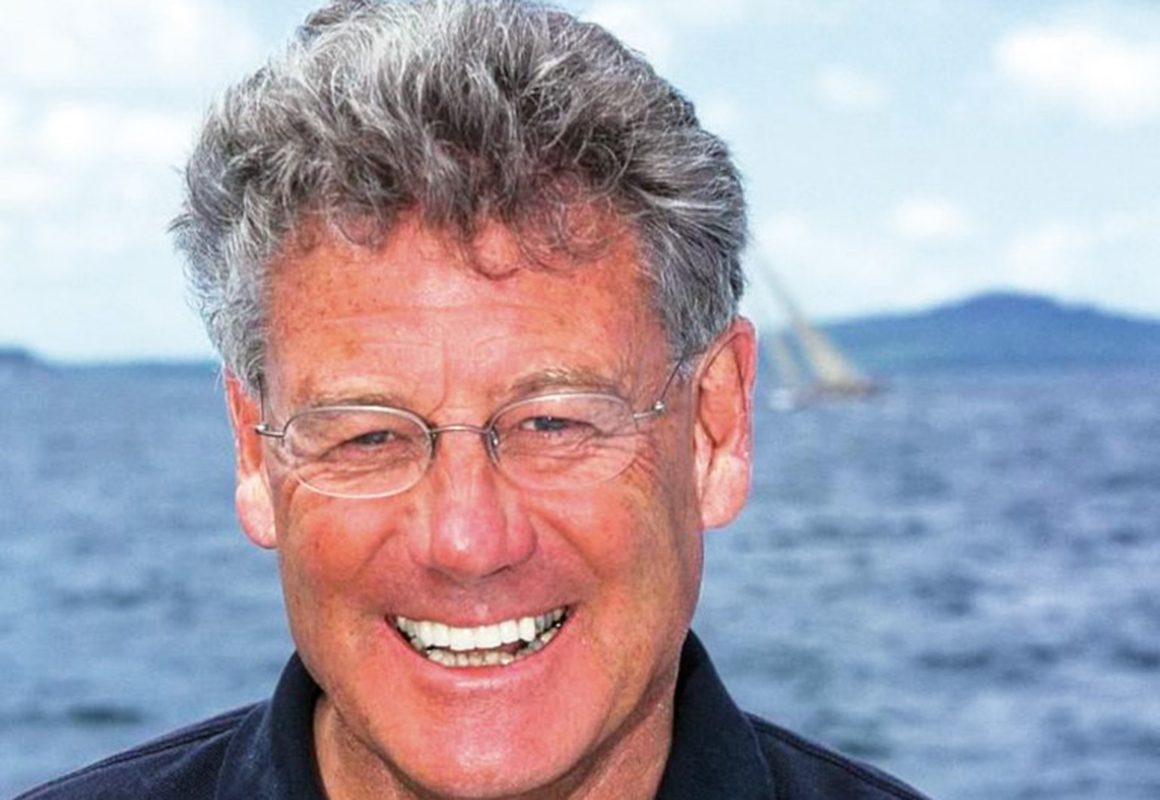
New Zealand’s ‘Voice of the America’s Cup’ – Peter ‘PJ’ Montgomery – is to be inducted into the America’s Cup Hall of Fame in March next year.
While Montgomery has covered many sports as a broadcaster, he’s best known as ‘The Voice of the America’s Cup’ in international radio/TV. He has covered 11 America’s Cup regattas, nine Olympic Games and all 11 Whitbread Round the World/Volvo Ocean Races.
He has also appeared in a movie – adding realism in the 1992 film Wind, where he played the America’s Cup broadcaster in the racing scenes. He features in the America’s Cup documentary film, The Wind Gods.
He was awarded an MBE in the 1995 Queen’s Birthday Honours.
AS FREE AS THE WIND
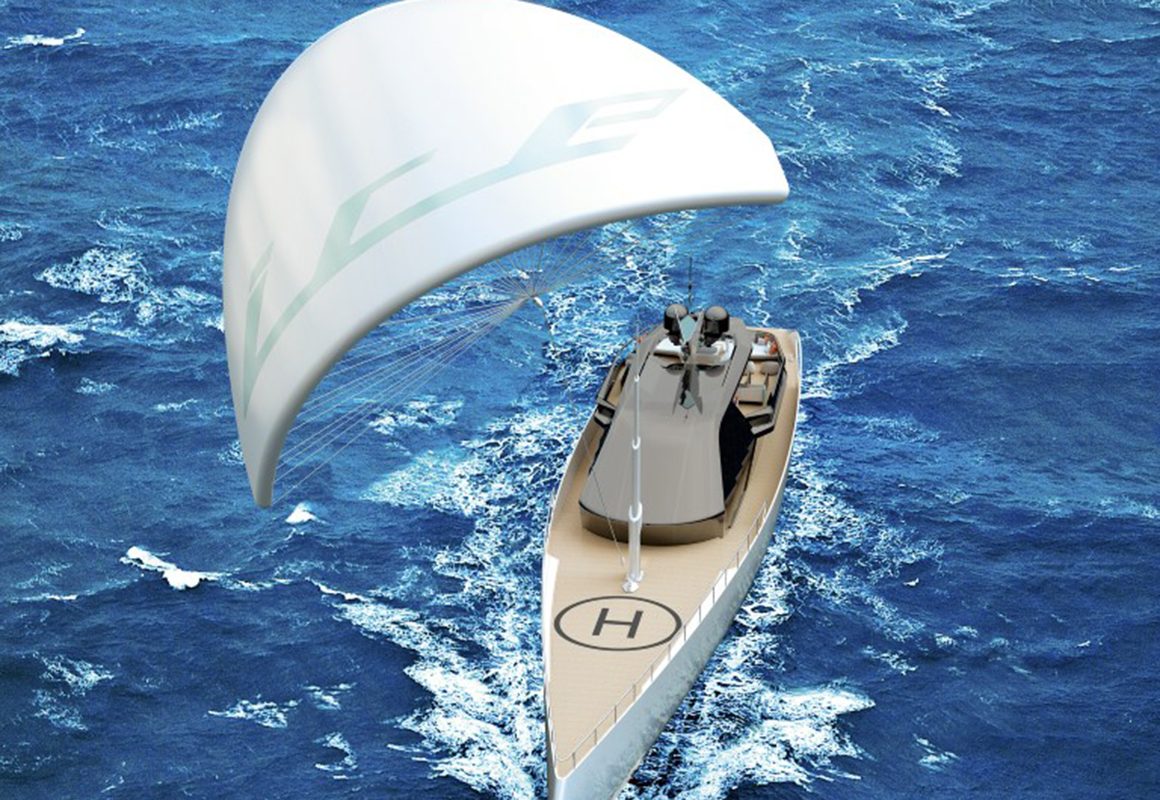
Conceived to harness the wind, Ice Kite is a 64m superyacht designed by Turkey’s Red Yacht Design (with naval architecture by Dykstra Naval Architects) for a German entrepreneur.
Given her design brief (a yacht with green technologies able to circumnavigate constantly), Ice Kite combines kite sailing with a low-resistance hull shape to get optimum consumption from her twin 1,000hp MAN diesel engines. She has a maximum speed of 17.4 knots.
A significant hull feature is a well-proportioned daggerboard to enable the yacht to make full use of the kite propulsion system at closer wind angles.
Though her hull is aluminum, the carbon fibre superstructure reduces weight top sides. One of the yacht’s main characteristics is the use of glass – specified by the owner to offer a sense of openness on board. He wanted a yacht that feels like she’s an integral part of the sea.
Ice Kite has 475m² of open space. The main saloon consists of two visually
interconnected sections: the Main lounge and the Kite lounge. The latter can be transformed into an indoor dining area, and has been specially designed for watching the kite’s hypnotic flight during the cruise.
Four guest cabins accommodate up to 10 people.
Ice Ghost is the yacht’s 26m support vessel – designed to cruise in tandem with Ice Kite and carry her toys to remote places.
CARBON-FREE IN ABEL TASMAN
Sailing charter operator Abel Tasman Sailing Adventures has been awarded ‘Zero Carbon’ certification through EKOS, an international non-profit enterprise.
Company owner Jane-Maree Holmes is extremely proud of the achievement. “As an environmentally interactive activity we’ve always tried to be aware of our environmental footprint. Becoming Zero Carbon-certified is something we’ve been wanting to measure and offset for a while.”
Certification has been a natural progression for the Kaiteriteri and Nelsonbased business, as sustainability is at the heart of its ethos and values. Offsetting the company’s carbon use has been complemented by offsetting personal vehicle use.
“As a family-owned business our work and personal lives are often blended, and to make sure we capture all our carbon use we’ve included all our private vehicle use. It was interesting that our vehicle carbon measurement was far more than from our vessels – it’s endorsed the realisation that sailing yachts are the definitely the way to go.”
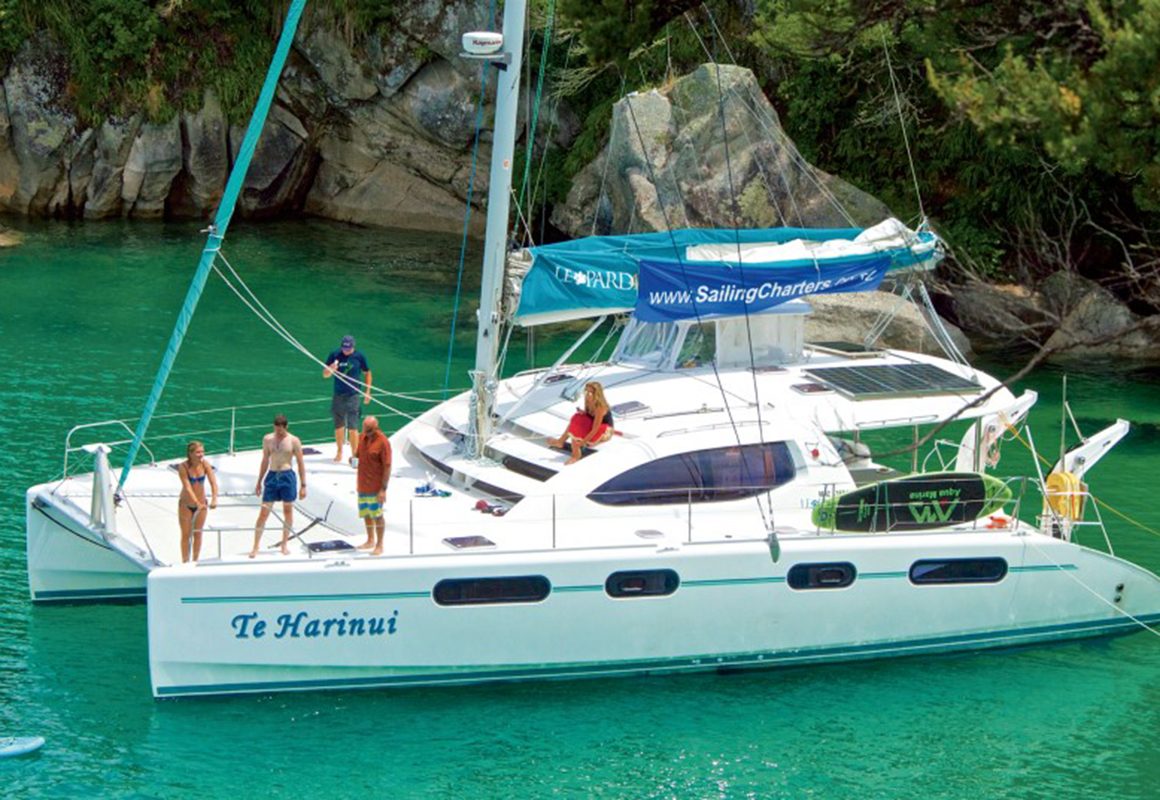
The company is now refurbishing a 16m sailing catamaran (scheduled for a November relaunch) which will sail from Kaiteriteri. It has comfortable, sheltered seating for up to 40 sailors – ideal for the company’s programme of combination sail, walk, cruise and kayak tours.
The Covid pandemic also saw the company re-evaluate its operation, resulting in some new sailing holiday options for New Zealanders.
“We want to show New Zealanders that we live in one of the world’s most scenic countries. We’ve designed our trips to have low environmental impacts, we only need the wind in our sails and some adventurous sailors to move us forward.”
LOOKING FOR PLEASANT MEMBERS
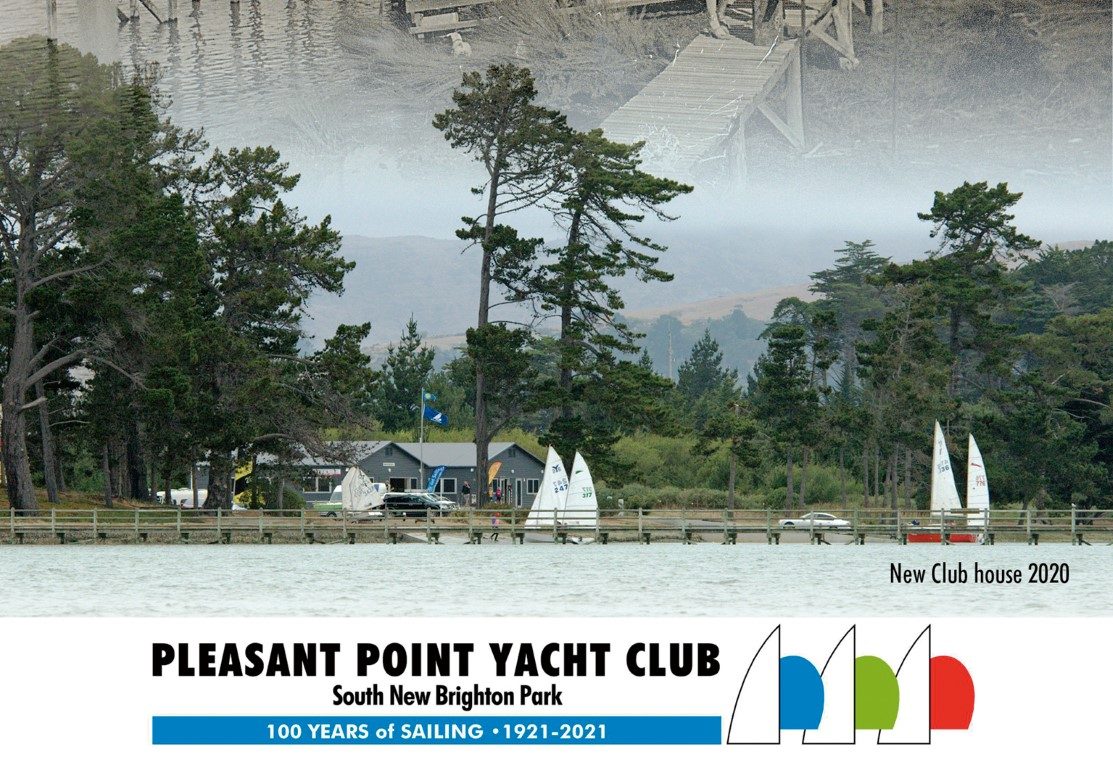
Christchurch’s Pleasant Point Yacht Club celebrates its centenary next February and the committee is extending an invitation to all previous members to attend the club’s celebrations.
Originally called the Boat Club when it was established in 1921 on the shores of the estuary in an area then known as Pleasant Point Domain, it was renamed Pleasant Point Boating Club in 1924. Five years later it moved to the western shore to an area of mud flats (now Rat Island) at the mouth of the Avon River.
The land was improved and over the years the club facilities were built, introducing a summer-long sailing programme of racing. So it remained until the first of the Canterbury earthquakes a few years ago damaged the buildings and land beyond repair.
Finding a new site (and the rebuild) took nine years, but the club is back in the South New Brighton Park with new facilities that opened in September 2019 – just a stone’s throw from where it all began in 1921.
The Centennial celebrations are scheduled for Waitangi Weekend, with a Noggin ‘n Natter on the Friday evening. The club’s main open event – the Sullivan Cup – will be held the next day, coupled with another trophy, the Arch Lamb Trophy for the Sunburst Class. Saturday’s racing is to be followed by a celebration dinner.
The club’s iconic Classic Yacht Race – first sailed at its 75th celebrations – will be held on Sunday. This will be coupled with a display by the members of the Classic Boat Group of Canterbury. Organisers also hope to stage a display of vintage cars.
JIM YOUNG ONZM
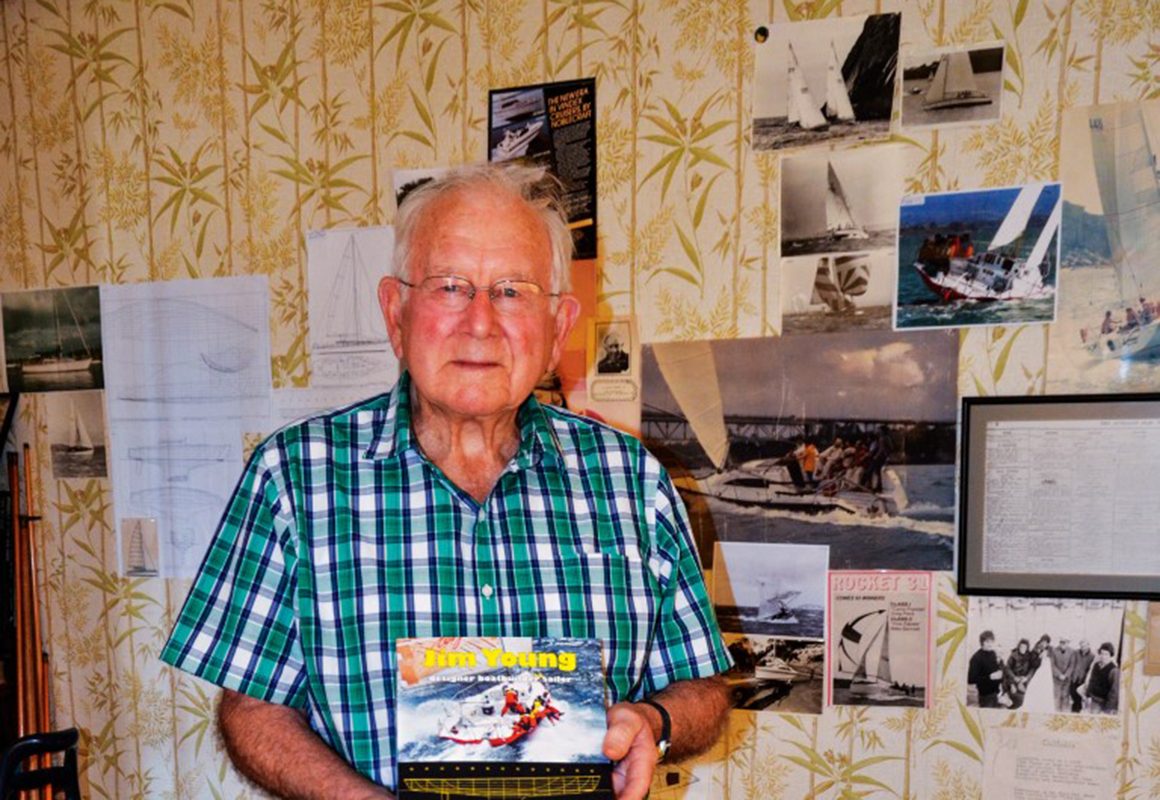
Boating New Zealand was saddened to hear of Jim Young’s final bar crossing on 18th June. One of this country’s most innovative designer/boatbuilders, summarising Young’s career in a few words is a difficult task.
Born in Wellington in 1925, he began his boatbuilding apprenticeship with Shipbuilders Ltd in 1940 and spent the latter part of WWII working at Associated Boatbuilders building Fairmile launches.
After the war he served with the J Force in Japan for 18 months, before going into partnership to build dinghies with the late Jack Taylor.
Young went out on his own in 1949 and within a short time was making a name for designing and building innovative boats. Keelers such as Tango and Fiery Cross had features – a spade rudder and a canting keel respectively – years ahead of their time. A pioneer advocate of multihulls, Young built his first catamaran in 1953. His 1958 3.6m Kitty catamaran was so fast it was banned from the Q Class. Young later designed numerous fast cruising multihulls.
In 1961 he designed and built the 10m planing launch Vindex, which became the archetypal launch of this type. He eventually designed a whole range of launches including GRP production versions based on Vindex.
In the 1970s Young designed, built and skippered the IOR racing keelers Checkmate and Heatwave, the lessons learned being incorporated into hugely successful racing yachts such as Positive Touch, Extreme and Camp Freddy.
He also developed a comprehensive range of stitch-and-tape trailer sailers and dinghies for amateur builders, with many hundreds being built.
His cruiser/racer keelers such as Namu and Jipco were so successful they became stock production boats, while his 8.8m cruiser/racer Tickled Pink became the plug for the GRP production Young 88. Designed in 1980, over 180 Y88s were built and the class remains hugely popular today.
While he officially retired in 1990, he never stopped designing. Sadly, few of his later designs were built.
“Most of my ideas just sail across the drawing board these days,” he wryly told me a few years ago. But he remained keenly interested in boats – from classics to the latest AC creations – right to the end of his life.
Young was highly regarded by his peers, who typically described him as “brilliant”, “genius”, “lateral thinker”, “innovative” and “fearless.” He was awarded an Officer of the New Zealand Order of Merit in 2012.
He’s survived by his wife Anne; children Frank, Adrienne and Wendy; grandchildren Arron, Stephen, Jenni, James, Alix and Kelsey; and 11 grandchildren.
By John Macfarlane
KAI MOANA FROM CONTAINER
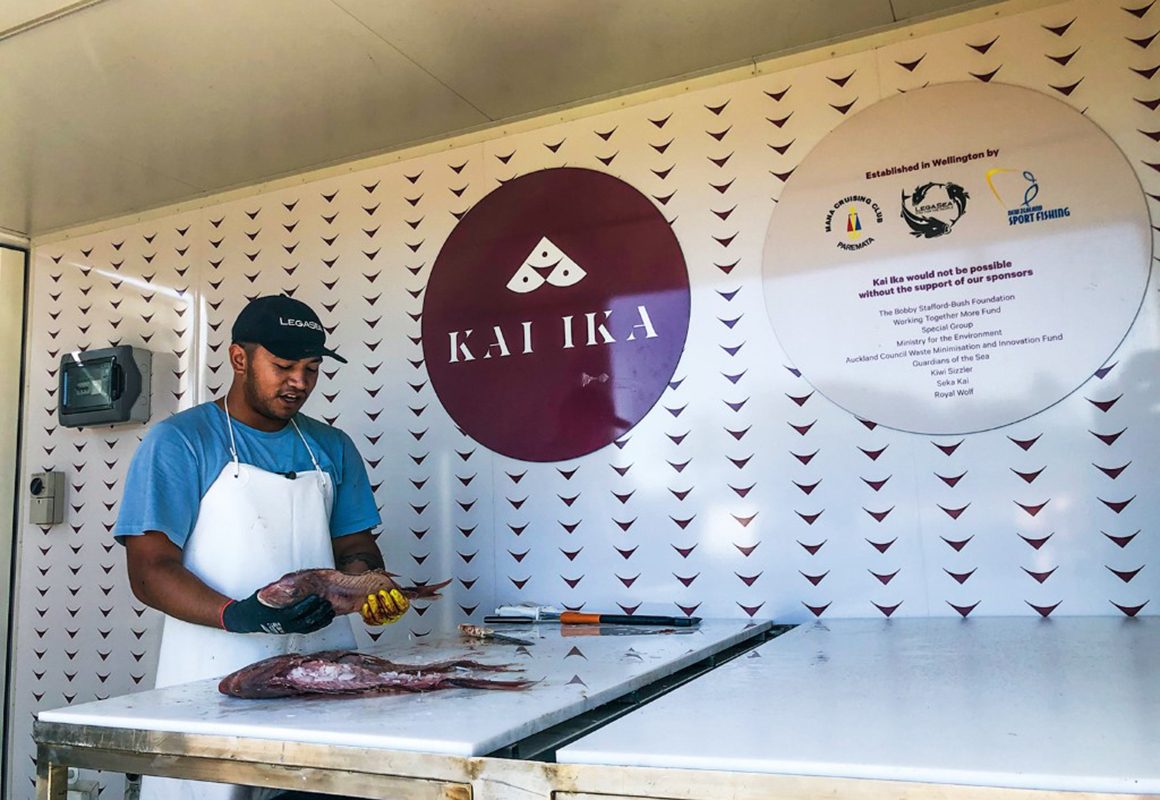
A 20-foot shipping container modified into a fish-filleting station and distribution hub has seen a Mangere marae significantly increase its supply of fish heads and frames to feed families in need.
Located at Papatūānuku Kōkiri Marae, the bespoke structure was created by Royal Wolf (an Australasian company specialising in the hire, sale and modification of new/refurbished shipping containers) for the Kai Ika Project. Kai Ika redistributes fish off-cuts – which would normally go to waste – to the local community.
Project leader Sam Woolford says the container is the centrepiece of Kai Ika’s operation at the marae, and there are plans to roll out the initiative nationwide.
“It’s a practical solution that’s elevated the whole project. It’s allowed us to go from 250 kilos a week through to 1,000 kilos a week and service three other marae.” He adds that the benefit of the container’s increased capacity was underscored during the COVID-19 level 4 lockdown when queues for collecting fish were 400m long.
“Kai Ika is all about kaitiakitanga, or guardianship, but it’s also about manaakitanga – support and caring for others. It shows how a simple adjustment in thinking and behaviour is having a positive impact in the community and helping many families as well as the environment. The container is a gathering place where people come together to fillet and collect the fish heads, frames and offal.”
Lionel Hotene from Papatūānuku Kōkiri Marae says the food the marae produces, which also includes kumara and other vegetables, helps address some of the food insecurities that many people in the community face and encourages a move away from fast food.
“The container takes us to another level by offering a better service to our people. It’s very professional, it’s something you probably wouldn’t [normally] see in South Auckland. This is real top-class, A-grade stuff.”
LegaSea, a not-for-profit organisation raising awareness of issues affecting the marine environment, started Kai Ika in 2016 to help feed communities in need. Kai Ika has been operating in Auckland in partnership with the Outboard Boating Club of Auckland on Tamaki Dr and at the Z Pier Charter Fleet at Westhaven Marina.
The container has easy access from both the front and sides to allow easy movement and loading of bins of fish parts. It is lined internally to create a cooler temperature during summer and the specialist electrical fit-out enables the unit to be washed out daily.
GOLD FOR BOI REGATTA
New Zealand’s biggest multiday keelboat sailing event, CRC Bay of Islands Sailing Week, has received a Gold Level Clean Regattas certification for its “extraordinary waste management efforts” during the January 2020 event.
Ocean conservation group Sailors for the Sea operates the Clean Regattas programme, which it says is ‘the world’s leading sustainability certification for on-water events’. CRC Bay of Islands Sailing Week Chairperson Manuela Gmuer-Hornell says the award is a clear indicator of their commitment to operating in an environmentally responsible way.
“We’re all sailors, organisers and participants, and we all love the ocean,” she says, “so it’s important we do our bit to protect it. The beauty of the local area is a big drawcard for us too, so we want to preserve it for the future.”
The regatta’s sustainability initiatives included waste minimisation, carbon reduction, buying local, educating participants and engaging with sustainability partners.
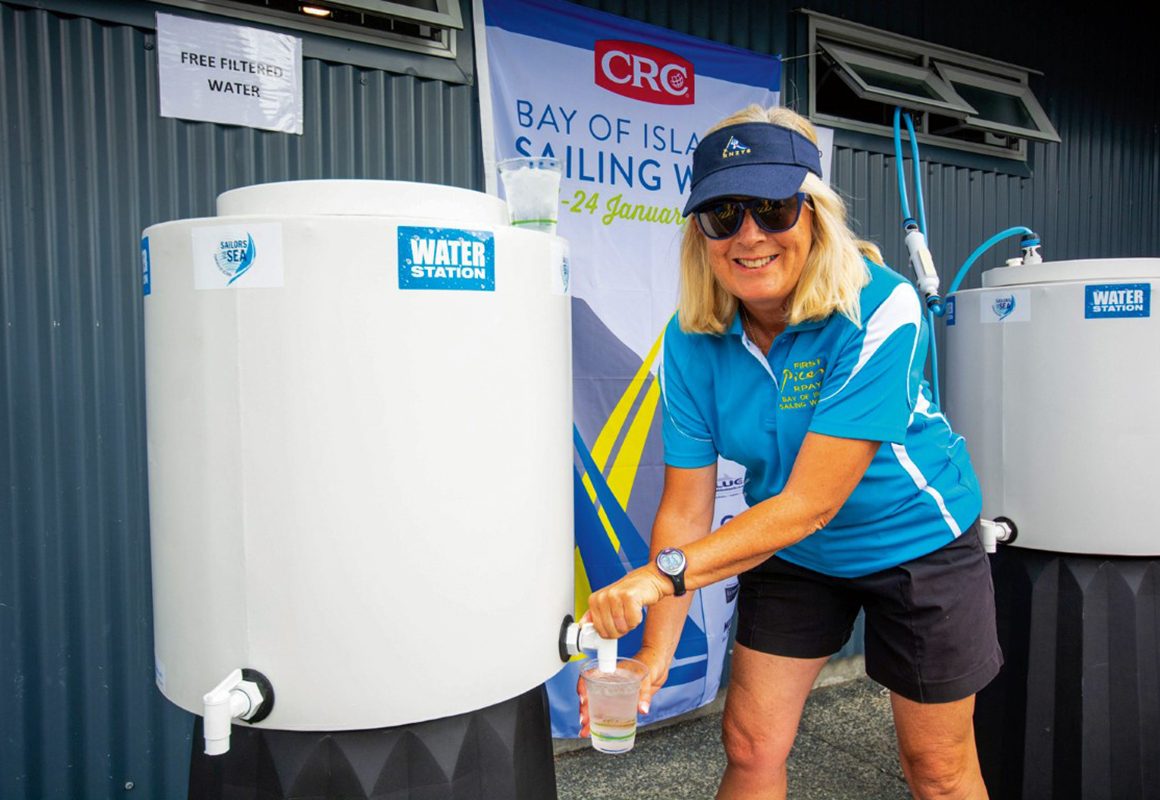
“We looked at every aspect of being more sustainable,” says Gmuer-Hornell. “One of the simpler changes was switching to reusable bottles with free water-refilling stations. Considering that there are probably 1,000 sailors and volunteers drinking at least a couple of bottles of water a day, over three days, that saved 6,000 single-use plastic bottles alone.”
They worked with local community group Russell Recyclers to help with waste minimisation, composting and recycling wherever possible, which resulted in a 75% reduction in waste going to landfill.
The organising committee also used video conferencing for committee meetings (eliminating the need for car travel), created an app to communicate documents digitally instead of printing, and enforced a no-discharge rule for competitors to eliminate pollution from boats entering the water.
The next CRC Bay of Islands Sailing Week is scheduled for 26–29 January, 2021. Organisers say they will be looking for ways to upgrade to Platinum level next year – the highest possible sustainability certification under the Clean Regattas programme.
Photo: Lissa Reydon


