
DICKSON DOUBLE IN TASMAN CHALLENGE
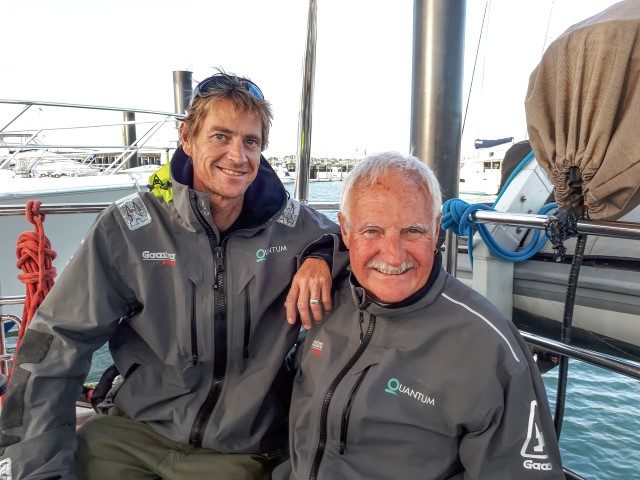
“I was pretty pleased to beat him,” said Hamish. “He’s a very good sailor.” Malcolm crossed the line 12 hours later in Sarau. “It’s good to be beaten by your son in a boat you designed-and-built yourself,” he smiled.
The two led the six-boat fleet that started from New Plymouth on 1 April for the 13th singlehanded trans-Tasman yacht race between New Plymouth and Mooloolaba, Queenland. The 1300nm race has been held every four years since 1970. It is the second longest, continually competed singlehanded ocean race in the world (after the OSTAR) and the only one of its kind in the southern hemisphere.
Bad weather prevented five Australian entrants for this year’s race from sailing across for the start but, in the event, the race developed into a bit of a light air drifter with tail-ended Graeme Francis in Robbery taking 17 days to make the crossing, a week behind the first yachts.
Malcolm sailed the 1978 solo Tasman race and tussled with David How in Ocean Gem, a Beneteau 445, for second place, swapping positions several times.
Diehard Aussie, Kevin le Poidevin, sailed the same Sigma 36 Rogue Wave, which he skippered in the 2014 event and kept close cover on Wellingtonian Geoff Thorn in his Bavaria 38 Am Meer.
The 1986 race record set by Ian Johnstone sailing the trimaran Bullfrog Sunblock was six days, eight hours and 50 mins which was only just eclipsed in 2014 by Austrian circumnavigator, Reini Gelder. He completed the course in six days, seven hours and 13 mins in Ave Gitana – a Lock Crowther-designed sistership of the previous record holder.
$500M LIFELINE FOR GREAT BARRIER REEF
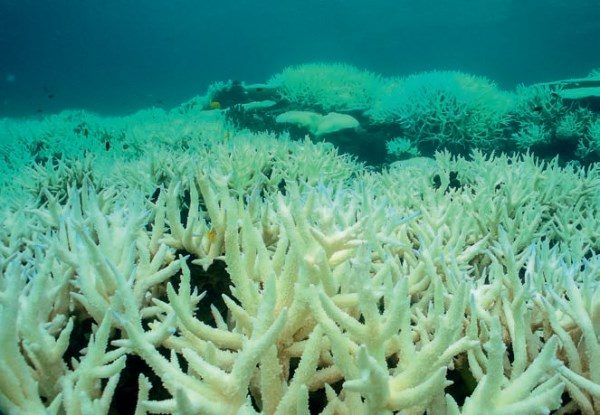
The funding, confirmed in the May budget, follows a recent study which found that 30 percent of the reef’s coral died in a nine-month marine heatwave in 2016.
In partnership with the Great Barrier Reef Foundation, the funds will tackle crown-of-thorns starfish, reduce pollution and mitigate the impacts of climate change.
The Marine Park Authority will also receive an additional $42.7 million for its joint field management program over the next six years. After that, the Marine Park Authority will receive a guaranteed ongoing funding increase of more than $10 million per year for field management – doubling the Australian Government’s contribution to the program in the long-term.
Great Barrier Reef Marine Park Authority Chairman Dr Russell Reichelt welcomed the funding, saying it was a “game changer” as it significantly ramped up reef programs and protection and provided an ability to seek co-funding from private investors and philanthropists.
“This is a hugely positive outcome for the Great Barrier Reef and comes at a critical time after back-to-back mass coral bleaching triggered by the increasing pressure of global warming.”
SHIPPING TO SLASH EMISSIONS
The new international agreement follows a recent meeting of representatives from more than 170 nations at the International Maritime Organisation (IMO) in London. Countries that voted against the move included Brazil, Saudi Arabia and the US.
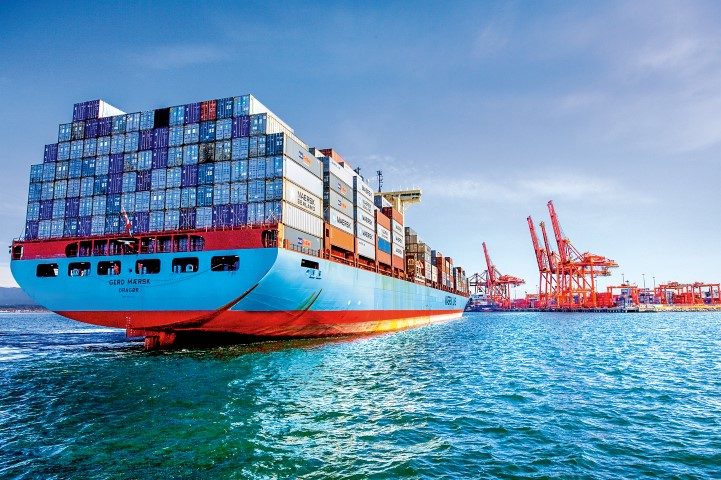
Like aviation, the global shipping industry has traditionally been excluded from climate change initiatives such as the Paris Agreement because they’re deemed to be an international activity. But shipping is a major pollution problem.
The International Council on Clean Transportation estimates that, if treated as a country, shipping would be the world’s sixth largest emitter of carbon dioxide – about the same as Germany.
This new development agreement is widely interpreted as the global shipping industry finally acknowledging that the move away from fossil fuels is inevitable and fast approaching.
A recent study by the Organisation for Economic Cooperation and Development found that using known technologies, including alternative fuels – and even electric or wind-assisted ships – could almost completely decarbonise the sector by 2035.
The UK’s shipping minister, Nusrat Ghani, says his government will be supporting the industry in the development of green technologies and fuels, and that these would provide opportunities for growth for UK maritime companies.
The IMO agreement is seen as particularly significant for Pacific island nations threatened by rising sea levels. Says the Marshall Islands’ environment minister, David Paul: “[This agreement] will determine whether Marshallese children born today will have the chance of a secure and prosperous life or will have to leave the land of their ancestors and set sail across the oceans to an uncertain future.”
Meanwhile, a new EU satellite tasked with tracking dirty air will become a powerful tool to monitor shipping emissions.
Sentinel-5P-Tropomi (S5P) was launched in October last year and recently completed its commissioning phase and has been monitoring nitrogen dioxide emissions.
Nitrogen dioxide is a product of marine diesel combustion, as well as the diesel used by motor vehicles. The new satellite allows operators to monitor emissions in far greater detail than before.
“The resolution from our previous instruments was about 20km by 20km,” says Pepijn Veefkind, an investigator with the Dutch met office. “Now, we’ve gone down to 7km by 3.5km, and we are thinking of going to even smaller pixels.”
By knowing the size of the global fleet, where it moves, the ships’ specifications and how much fuel they are likely consuming – it is possible to estimate how much CO₂, or indeed NO₂, is being pumped into the atmosphere from exhausts.
FLOATING NUKE STATION
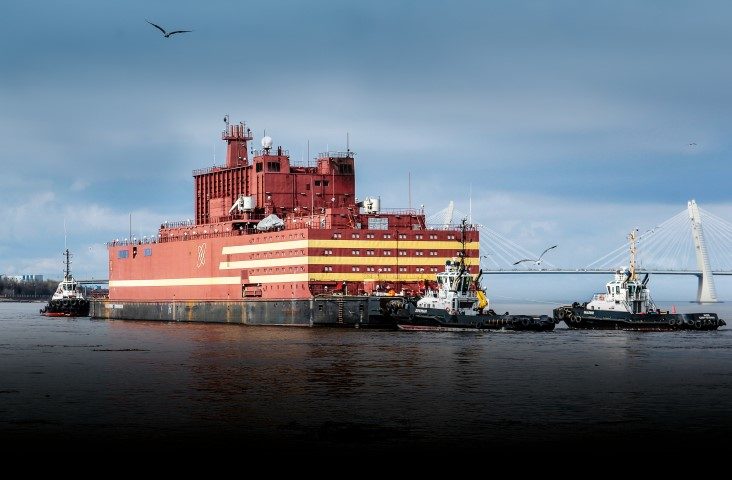
The 21,500-tonne Akademik Lomonosov – equipped with two nuclear reactors – is headed to the port town of Pevek where it will power the town and oil rigs when its reactor shuts down next year.
The 144m behemoth has a crew of 69 and provides 70 megawatts of electricity. It will eliminate the need for about 45,000 tons of fuel or diesel oil, says its manufacturer, OKBM Afrikantov.
Greenpeace has condemned the project as a ‘floating Chernobyl’ and ‘nuclear Titanic’, but the ship’s owner Rosatom says the design is considered very effective for generating electricity in remote areas and can be moved on if not required or be used to power desalination plants.
Russia has at least another seven floating nuclear reactors planned and China is working on building its own for launching in 2020.
Countries such as Algeria, Indonesia, Malaysia, and Argentina have shown interest in hiring the ships.
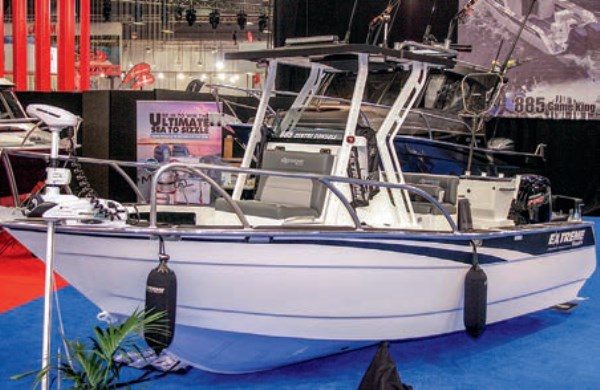
...AND THE WINNERS ARE...
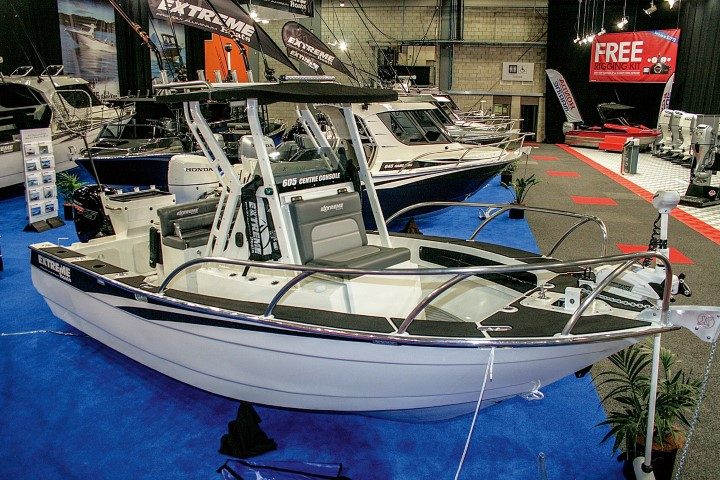
Above: Extreme 605 CC
Organisers say attendance at this year’s event was about 10 percent up on previous shows – which typically attract around 35,000 visitors.
The 2018 show also presented more display space than ever before. All good news for the industry.
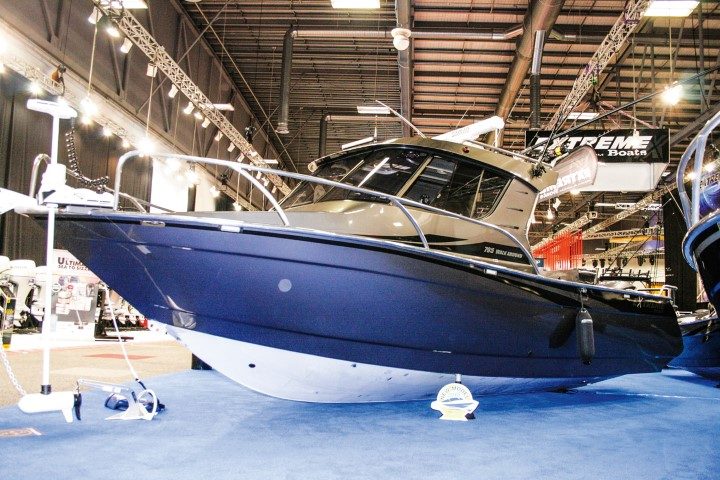
Above: Best New Model: Extreme 795 Walk Around
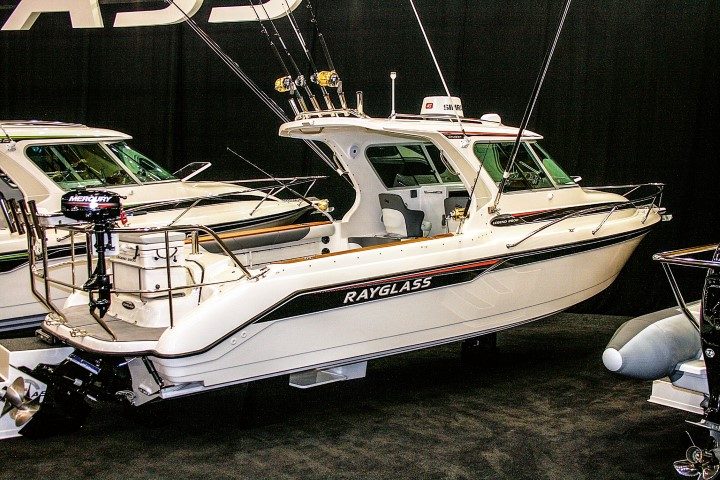
Above: All Purpose Family Boat Open: Rayglass Legend 2800
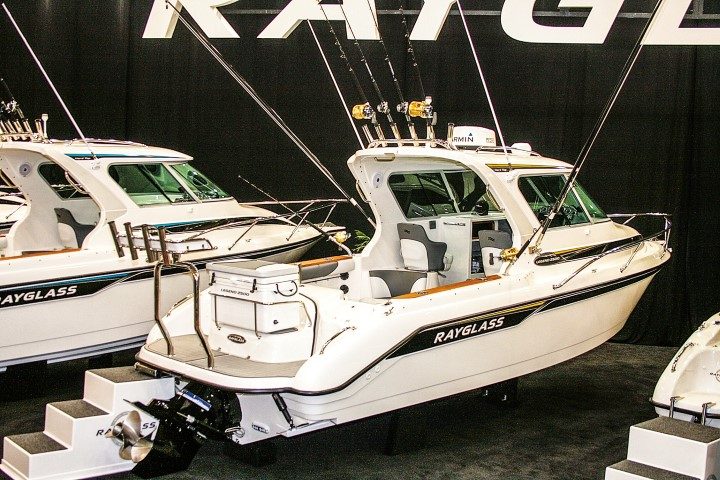
Above: All Purpose Family Boat up to 8m: Rayglass Legend 2500
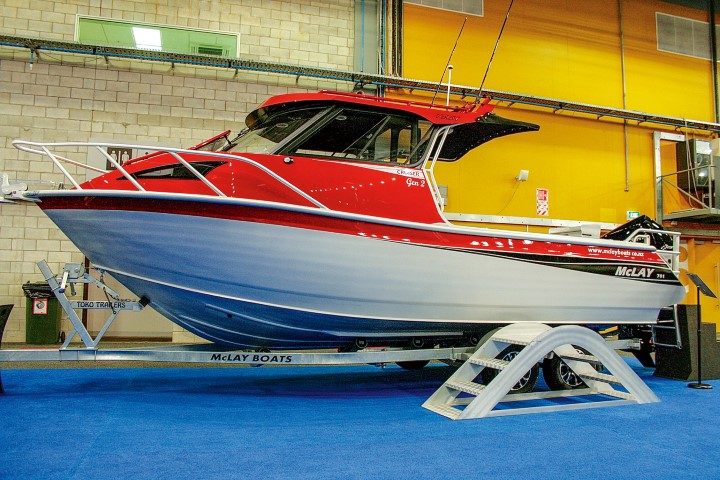
Above: All Purpose Family Boat up to 7m: McLay 701 Gen 2 Extracab
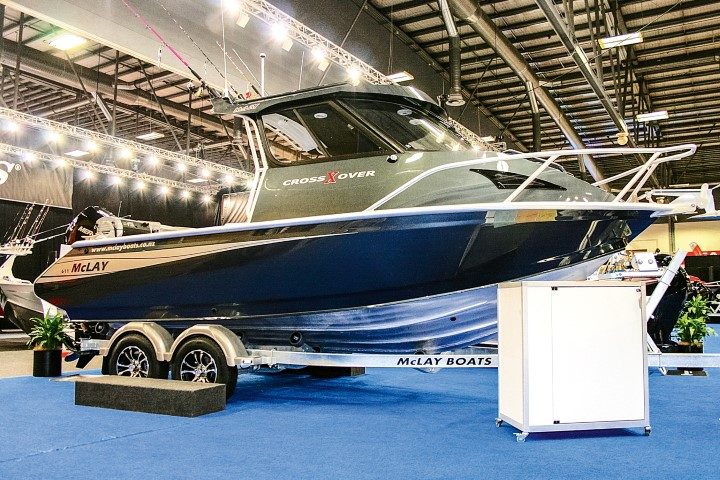
Above: All Purpose Family Boat up to 6m: McLay 611 CrossXover
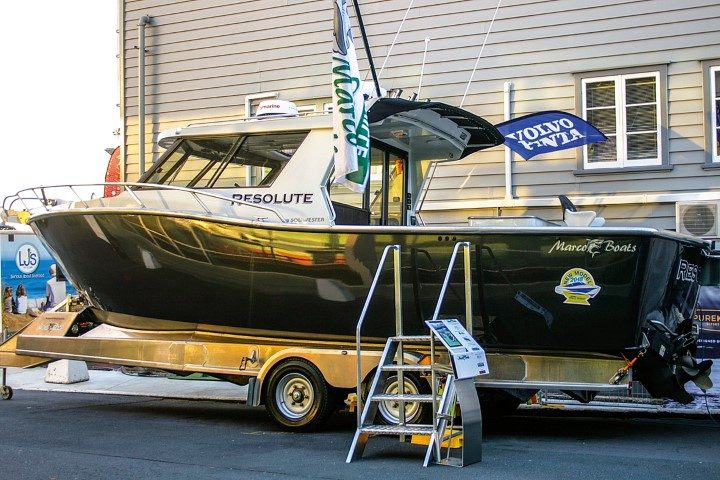
Above: Specialist Fishing Boat Open: Marco 950 Souwester
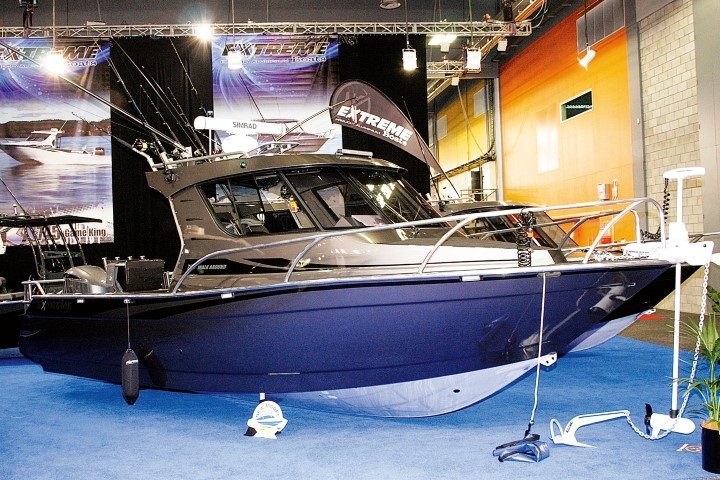
Above: Specialist Fishing Boat up to 8m: Extreme 795 Walk Around
Specialist Fishing Boat up to 7m: Extreme 605 Centre Console
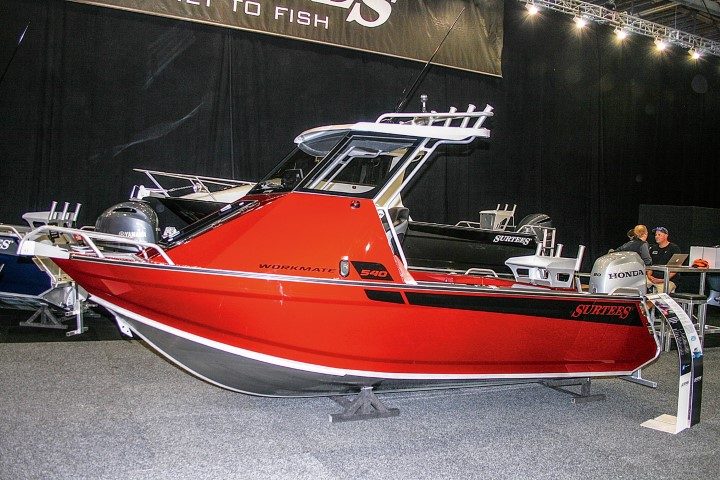
Above: Specialist Fishing Boat up to 6m: Surtees 540 Workmate
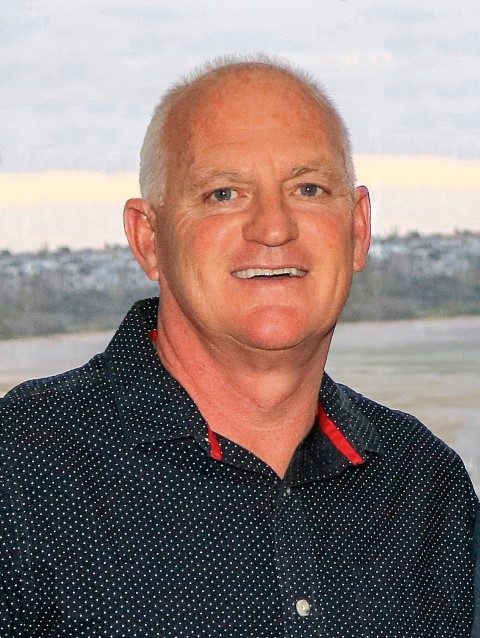
Above: New Zealand Boat Show Hall of Fame Inductee: Tony Hembrow
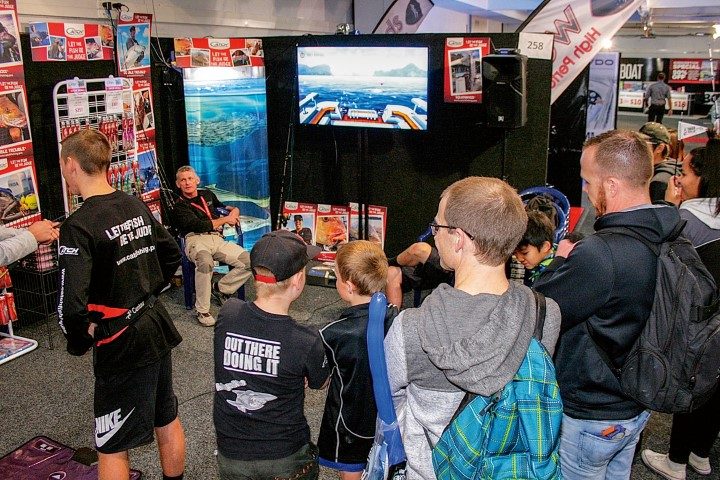
Above: Tenob Wholesale Marine Best Interactive Stand: Catch Fishing Tackle
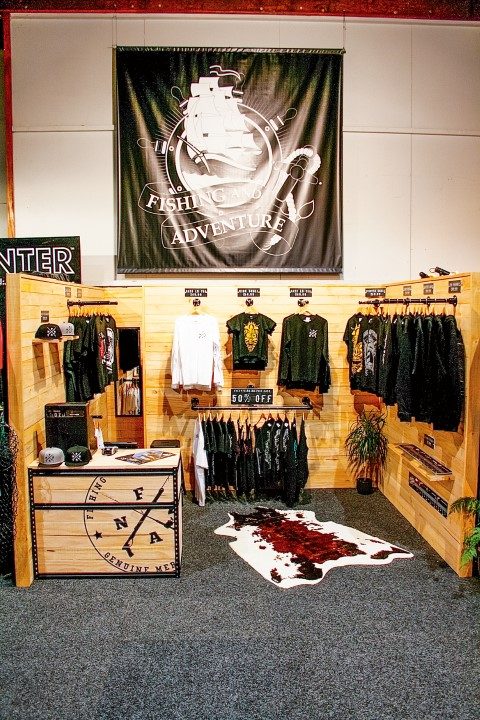
Above: Tenob Wholesale Marine Best Small Stand: Fishing & Adventure
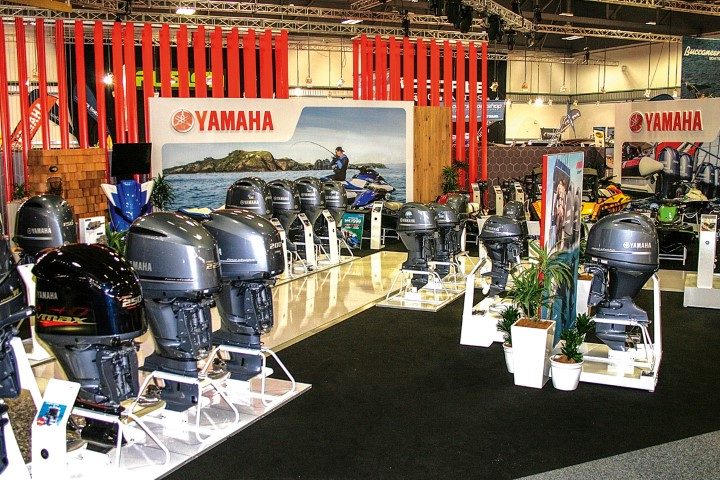
Above: Tenob Wholesale Marine Most Innovative Stand: Yamaha Marine NZ
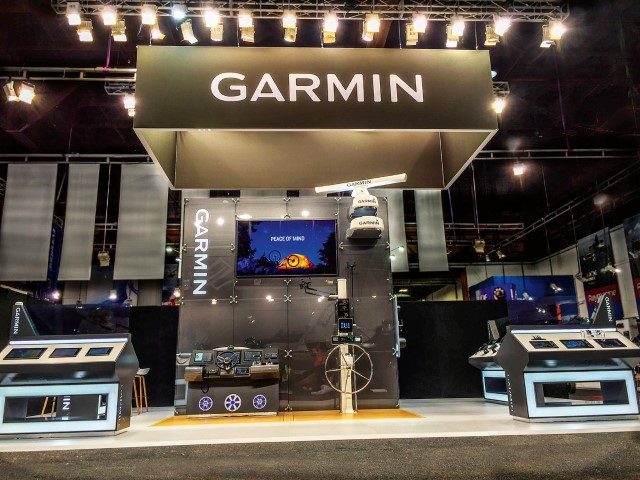
Above: Tenob Wholesale Marine Best Commercial Stand: Garmin
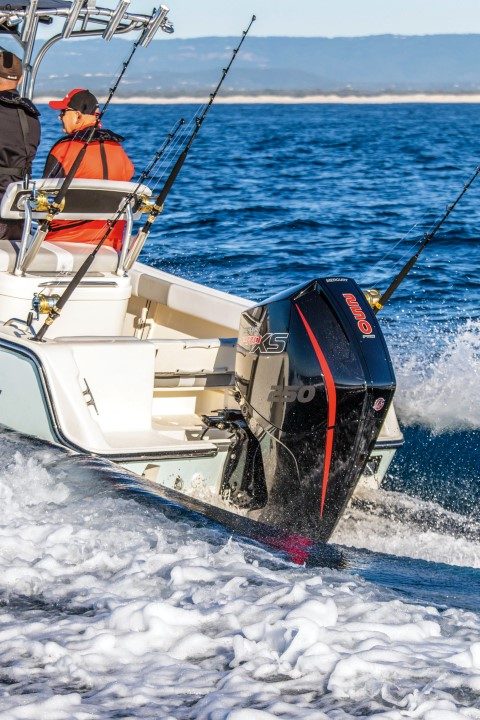
Above: Altus Most Innovative International Product: Mercury V8 Outboard Engines

Above: Altus Most Innovative Local Product: Fusion Apollo Series MJ-AP770
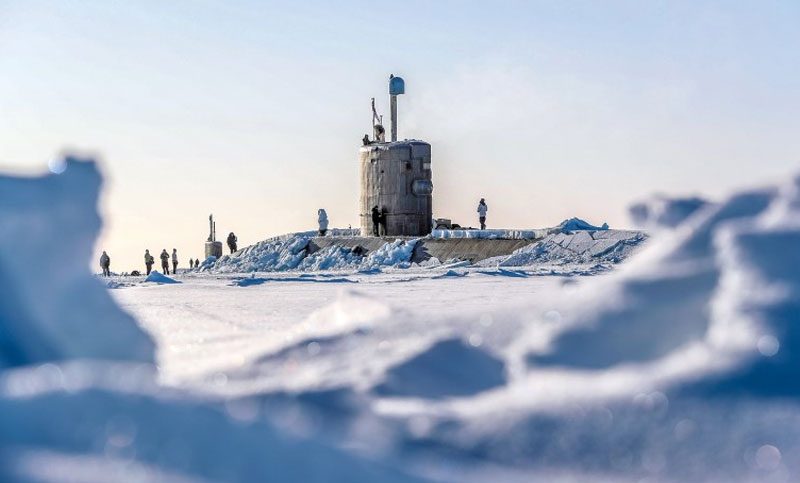
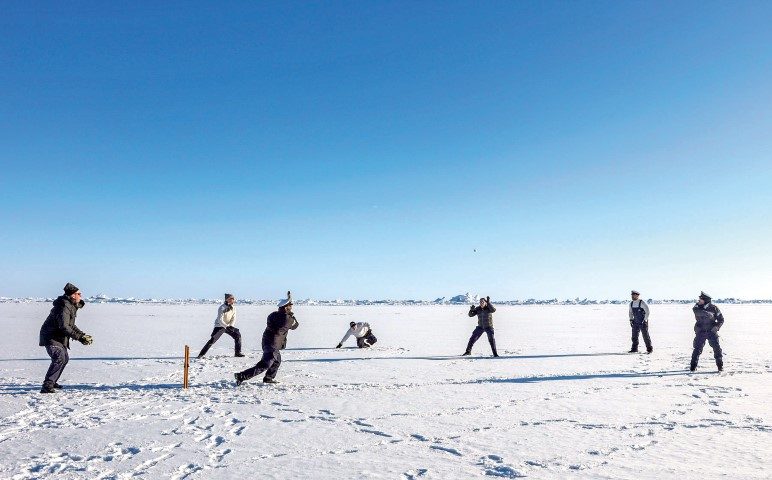
HOWZAT ON TOP OF THE WORLD
This impromptu game took place near the North Pole in April when the Royal Navy submarine HMS Trenchant broke through the ice.
The hunter-killer sub was training with two US subs – the USS Connecticut and USS Hartford – an exercise co-ordinated by the US Navy’s Arctic Submarine Laboratory. The trials were designed to test submariners’ skills in operating in the frigid climate of the Arctic Circle.
They also allowed the crew to test a range of equipment, notably sonar, against live ‘targets’ and to practice tracking and simulating attacks against other submarines.
Batting and bowling through freezing temperatures, the team enjoyed the clear blue skies in one of the coldest places on earth.
Photo: HMS Trenchant was one of three submarines that broke through the Arctic ice – triggering an impromptu game of cricket.
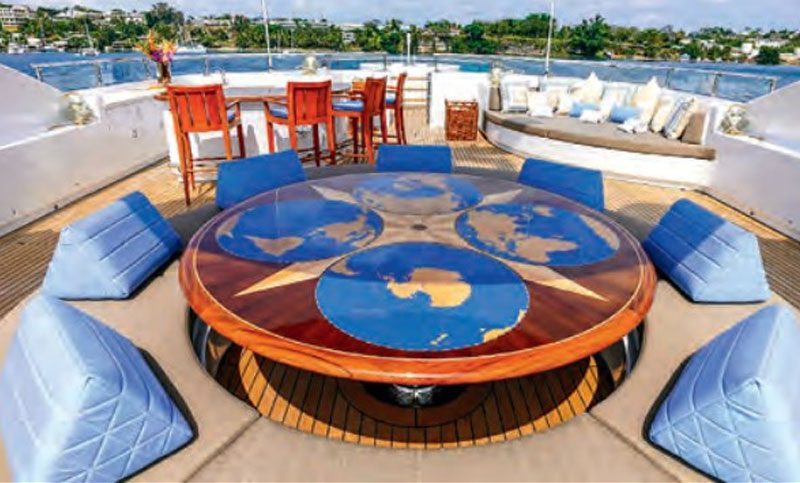
ORAMS NOMINATED FOR TOP AWARD
The extensive refit included a full repaint, engineering and major structural work on the vessel, which has traversed the North West Passage twice. She had covered 40,000 nautical miles through some of the world’s harshest conditions prior to reaching Auckland.
The interior of the flybridge was removed in its entirety so that the structure and joinery could be completely remodelled. The addition of a bar and jacuzzi as well as mood lighting created a completely new space, and the structure was rebuilt in composite to reduce the weight of the upper deck and future-proofed it against corrosion.
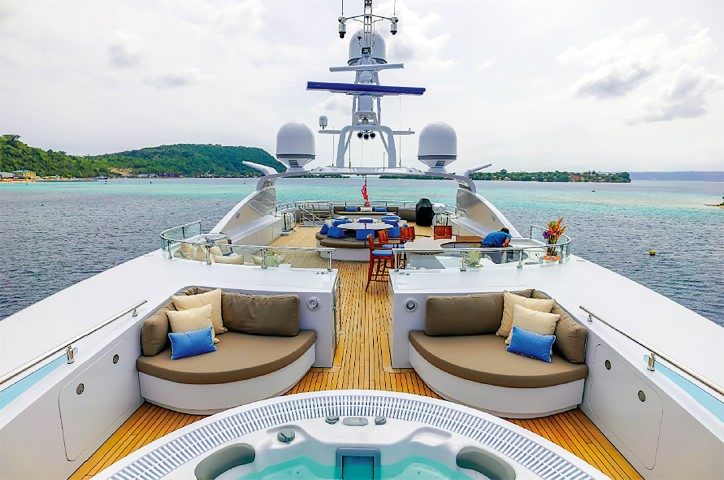
The refit also saw the two main engines rebuilt, two generator replacements, shaft seal and bearing replacements, hydraulic system overhaul, bow thruster overhaul and watermaker overhaul.
The project saw 12 months of work completed in 184 days – an ambitious target time frame set before work began.
This isn’t the first time Orams’ refit work has drawn accolades. It’s refit of the 44m Shenandoah of Sark reached the finals of the 2010 World Superyacht Awards.
SAFETY HARNESS GREMLIN
The incident – where crew member, Simon Speirs fell overboard from the yacht CV30 – is being investigated by the UK’s Marine Accident Investigation Branch.
Spiers was participating in the third leg of the Race – between Cape Town and Fremantle – and was attached to the yacht by his safety harness tether. The hook at the end of the tether was clipped to a jack-line, but deformed under load and released, resulting in him falling overboard. He was recovered unconscious but could not be resuscitated.
INITIAL FINDINGS
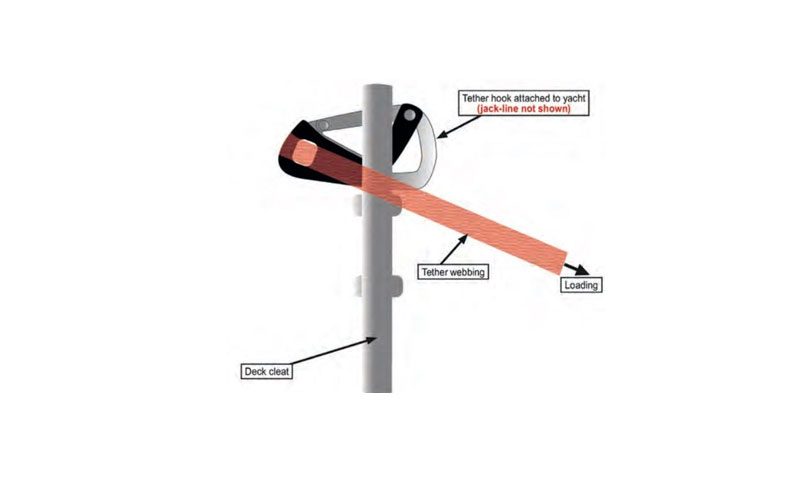
Speirs was using a three-point webbing tether. The hook at the end of the tether became caught under a deck cleat (Figure 1), resulting in a lateral loading that distorted the hook to (Figure 2), causing it to release.
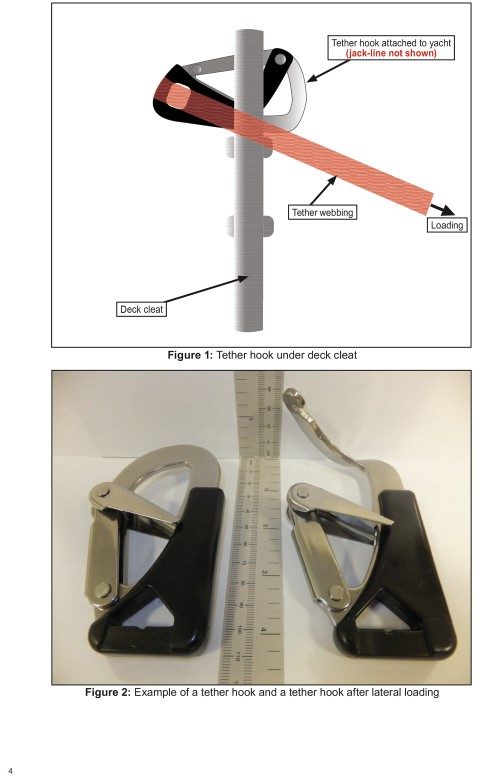
The harness tether was certified under ISO12401 (Small craft – Deck safety harness and safety line – Safety requirements and test methods), the international standard applicable to this equipment.
The standard assumes the tether and its hooks will be loaded longitudinally rather than laterally. When loaded longitudinally, the tether can withstand a load of over 1 tonne. But when loaded laterally it will deform at much less load.
It is important that tether hooks remain clear of obstructions and are free to rotate to align the load longitudinally. For more information visit www.gov.uk/maib.

FINDING ENDURANCE
The loss of the ship under the ice triggered one of history’s greatest survival stories. Shackleton and his 27 men spent weeks on the ice before using the ship’s lifeboats to reach nearby Elephant Island in the South Shetland Islands.

The most remarkable part of the epic, though, saw Shackleton and five others sail the jury-rigged James Caird lifeboat 800 miles from Elephant Island to South Georgia – across treacherous, freezing waters with scant navigational equipment. The remainder of the crew were rescued in August 1916.
A number of previous expeditions to find the Endurance have failed.
Beginning in January next year, a British-led team from Cambridge University’s Scott Polar Research Institute will use autonomous underwater vehicles to travel almost two miles under the ice, using co-ordinates taken by the Endurance’s captain, Frank Worsley, as the ship sunk.
A rival expedition is being launched by US shipwreck hunter David Mearns, who has been studying Endurance for more than 15 years.
FINER POINTS OF ANCHORING
The company’s managing director, Dean Horgan, initiated the seminar after witnessing anchoring carnage during over Christmas holidays, when numerous boats had to contend with cyclone Fehi.
Dragged boats, tangled anchor lines, damaging collisions – you name it, says Dean, I saw it.
A seminar about the better techniques of anchoring – presented by experts – seemed a good idea. He began with the closest group he knew – the owners of the Riviera boats he sells.
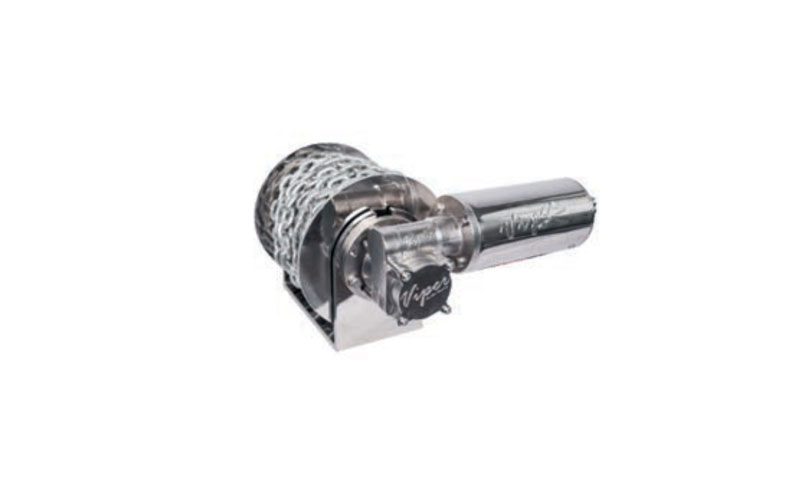
The seminar – held in early April – was attended by around 50 people. Guest speaker was Steve Mair from Manson Anchors and Elvis Aitchison from Lusty and Blundell (covering the winch aspects of anchoring).
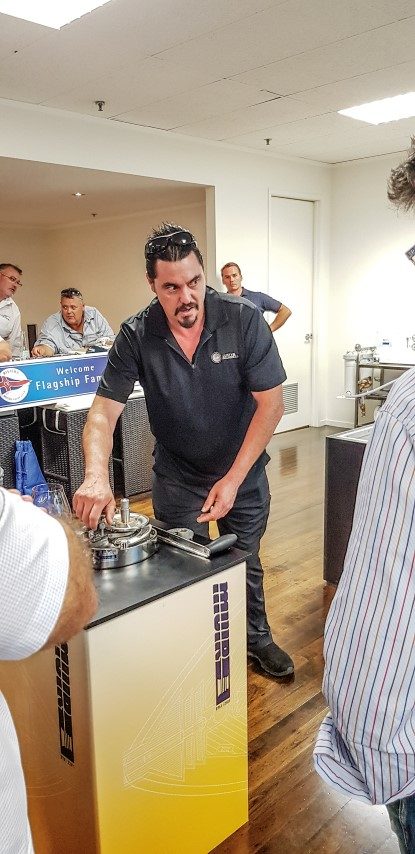
Mini anchors and a sand box were on hand to demonstrate how to drop and set an anchor.
Modern anchors are a lot easier to set than older designs, but the same principles still apply for ensuring the correct amount of rode is let out for the depth of water.
With modern boats and powerful engines care needs to be taken when ‘setting’ the anchor to ensure it and the chain are not overloaded.
Lively discussion ensued, as everyone appreciated that an anchor was often the one piece of equipment that ensured the safety of the vessel, as well as allowing a good night’s sleep.
Steve’s key advice? Choose the right-size anchor. If in doubt go bigger. If you have more doubt – go bigger again! He also strongly advised having a second anchor on board.
Lusty and Blundell’s mobile caravan was available for participants to check out some of the latest electronic equipment available. A good place for learning how to set your GPS anchor alarm!
Additional seminars covering a wide range of topics are being developed by Flagship Marine.
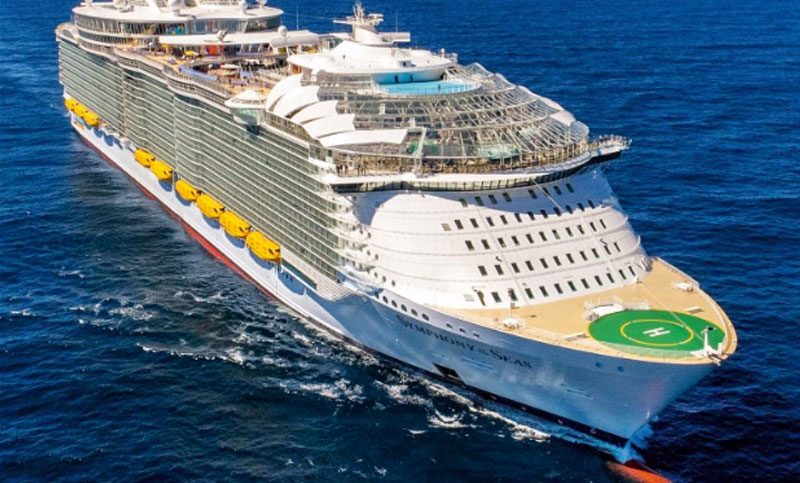
LUXURIOUS BEHEMOTH
Boasting more cabins than any other vessel afloat and with room for 6,680 passengers, the just-launched, 228,081-ton Symphony of the Seas is the world’s largest ocean liner.
She’s a slightly larger version of the third ship in Royal Caribbean’s Oasis Class, the 22-month-old Harmony of the Seas. Harmony, in turn, was a bit bigger than the first two Oasis Class vessels, Oasis of the Seas and Allure of the Seas.
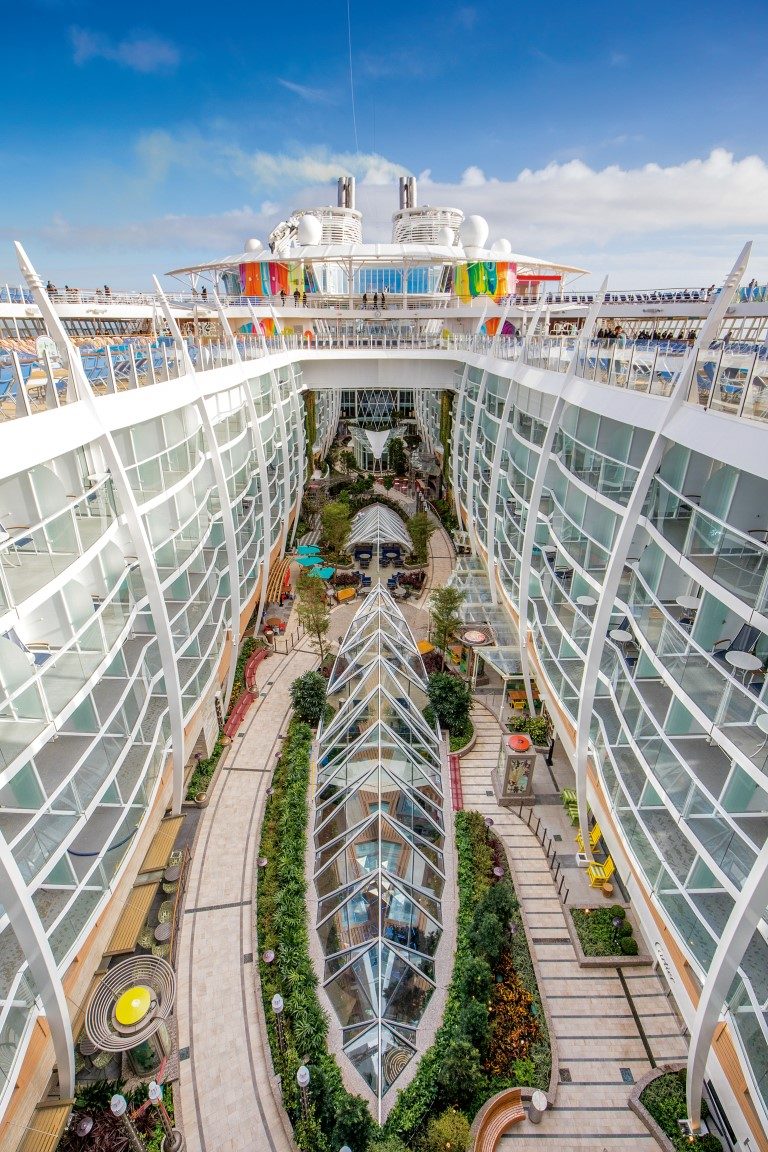
Boardwalk
Designed for vacationers who love big, bustling mega-resorts, the Oasis Class vessels have made waves in the cruise industry since they began debuting in 2009. All of the Oasis Class ships currently at sea are in excess of 225,000 tons — more than 30 percent larger than the next biggest cruise vessels.
Royal Caribbean CEO Michael Bayley says the line’s focus is on building vessels with an ever-growing array of attractions and activities for vacationers – and this inevitably results in ever-bigger ships. “We design for maximum fun, entertainment and vacation experience, and end up with big ships.”
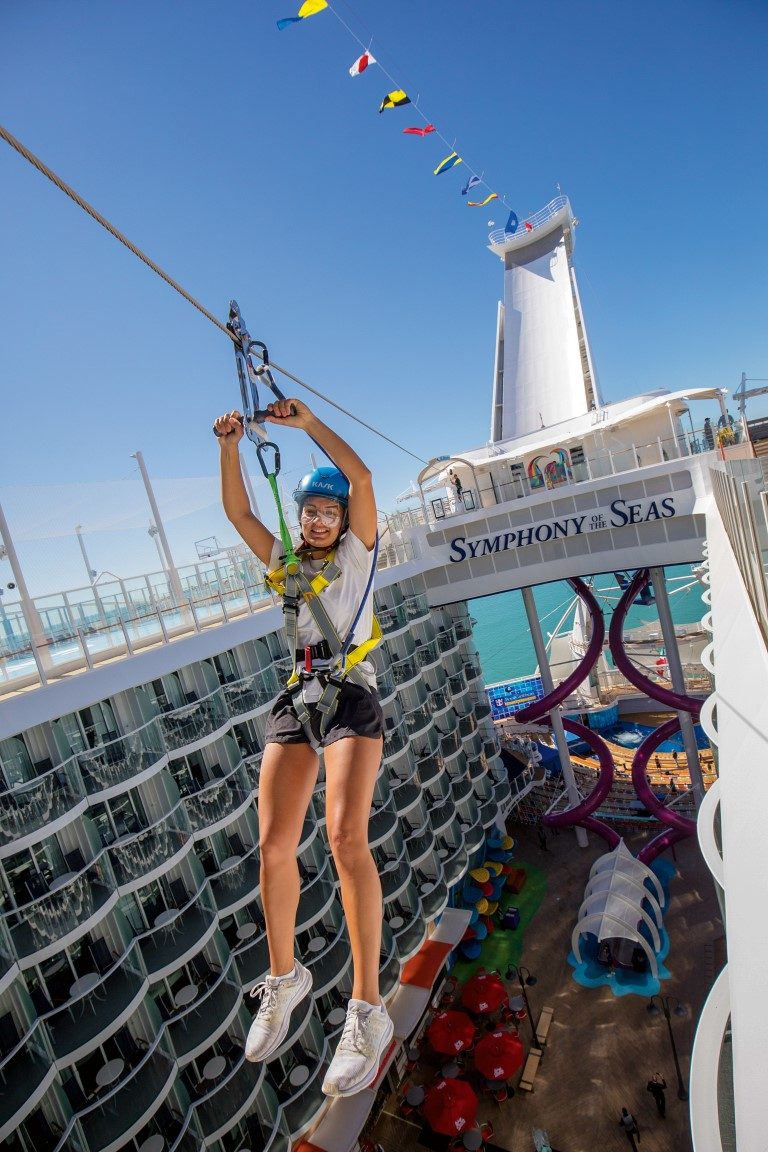
Zip Line
Symphony eclipses Harmony by more than 1,000 tons and offers several new features including a revamped Boardwalk amusement area and a new laser tag attraction. The ship also has a first-of-its-kind, two-deck-high family suite with a slide between floors.
The ship was built at the giant STX France shipyard in St. Nazaire, France – the same shipyard that built Harmony.
Symphony will spend her first few months sailing in the Mediterranean out of Barcelona before moving to Miami to operate cruises to the Caribbean.
She won’t be the world’s biggest cruise ship for long. Bayley says a new vessel scheduled for launching in 2021 will be even bigger.
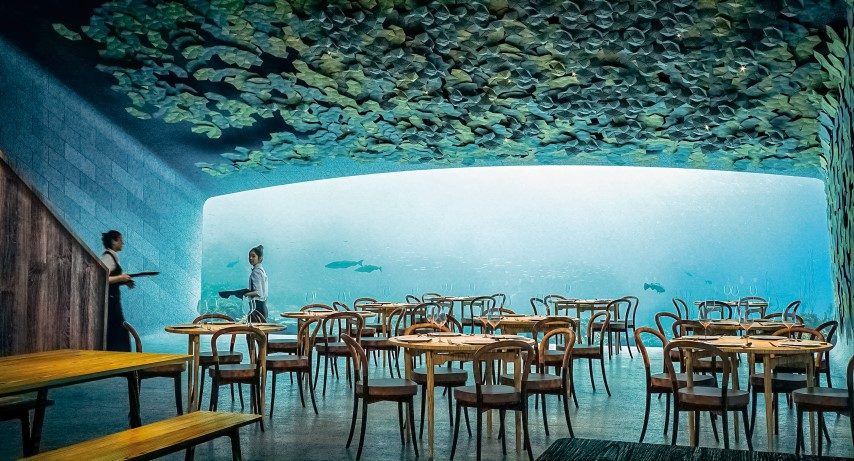
Dining at Under
Billed as the world’s largest underwater restaurant – and the first in Europe – Under is a new, must-visit dining facility nearing completion on Norway’s southern coast. The 600m2 structure – scheduled to open next year – will accommodate 100 diners.
The restaurant’s name is also a play on words: in Norwegian, ‘under’ can also be translated into ‘wonder.’ And the view promises to be wondrous.
Half-submerged, the building’s monolithic form breaks the water surface to lie against the craggy shoreline. A massive 11m x 4m panoramic acrylic window offers a view of the seabed as it changes throughout the seasons and varying weather conditions.
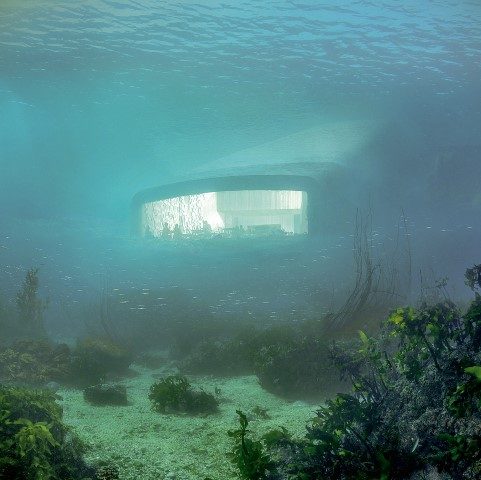
Diners will see all sorts of fish species swimming by, including huge cod, colourful lip fish, lobsters, seals, spiny dogfish and distinctive seaweed and kelp in the changing seasons.
More than a restaurant and aquarium, Under will also become a part of its marine environment and will function as a research centre for marine life. The building’s sleek, streamlined form is encapsulated in a concrete shell with a coarse surface that invites mussels to cling on.
Over time, as the mollusk community densifies, the submerged monolith will become an artificial mussel reef that functions dually to rinse the sea and naturally attract more marine life to its purified waters.
With metre-thick concrete walls, the structure’s built to withstand pressure and shock from the rugged sea conditions. It was designed by Snøhetta – an international, award-winning architectural company.


