
RNZYS’ 150TH CELEBRATIONS
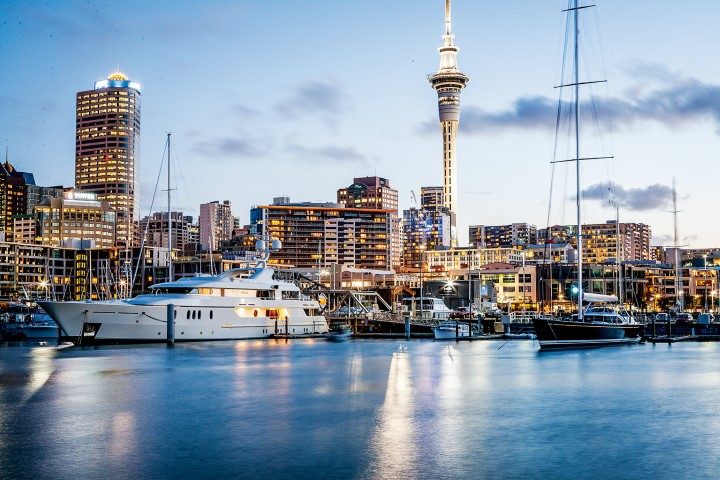
A jam-packed 2021 is on the cards to mark the Royal New Zealand Yacht Squadron’s 150th birthday – a ‘sesquicentenary’ celebration that coincides with Auckland hosting the 36th America’s Cup. These events include J Class racing, superyacht regattas as well as offshore and New Zealand-based races.
RNZYS Vice Commodore Aaron Young says a race to Kawau Island on New Year’s Eve 2020 kicks off the celebrations, followed by the Kawau New Year’s Day Regatta, and then by a Kawau to Great Barrier Cruise from the 3 – 6 of January. The Squadron has also secured two offshore races for the year. The first is from Sydney to Auckland in conjunction with the Royal Prince Alfred Yacht Club, starting on 1 February. The second is a race from Auckland to Southport Yacht Club in Queensland, starting on the 1 June.
In what is one of the most anticipated additions to the calendar, the Squadron hopes to attract a number of J Class Yachts with planned sailing in the Bay of Islands in February, and in Auckland in early March. J Class yachts are 40-45m long and have a crew of 30-plus professional sailors on board. They were used in the America’s Cup during the 1930s.
A superyacht regatta has been locked in for the 25 – 27 February in Auckland (organised by RNZYS), likely to be the biggest ever been seen on New Zealand waters. Dates are to be confirmed for the America’s Cup Christmas Regatta, but it is expected to take place sometime in December 2020/January 2021, and the PRADA Cup Challenger Selection Series in January / February 2021.
Steve Armitage, the general manager of Auckland Tourism, Events and Economic Development (Destination) says 2021 is going to be an unprecedented year for the region.
“Auckland is gearing up to host a mega year of events starting with the 36th Cup, the Squadron’s 150th and finishing with APEC Leaders’ Week. There will also be a diverse array of international sporting events such as the Women’s Rugby and Cricket World Cups, World Softball Championships, the national kapa haka festival, Te Matatini, along with the exciting annual events calendar.
“We’re looking forward to welcoming the world here and showing off Auckland’s stunning natural attributes, culture and city sophistication.”
For more information contact Andrew Delves – adelves@rnzys.org.nz
ETNZ’S CHARITY
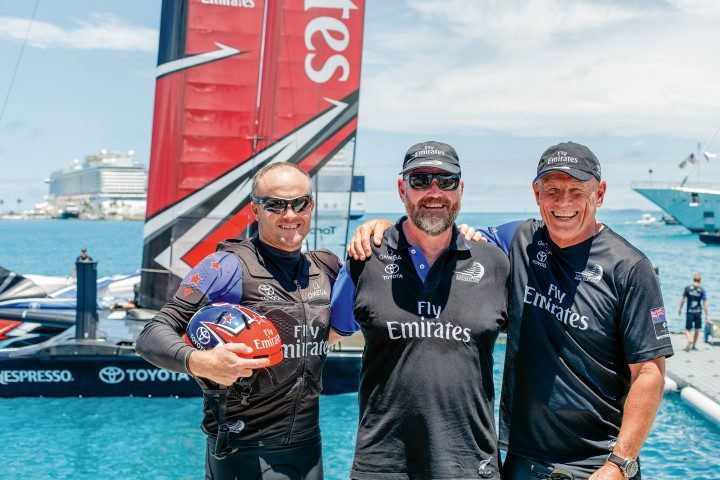
TNZ is to partner with the Motor Neurone Disease Association of New Zealand as the official charity of the Team for the 36th America’s Cup.
Motor Neurone Disease (MND) causes the muscles that enable us to move, speak, swallow and breathe to gradually stop working. New Zealand has the highest known rate of MND in the world, with an average of two people diagnosed each week and well over 300 people living with the condition.
ETNZ has first-hand experience witnessing the devastation of MND through team mate and current Director of America’s Cup Event Ltd (ACE), Greg Horton.
“Greg has been and continues to be an undeniable inspiration to the team while fighting MND,” says ETNZ CEO Grant Dalton.
“While the disease is having a devastating effect on him physically he has always remained so strong and optimistic despite his personal hardship. He contributed to our success in winning the Cup in Bermuda, and he still manages to undertake his vital role towards the planning for the 36th America’s Cup in 2021.”
Greg is also a member of the National Council of the not-for-profit charity MND New Zealand which supports people living with MND, their family and carers and health professionals to enable them to have the best possible quality of life.
MND New Zealand General Manager Carl Sunderland says it’s a huge honour to be the Official Charity of ETNZ.
“We rely almost completely on the generosity of the New Zealand community to continue to provide free, personalised support to people living with MND, their carers and families and this partnership will help raise awareness of this devastating disease and the vital work we do.”
To make a donation to MND New Zealand, visit www.mnd.org.nz
NZ 49ERS WIN AT KIEL
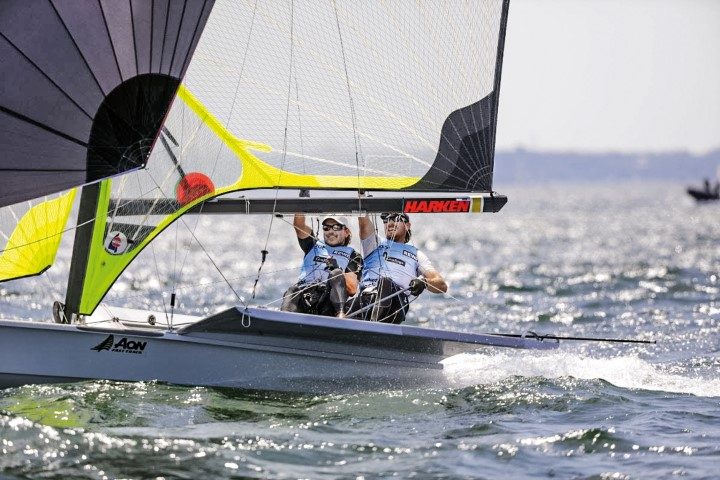
Logan Dunning Beck and Oscar Gunn have won their first big international regatta together, taking out the 49er class at Kiel Week in Germany.
The pair, who have been sailing together for the last two years, picked up World Cup Series silver medals in Hyeres and Enoshima in 2018 and they also led at last year’s sailing world championships in Aarhus for a handful of days before eventually finishing seventh.
Their second in Kiel’s medal race was enough for them to finish ahead of Poland’s Lukasz Przybytek and Pawel Kolodzinski, with James Peters and Fynn Sterritt of Great Britain third.
Kiel Week is one of the world’s biggest regattas, featuring myriad classes, and over the nine days 4,000 sailors from 60 nations competed in more than 1,900 boats. The 49er fleet for the 125th edition of the regatta was particularly strong, making for very competitive racing.
CARVING NUMBERS
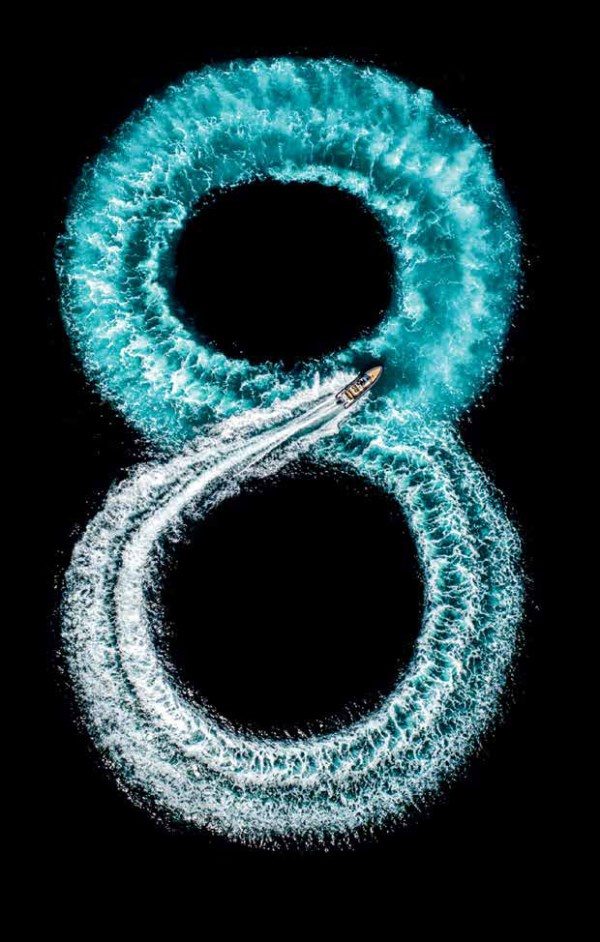
Capturing the precision steering of a numerically-oriented helmsman earned Jersey photographer Marc Le Cornu a winner’s prize in the prestigious 2019 Drone Awards photo competition held recently in Siena, Italy.
The Drone Awards has become a leading event for aerial photographers looking to show off their work and connect with like-minded enthusiasts. More than 4,500 entries were submitted (from 107 countries) by professional photographers as well as amateur enthusiasts.
Prizes were awarded in seven categories: Abstract, Nature, People, Sport, Wildlife, Urban and Video. Le Cornu took the winning spot in the Abstract category.
The images can be viewed at www.droneawards.photo
EXPERTS DISCUSS OCEAN POTENTIAL
Leading scientific minds meet in Nelson this August to discuss the shift taking place in aquaculture – from sheltered waterways to open ocean farming.
New Zealand’s Cawthron Institute is hosting its inaugural Open Oceans aquaculture symposium, Unlocking the Potential of our Oceans. It will discuss the ways open ocean aquaculture developments in both shellfish and finfish farming could revolutionise the global aquaculture industry.
The country’s aquaculture industry is growing in response to globally increasing demand but is constrained by limited sheltered inshore farm space, says Cawthron Institute CEO Professor Charles Eason.
The new frontier is open ocean aquaculture, where large tracts of consented space are available but the farming process is challenging in exposed and dynamic waters. New engineering concepts and farming approaches are needed to realise this opportunity and provide confidence for industry investment.
“Cawthron Institute is advancing open ocean aquaculture technology through the development of new tools and methods to cost-effectively farm shellfish and finfish,”says Eason.
“This symposium will outline technological advancements from Cawthron scientists and global research leaders, as well as the social and economic impacts of open ocean aquaculture. There is a global demand for protein, and aquaculture is a good way to produce that protein, with potentially less impact than land-based farming.”
The symposium will bring to New Zealand Hans V. Bjelland, the director of Exposed Aquaculture at the centre for research-based innovation from Trondheim, Norway and Arndt Hildebrandt from the Ludwig-Franzius Institute for Hydraulic, Estuarine and Coastal Engineering in Hanover, Germany.
The symposium will be held from 5-7 August 2019 at the Rutherford Hotel in Nelson, New Zealand. For more information visit www.openoceans.nz
become a Coastguard member
Engine trouble? Sick child? Flat battery? Mate, we're there.
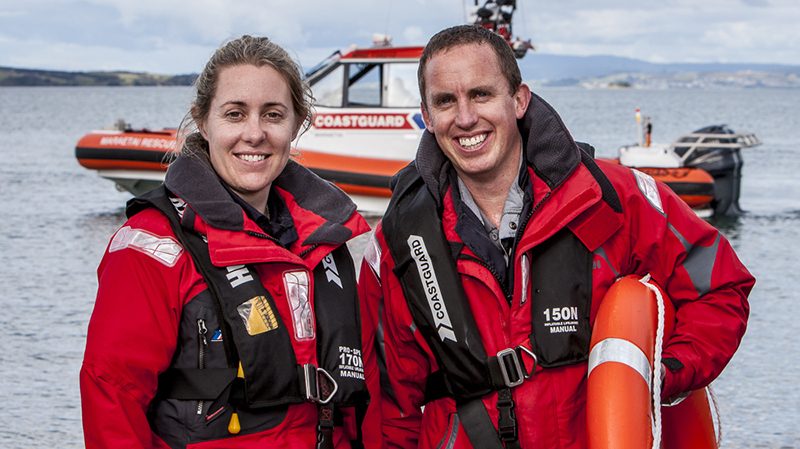
Having a problem on the water can be a hassle but with a Coastguard Membership you’ve got peace of mind every time you hit the water knowing we’ve got your back.
No matter if you break down, get a flat battery, or are out with the family when one of the kids get sick, rest assured one of our rescue vessels, crewed by our trained volunteers, will turn up and do all they can to get you home in one piece, free of charge.
Your Coastguard Membership means we’re here to help when you need us on the water, and help you get the best out of your boating safely with a whole range of safety and information benefits.
From a simple jump-start to a full blown emergency, we’re your best mates out on the water. Coastguard. Boatie’s Best Mate.
Don’t miss the boat. Join up today
Already a Member? Renew here
FULLERS 360 REVIEW
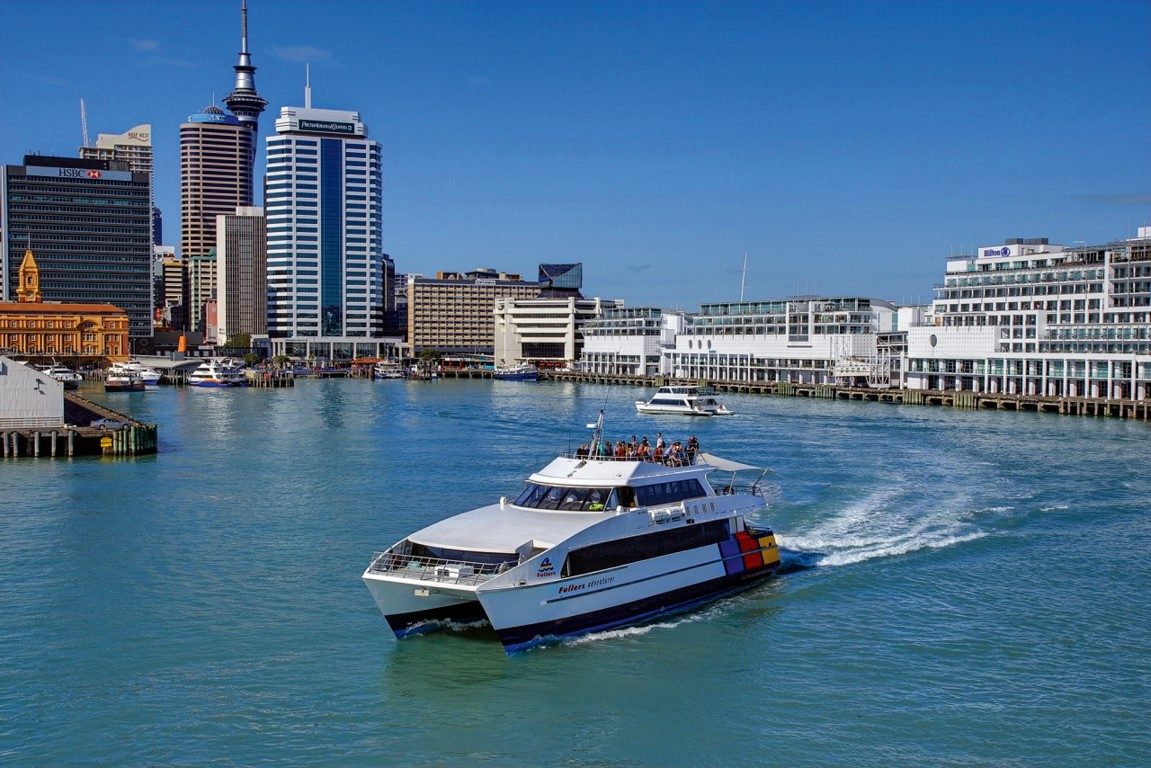
The Hauraki Gulf’s largest ferry company has launched a review of its operations aimed at improving its service.
Fullers360 carries more than five million commuters and visitors every year around the Hauraki Gulf.
“Overall,” says CEO Mike Horne, “our customers tell us we’re doing a good job. But we’ve heard loud and strong that some of our customers are unhappy with our services and this really concerns us. We realise we could listen better, and we are committed to doing that.”
A review of the company’s operations is looking at current staffing levels, scheduling, talking with crews and prioritising better customer communication on the wharves – all of which underpin maintaining stringent safety procedures.
Immediate steps include:
Creating a community voice – an open forum to enable the community to influence and contribute to the running of local services is being established.
Transparency of services – the Fullers team works hard to maintain Waiheke’s high-performance standards, but it hasn’t been sharing this information as well as it could with the community. Fullers is committed to changing this.
Critical infrastructure – working with local government is vital. It owns and controls the infrastructure on which all ferry services operate. Fullers has a role as an influencer and its customers’ input is essential. Action is underway for an improved ferry network. Customers and stakeholders will receive progress updates.
Investment in the fleet – in addition to the established three-year investment programme, Fullers recently invested a further $13m in purchasing two vessels. These vessels will enter the Waiheke and Devonport routes from August 2019 and will provide flexibility and scale for both. The company has committed to the R&D of full electric carbon fibre ferries, designed and built in New Zealand, with the aim of introducing them by 2021.
BOI MARINA IS TOPS
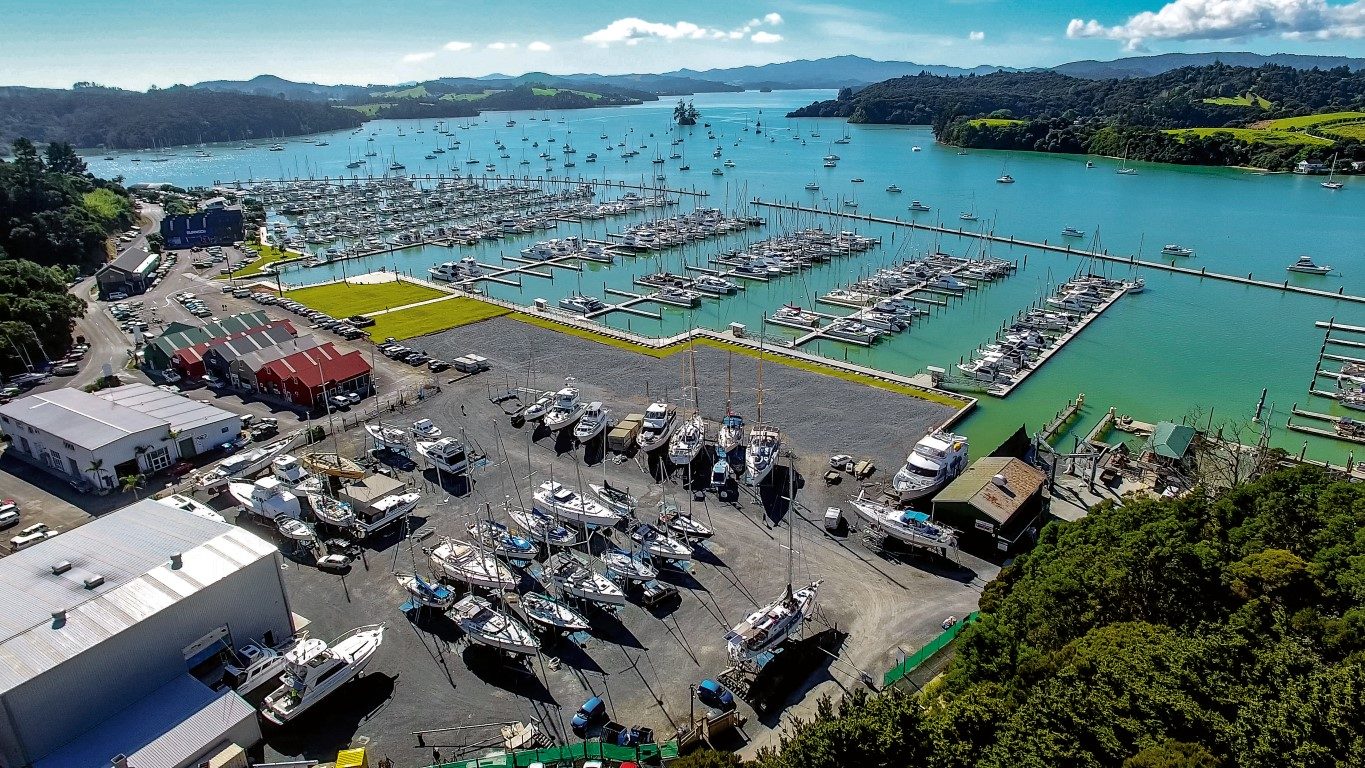
The Bay of Islands has the best international marina in the Asia-Pacific region, according to the Marina Industries Association (MIA), the organisation representing the marina and related service industries in this part of the world.
Bay of Islands Marina in Opua won the award at the recent 2019/2020 Club Marine Marina of the Year Awards on Australia’s Gold Coast. This is the first time in the 17-year history of the event that a New Zealand marina has won the award.
Auckland’s Westhaven Marina and China’s Sanya Serenity Marina were on the shortlist, along with Bay of Islands Marina.
There are 10 categories in the Awards which are conducted every two years by the MIA. Entries are judged by members of the association’s executive board.
The judges were impressed by the demonstrably high level of service offered to customers, from arrival and Customs clearance through to the work conducted by the boatyard and the excellent marine service industry at Opua, all of which enhance the marina’s reputation as a favoured destination for yachties traversing the Pacific.
Far North Holdings general manager Chris Galbraith says the award is a vindication of the time, effort and attention to detail that has gone into the recent expansion work at the marina.
“All the way through we have looked at this project through as many lenses as possible and done whatever we could to ensure that the product lives up to the expectations of our customers, our service industry tenants, our staff, our communities here in the Bay of Islands and our shareholders – the ratepayers of the Far North in the form of our single owner, the Far North District Council.”
AUCKLAND DROPS PROPOSED ANCHOR FEE
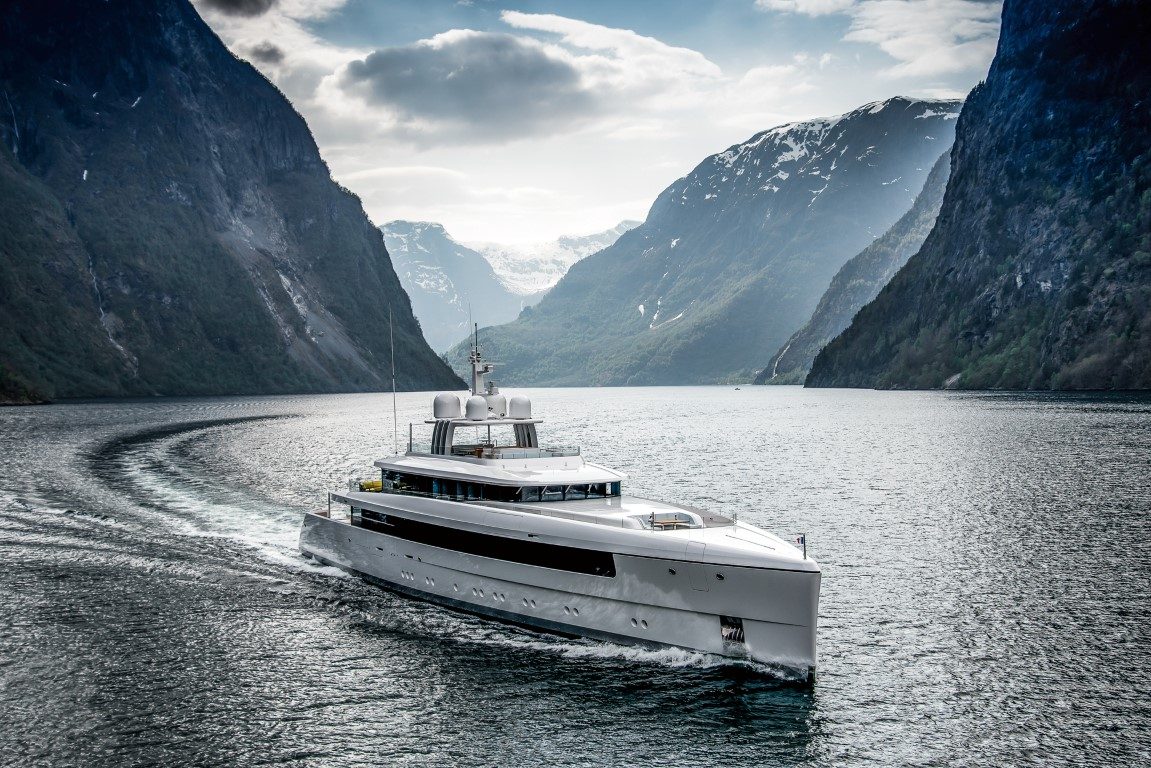
Auckland Council has dropped a proposed daily anchoring fee which would have seen superyachts and other foreign-flagged vessels of over 40m billed each time they anchored within Auckland’s navigable waters.
“Working with Auckland Council, the Royal New Zealand Yacht Squadron and Emirates Team New Zealand, we were able to help Council appreciate just how much of a deterrent a daily anchoring fee would have been to foreign vessels planning to visit our shores, particularly for the Prada and America’s Cup in 2020-21,” says Peter Busfield, executive director of NZ Marine.
NZ Marine is the country’s marine industry association and represents marine companies and their respective boatbuilders and apprentices.
Auckland Council has worked with the marine industry to overhaul the plan, settling on a new, low, visitor-friendly 12-month navigation and safety fee for vessels over 40m in length. The services covered by the fee include the Harbourmaster maintaining navigation aids and maritime safety functions, and helping masters of visiting yachts over 40m LOA to find suitable anchorages among the more than 50 islands in the Hauraki Gulf.
These vessels will be required to pay a one-off annual navigation and safety fee of $20 plus GST per metre of vessel under the new requirements.
“It’s great to continue presenting the welcoming and cohesive front for which New Zealand is well known to the international superyacht community,” says Busfield. “We are keeping the door open for superyacht visitors from around the globe who want to experience our beautiful part of the world.”
FOODSTUFFS TRAPS PLASTIC
Foodstuffs North Island has launched a new pilot programme to stop waste flowing to the sea.
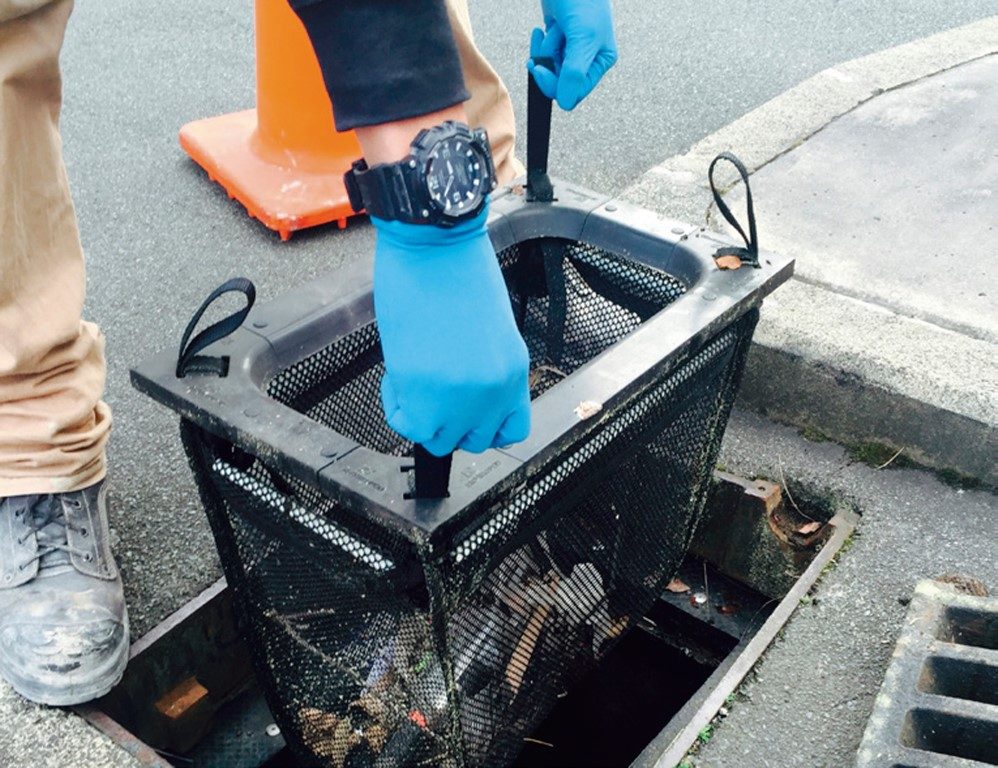
Launched on World Oceans Day (8 June), the programme is a significant investment in rubbish traps for store-based stormwater drains. Eleven New World and PAK’nSAVE stores are installing 125 LittaTrap™ catchers from New Zealand company Stormwater360 – a move to stop toxic waste and plastic flowing through drains to waterways.
Mike Sammons, Sustainability Manager for Foodstuffs, says recent trials with single traps at New World Browns Bay and New World New Lynn in Auckland have demonstrated the efficacy of the system.
“We captured everything from organic leaf matter and cigarette butts to soft plastics, polystyrene beads and straws. If all storm drains at Browns Bay had a LittaTrap installed a total of 7,322 pieces of plastic and other litter could be caught over a 12-month period. Captured waste is carefully disposed of in landfill.”
In 2017, Foodstuffs removed all health and beauty products containing plastic microbeads and in 2018 stopped selling plastic cotton buds, plastic tampon applicators. It also stopped giving out singleuse plastic bags at checkout.
Further trials are currently underway to replace plastic produce bags and a new zero-packaging ‘refillery concept’ has been launched in New World stores in Long Bay, Auckland and Durham Street in Christchurch.
“Part of being a responsible retailer,” say Sammons, “is also looking beyond our own physical footprint and ensuring we’re not passing on a problem to the wider environment through land, sea or air pollution. Average store recycling rates are now at 85%, but some like New World Wellington City have reached 90% recycling, including donating the equivalent of 7,800 meals a month to the local community.
“Over the last few years we’ve worked hard to reduce our carbon footprint by moving to natural refrigeration and supporting the transition to electric vehicles. We currently have half of New Zealand’s EV fast chargers in our carparks, over 30 EVs on the road and we are building three electric lorries in Christchurch.”
LIFE MEMBERSHIP FOR BROOKE
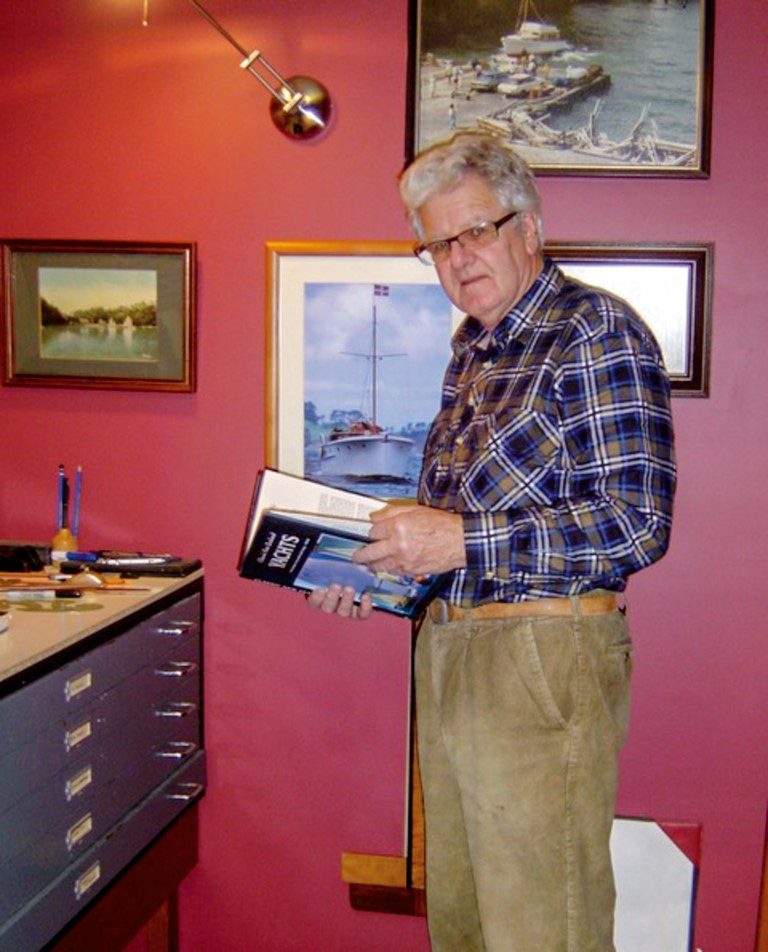
Classic boat icon Robert Brooke has been awarded Life Membership of the Classic Yacht Association.
Brooke – a qualified boatbuilder – served his apprenticeship with Percy Vos. He has restored and built numerous traditional wooden boats and is known as a Logan restoration specialist.
He has also played a major role in education, pioneering the integration of the ‘Design-and-Build’ mode of teaching and learning into the national curriculum of Workshop Technology. Where students previously copied existing designs or components, under Design-and-Build they conceive the design and see it through to completion. This principle has become the mainstay of technology education and is flourishing under the NCEA environment.
Brooke was an advisor in technical subjects for the then Department of Education from 1987 to 1990 and was the National Moderator of the Northern Region appointed to assess National Standards. He has been National Examiner for Ship, Yacht and Boatbuilding and has been a member of the Ship, Yacht and Boatbuilding Advisory Committee for Unitec. He has moderated Ship, Yacht and Boatbuilding Trade and Advanced Trade examinations. He has been General Manager of the Boating Industry Training Organisation.
In May this year Brooke was awarded with the New Zealand Order of Merit for services to education and heritage preservation.
AN ICON PASSES ON
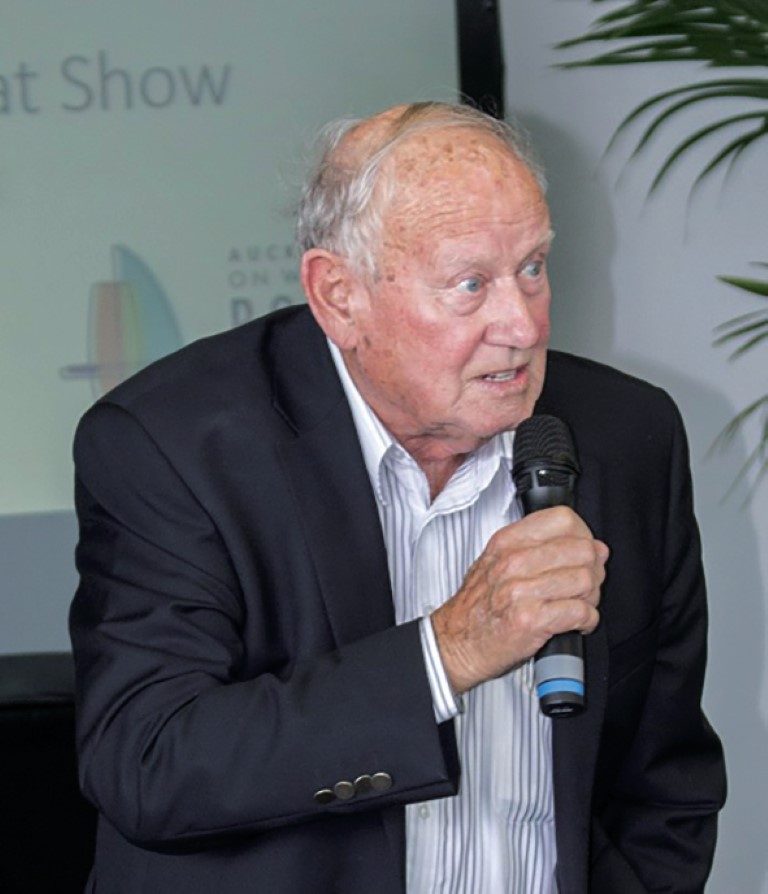
One of New Zealand’s most prolific boat designers and builders – Bob Salthouse – died in June aged 83. He had been in poor health for some time.
Though the exact number is unclear, it’s estimated that in a career spanning more than half a century Bob designed over 750 boats – and impressively – most are still afloat. They covered the entire spectrum of vessels – yachts, launches, wooden boats, workboats charter boats and luxury pleasure boats.
They include the 32m alloy superyacht Pacific Mermaid and some of the most successful production designs New Zealand has seen – the Cavalier 32 and 39, both launched in the 1970s. Around 170 of the 32s were built and 84 of the 39s.
Equally successful was the Corsair range of 10.9m launches, with more than 150 produced in three models from 1973. One-off commissions included the famous game-fisher Te Ariki Nui in 1983 and the 27.4m Pacific Challenge for the America’s Cup in Fremantle in 1985.
Bob – together with brother John – began building boats in the early 1950s before Bob left to start up his own company, Salthouse Marine, in 1983.
Dean Salthouse is the youngest of Bob’s three sons and is the only one to follow in his dad’s footsteps, completing a boatbuilding apprenticeship. Dean founded Salthouse Next Generation Boats after he and his father successfully revamped the original Corsair design into a wider-bodied Cabriolet-styled motor yacht.
Bob’s brother John died earlier this year.


