
BIOBANK TO SAVE CORAL
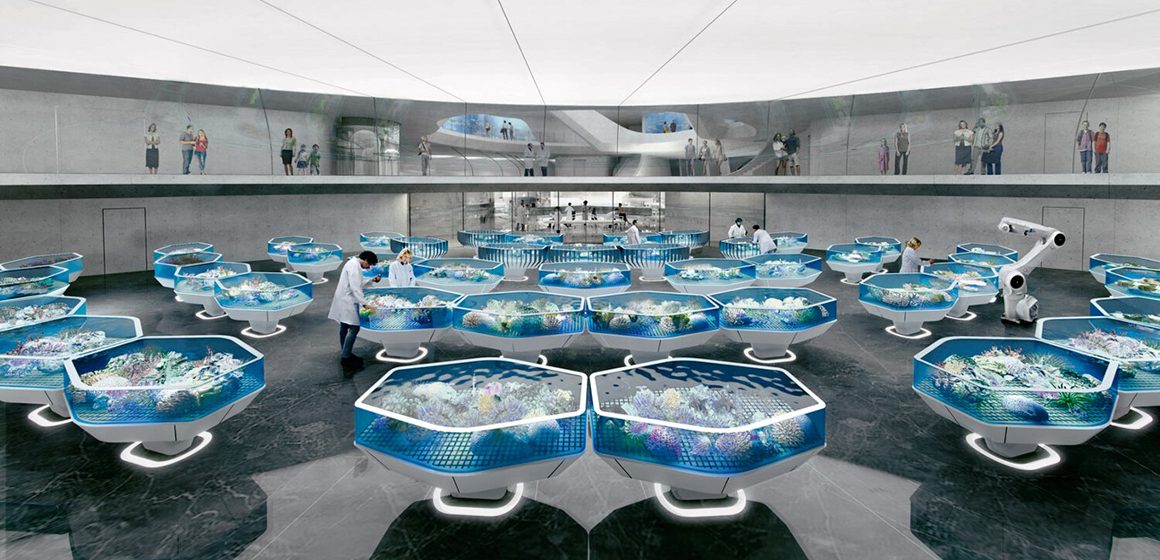
Facing diverse threats ranging from pollution through acidic oceans to global warming, the planet’s coral beds will hopefully receive a helping hand from the world’s first coral biobank, proposed for Port Douglas in Queensland, Australia.
The conservation facility will house some 800 coral species from around the world. It has been described as a ‘Noah’s Ark’ for the planet’s coral, fitted with hundreds of tanks with temperature and light control.
Designed by Sydney’s Contreras Earl Architecture, the four-storey centre mimicks a mushroom coral head. Inside, facilities include an exhibition centre and auditorium – and research laboratories over four levels. The facility would also be an interactive space so visitors can view corals and learn about the reef.
The project is led by the Great Barrier Reef Legacy – a non-profit organisation seeking philanthropic backing to fund construction. Graphics supplied by Contreras Earl Architecture.
UNDERWATER SPACE STATION
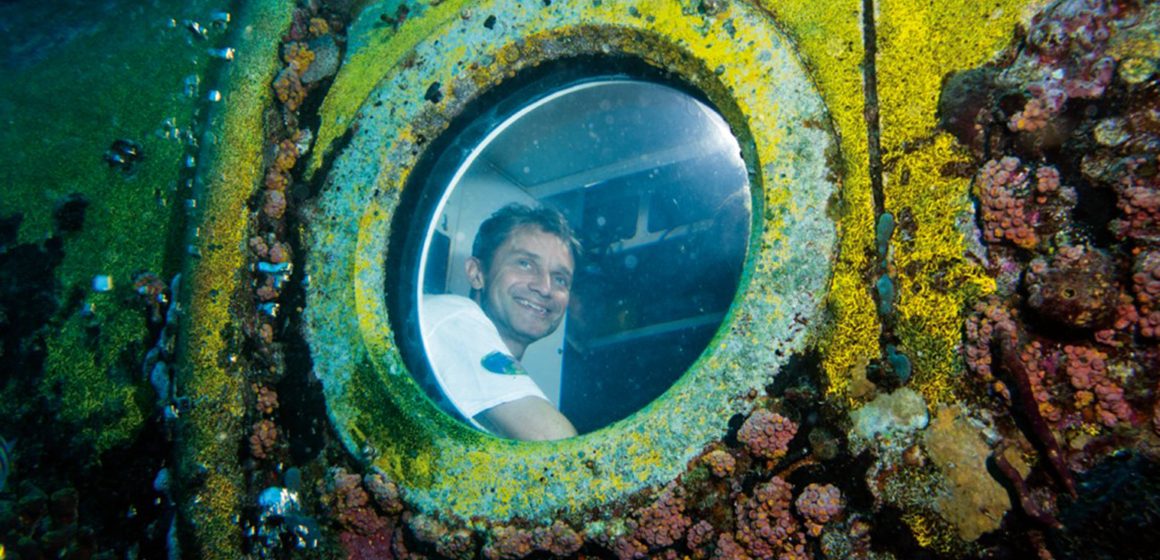
Renowned aquanaut, ocean explorer and environmentalist Fabien Cousteau – grandson of Jacques-Yves Cousteau – is hoping a proposed underwater research station and habitat will address humanity’s most critical concerns.
A project of the Fabien Cousteau Ocean Learning Center (FCOLC), PROTEUS™ has been conceived as an underwater version of the International Space Station. It will be a platform for global collaboration among researchers, academics, government agencies and corporations to advance science for the benefit of the planet.
“As our life support system, the ocean is indispensable to solving the planet’s biggest problems,” says Cousteau. “Challenges created by climate change, rising sea levels, extreme storms and viruses represent a multi-trillion-dollar risk to the global economy.”
Proposed as the largest and most technologically advanced underwater station ever built, PROTEUS™ will allow scientists and aquanauts the time to conduct continuous night and day diving and data collection. It will create a better understanding of how climate change affects the ocean and facilitate testing of advanced technologies for green power, aquaculture and robotic exploration.
Onsite labs will facilitate processing of organic samples that can be studied in real time, rather than the specimens rapidly degrading or dying during the arduous journey to the surface. On-premise experimentation results in an enhanced pipeline to support the development of new treatments for cancer, antibiotics, vaccines and much more.
The station will be located off Curaçao at a depth of 60 feet in richly biodiverse marine-protected water. It will also feature a full-scale video production facility to provide continuous live streaming for educational programming.
PROTEUS™’s strategic partners include Northeastern University, Rutgers University and CARMABI. The initial concept design has been co-conceived by renowned industrial designer Yves Béhar and his firm Fuseproject.
Founded in 2016, the Fabien Cousteau Ocean Learning Center’s mission is to raise awareness, educate, and empower the citizens of the world to protect and preserve the planet’s coastal areas, endangered marine habitats and marine life.
MISSING AMBER ART FOUND?
Polish divers have stumbled across the wreck of a WWII ship in the Baltic which they believe might contain missing treasure pilfered from Russia by the Nazis.
The wreck is that of the 897-ton Karlsruhe – one of a fleet of vessels involved in Operation Hannibal, a German Navy initiative to evacuate thousands of troops and civilians from East Prussia between mid-January and May 1945 as the Red Army advanced.
She left the port in a great hurry on April 12, 1945 – the last ship to leave Królewiec before the Russians took it. She was carrying 1,083 refugees and 360 tons of cargo but was sunk the next day. There were only 113 survivors.
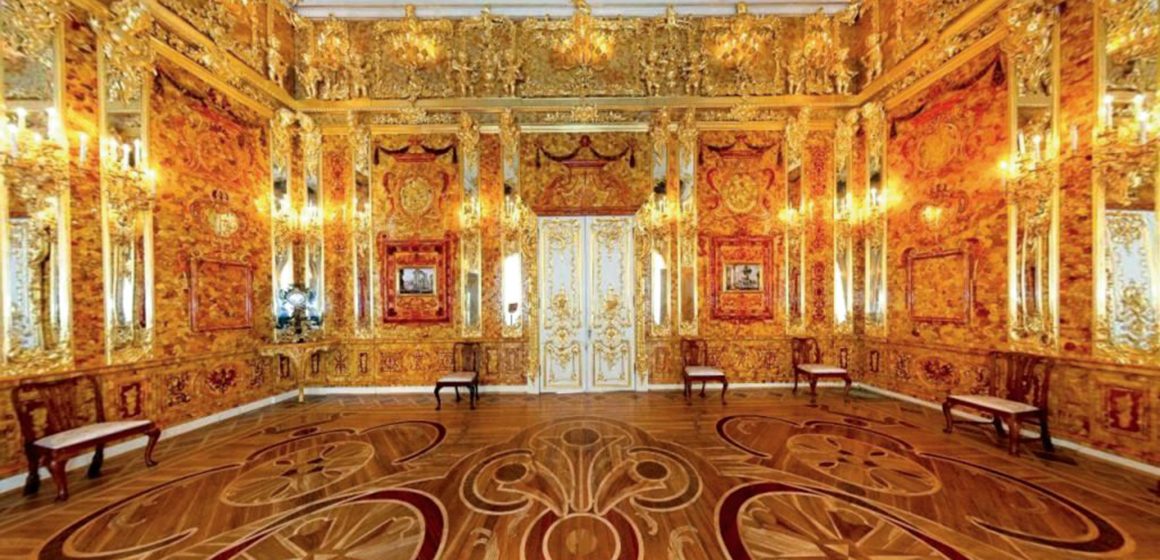
It’s also believed she was carrying the priceless art and amber panels (valued at £250million in today’s money) that for some 300 years had formed the legendary Amber Room in the Imperial Catherine Palace near St Petersburg.
The room’s ornate décor was often described as the eighth wonder of the world. Spread across 60m2 its walls were covered by more than six tonnes of amber comprising 100,000 pieces and arranged in an intricate jigsaw pattern.
Prussian monarch Friedrich-Wilhelm I had given the panels to Russia’s Peter the Great in 1716. But in 1941, adamant that the gift was rightfully the Third Reich’s, German soldiers stripped the amber panels from the walls of the room and shipped them to the Fatherland in 27 crates. After that, the trail goes cold – the panels vanished.
Until the recent discovery of the Karlsruhe by the Baltic-tech divers, who say the ship was in the last known area of the crates. Company spokesman Tomasz Zwara says documents show that the ship left the port in a great hurry and with a large load.
Lying at a depth of 88m the wreck is practically intact and in its holds divers have discovered military vehicles, porcelain and many crates – their contents so far unknown.
The Amber Room was subsequently re-created. If the missing panels are found, will they replace the replicas?
LARRY PARDEY 1939–2020: FAMED CRUISER CROSSES THE BAR
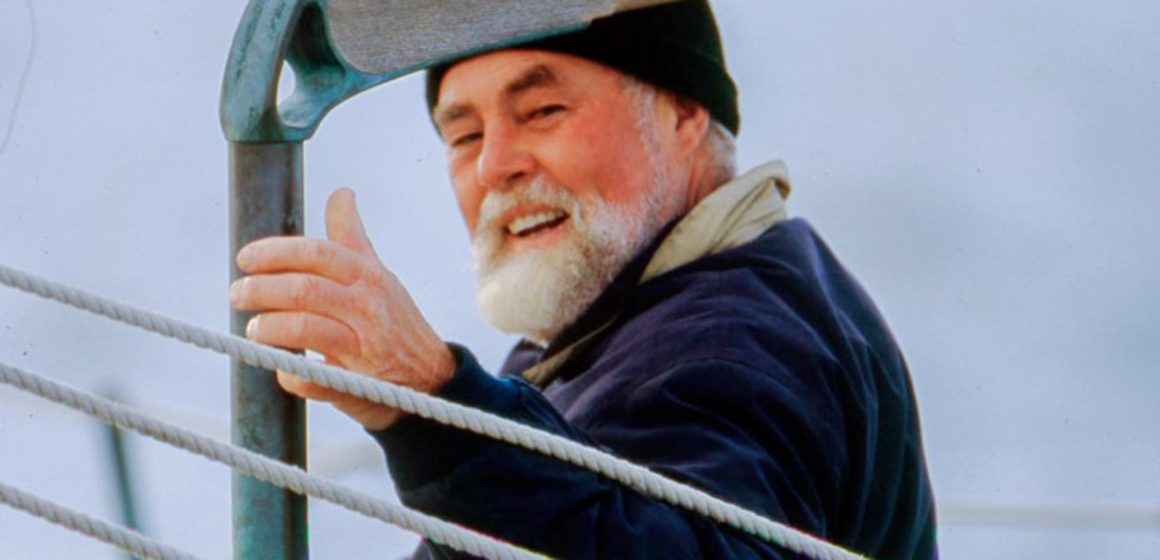
Larry Pardey – Canadian sailor, boatbuilder and author – died earlier this year in a Northland rest home after a life of sailing and building boats.
Pardey – who with wife Lin coauthored 12 books on their voyaging – was one of the first people to sail across the Sahara Desert. In 1967, as part of an expedition organised by the French and sponsored by National Geographic, he captained a North American team sailing land yachts from Colum Bechar in Algeria to Noachott in Mauritania, a distance of approximately 2735 kms.
Pardey began sailing at age 17 in Vancouver. He purchased and restored a 28-foot Tumlaren sloop, Annalisa. In 1964 he sold her and went to California in search of an affordable cruising boat.
Instead, he signed as first mate on the 85-foot schooner, Double Eagle and sailed to Hawaii on a movie-making charter. On his return he began building his first cruising boat, Seraffyn – a 24’ 6” Lyle Hess-designed, engineless cutter. Five months into the project he met Lin Zatkin who joined him to finish building what became their first cruising boat.
Together they eventually sailed more than 200,000 miles, including both an eastabout and westabout circumnavigation. To earn their way they delivered boats, restored boats and worked as riggers. Lin’s writing skills covered their cruising costs.
The couple opted for another Lyle Hess design for their next boat, the 29’ Taleisin, also built by Pardey and also engineless. In 1985, during a voyage to New Zealand, the two purchased a small boatyard and cottage on Kawau Island, 30 miles north of Auckland. This became their home and base but did not stop them from voyaging onward.
In 2009 the Pardeys made their last ocean passage together and Larry developed Parkinson’s Disease in 2015.
Together they wrote 12 books and created five instructional DVDs.
Among the numerous awards they’ve received is the Cruising Club of America’s prestigious Far Horizon Award for 2009 in recognition of their combined voyaging. They were also presented with the SSCA award from the Seven Seas Cruising Association in recognition of their contributions to the sport of sailing and the cruising community – only the 16th time in the club’s 60-year history this has occurred.
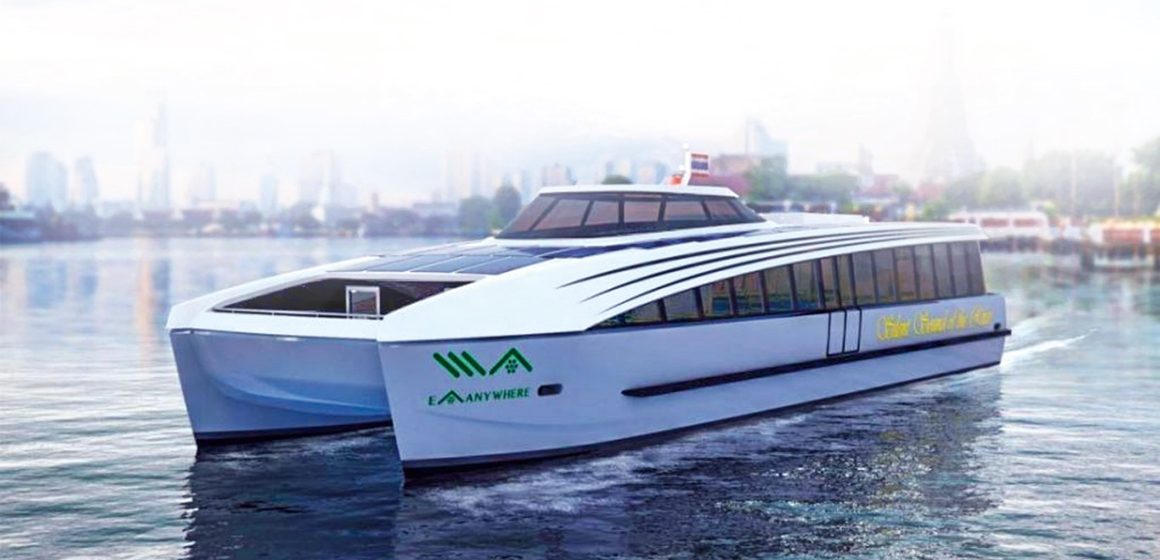
BANGKOK’S ELECTRIC FERRIES
The first of a fleet of 27 fully-electric catamarans is being trialled in Bangkok – part of an initiative to help clean the city’s air and transform its Chao Phraya river.
Danfoss Editron is providing the electric drivetrain systems for the cats. The project’s part of Thailand company Energy Absolute’s plans to promote and increase alternative energy methods of transport in Thailand.
Bangkok is the world’s most visited city, welcoming nearly 23 million international visitors last year. But its air quality is regularly recorded at unhealthy levels due to traffic, construction and factory emissions and the burning of waste and crop residues.
The city’s seasonal weather changes, which prevent pollutants such as exhaust fumes from dissipating, further exacerbates the issue. The Thailand government is attempting to clean up its air via several methods, including the promotion of alternative energy modes of transport.
Each 24m catamaran can carry 200 passengers and contains two of Danfoss Editron’s EM-PMI375-T800 motors. These provide a continuous power output of between 174-192kW and are based on synchronous
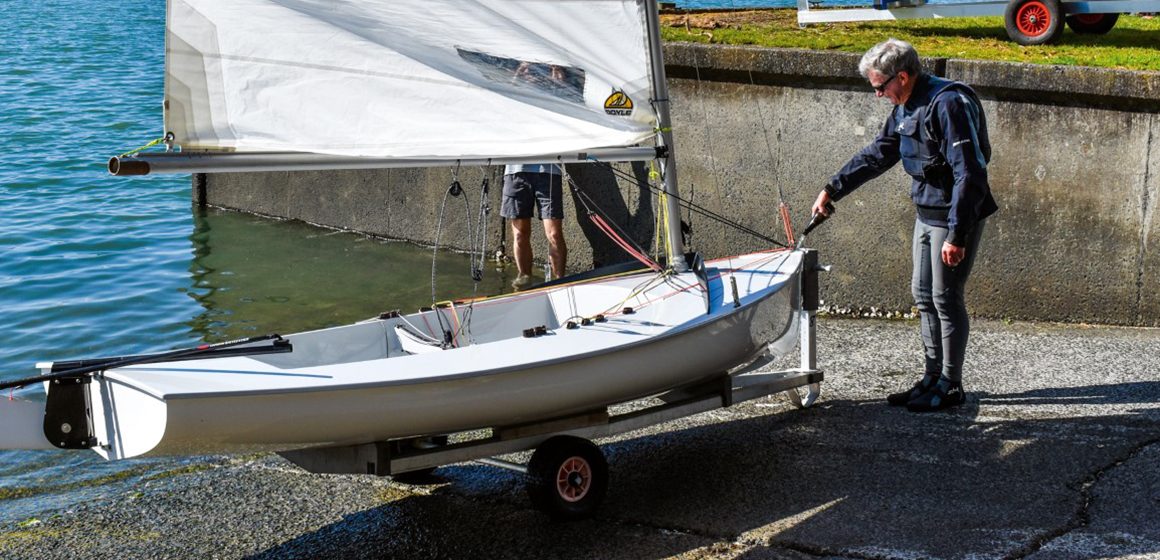
GRP ZEPHYR
The 2020 Auckland Zephyr Championship at French Bay was notable for the launching of the first full GRP Zephyr. Designed in 1956, the class remains strong – major regattas continue to attract scores of entrants.
With demand for new boats growing, a deck plug and moulds were built during Covid lockdown in a joint project between the Zephyr Owners Association and Silverdale’s Mackay Boats. The resulting seven-mould package has enabled the production of a finely-detailed hull, showcasing the skill and precision of boatbuilder Owen Mackay.
The first production run of four boats has been pre-sold and the class is confident of a second 64 years of existence.
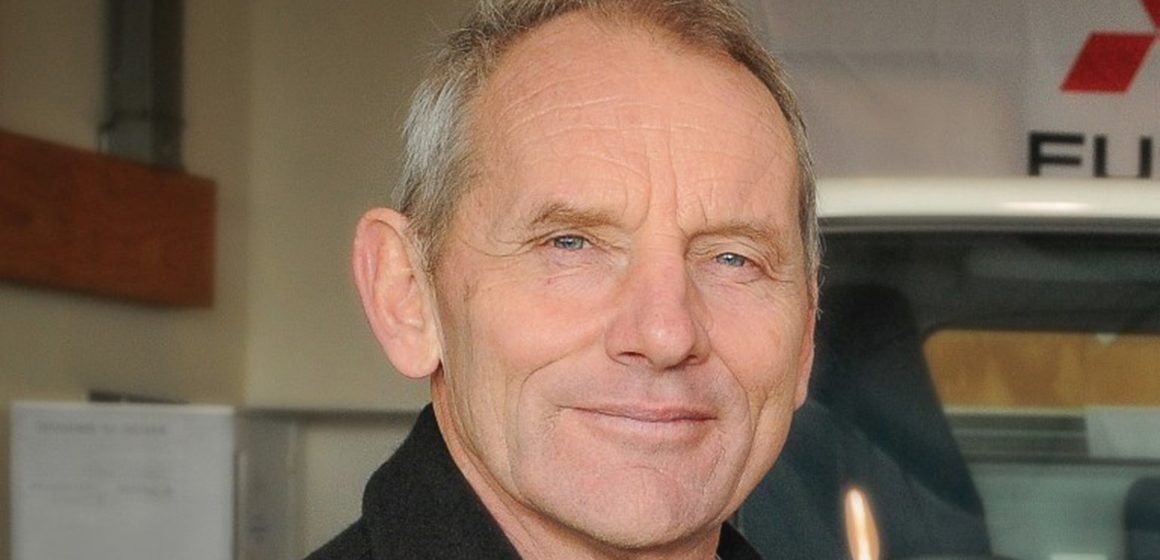
REMEMBERING KEITH ANDREWS
As a young boy in the ‘60’s Keith Andrews asked his parents for a sailing dinghy for Christmas. But with five children his parents had no extra money, and Christmas came and went dinghy-less. From then on Keith knew if he wanted anything he’d have to work for it, so he got a part-time job.
His first boat was an OK dinghy, which he kept at the local Onerahi Yacht Club. Every Sunday he loaded the sails and gear onto his bike and rode to the club for racing. In his teens the motor mechanic partnered up with fellow sailmaker yachtie Jack Lloyd to build and race the 24ft Bruce Farr design Strait Laced. A few years later they built Lovelace – a Bruce Farr One-Ton racing yacht.
The determined young men qualified to race for New Zealand in the 1978 Pan Am Clipper Cup series held in Hawaii and raised enough money to ship the boat and compete in the series over six weeks. Lovelace was sold shortly afterwards to an American who renamed her Whangarei.
On his return Keith’s focus shifted to family and a home, although he was never far from the sea. He loved sailing catamarans, crewing on friends’ boats, and fishing or wakeboarding on his fizz boat with his three children.
Keith began his last home last year but it remained uncompleted when he succumbed to cancer, aged 66. He leaves behind his wife of 42 years Vicki and water-loving children Kurtis, Camden, and Holly, their partners, and five grand-children.
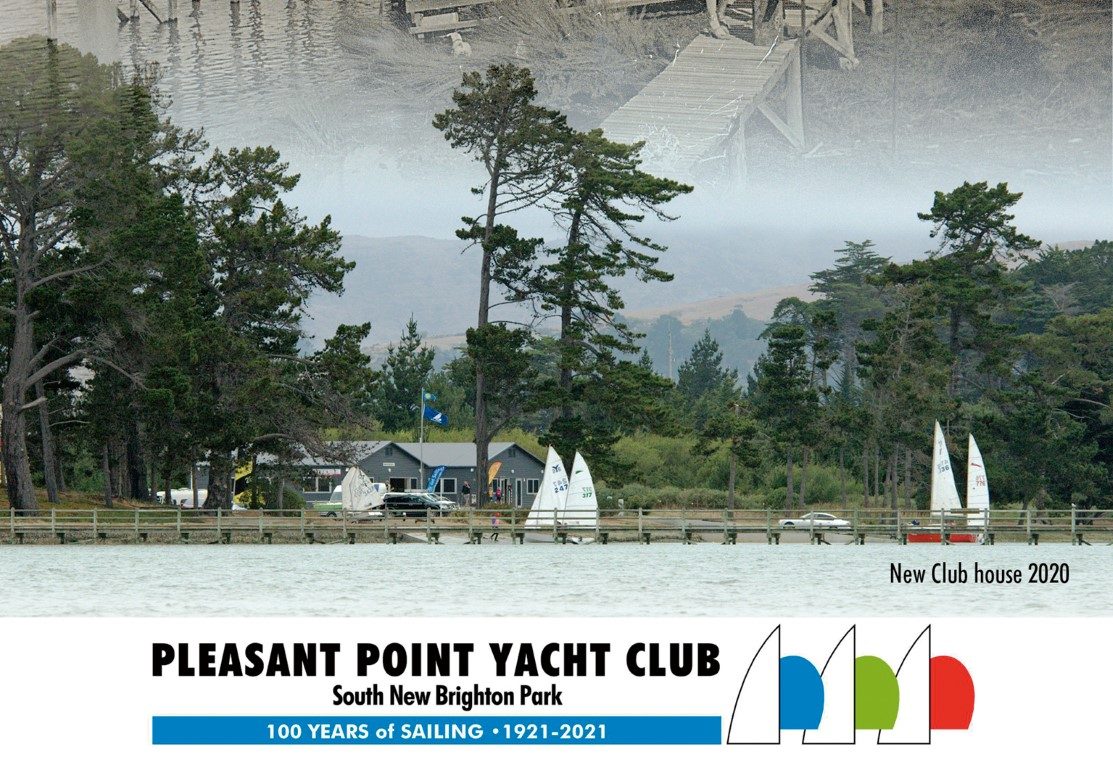
LOOKING FOR PLEASANT MEMBERS
Christchurch’s Pleasant Point Yacht Club celebrates its centenary next February and the committee is extending an invitation to all previous members to attend the club’s celebrations.
Originally called the Boat Club when it was established in 1921 on the shores of the estuary in an area then known as Pleasant Point Domain, it was renamed Pleasant Point Boating Club in 1924. Five years later it moved to the western shore to an area of mud flats (now Rat Island) at the mouth of the Avon River.
The land was improved and over the years the club facilities were built, introducing a summer-long sailing programme of racing. So it remained until the first of the Canterbury earthquakes a few years ago damaged the buildings and land beyond repair.
Finding a new site (and the rebuild) took nine years, but the club is back in the South New Brighton Park with new facilities that opened in September 2019 – just a stone’s throw from where it all began in 1921.
The Centennial celebrations are scheduled for Waitangi Weekend, with a Noggin ‘n Natter on the Friday evening. The club’s main open event – the Sullivan Cup – will be held the next day, coupled with another trophy, the Arch Lamb Trophy for the Sunburst Class. Saturday’s racing is to be followed by a celebration dinner.
The club’s iconic Classic Yacht Race – first sailed at its 75th celebrations – will be held on Sunday. This will be coupled with a display by the members of the Classic Boat Group of Canterbury. Organisers also hope to stage a display of vintage cars.
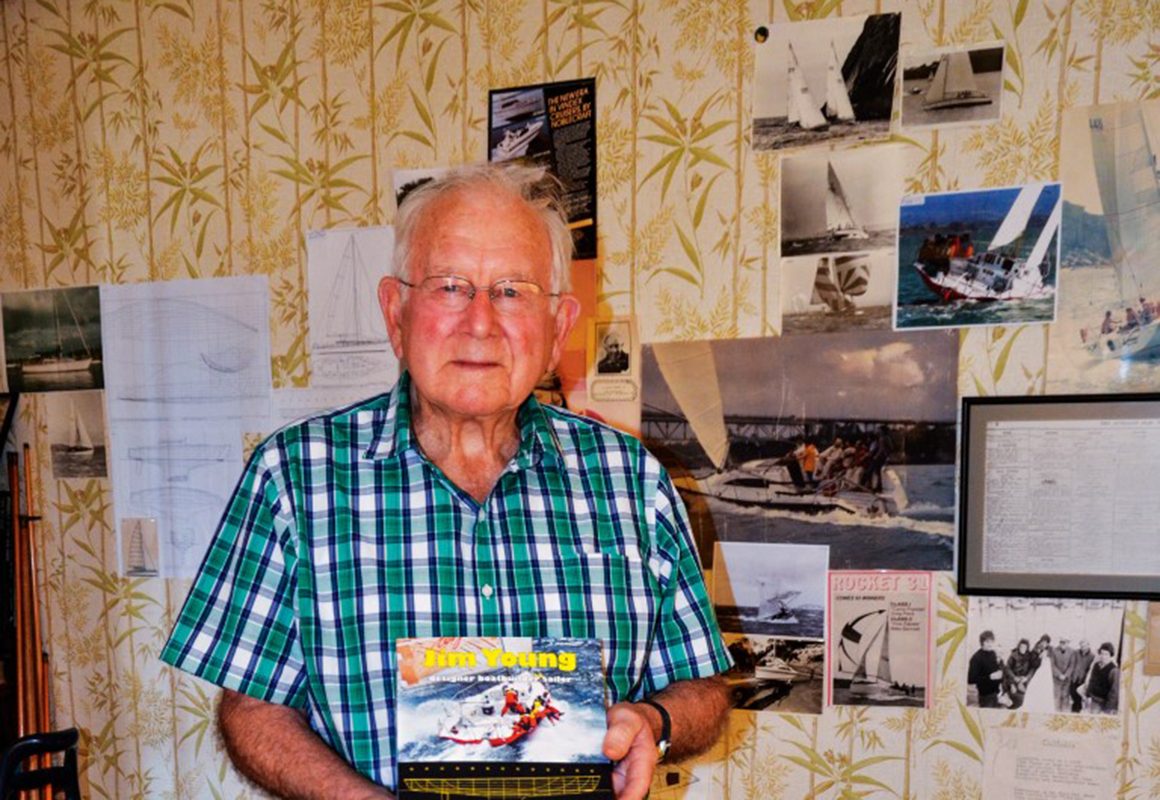
JIM YOUNG ONZM
Boating New Zealand was saddened to hear of Jim Young’s final bar crossing on 18th June. One of this country’s most innovative designer/boatbuilders, summarising Young’s career in a few words is a difficult task.
Born in Wellington in 1925, he began his boatbuilding apprenticeship with Shipbuilders Ltd in 1940 and spent the latter part of WWII working at Associated Boatbuilders building Fairmile launches.
After the war he served with the J Force in Japan for 18 months, before going into partnership to build dinghies with the late Jack Taylor.
Young went out on his own in 1949 and within a short time was making a name for designing and building innovative boats. Keelers such as Tango and Fiery Cross had features – a spade rudder and a canting keel respectively – years ahead of their time. A pioneer advocate of multihulls, Young built his first catamaran in 1953. His 1958 3.6m Kitty catamaran was so fast it was banned from the Q Class. Young later designed numerous fast cruising multihulls.
In 1961 he designed and built the 10m planing launch Vindex, which became the archetypal launch of this type. He eventually designed a whole range of launches including GRP production versions based on Vindex.
In the 1970s Young designed, built and skippered the IOR racing keelers Checkmate and Heatwave, the lessons learned being incorporated into hugely successful racing yachts such as Positive Touch, Extreme and Camp Freddy.
He also developed a comprehensive range of stitch-and-tape trailer sailers and dinghies for amateur builders, with many hundreds being built.
His cruiser/racer keelers such as Namu and Jipco were so successful they became stock production boats, while his 8.8m cruiser/racer Tickled Pink became the plug for the GRP production Young 88. Designed in 1980, over 180 Y88s were built and the class remains hugely popular today.
While he officially retired in 1990, he never stopped designing. Sadly, few of his later designs were built.
“Most of my ideas just sail across the drawing board these days,” he wryly told me a few years ago. But he remained keenly interested in boats – from classics to the latest AC creations – right to the end of his life.
Young was highly regarded by his peers, who typically described him as “brilliant”, “genius”, “lateral thinker”, “innovative” and “fearless.” He was awarded an Officer of the New Zealand Order of Merit in 2012.
He’s survived by his wife Anne; children Frank, Adrienne and Wendy; grandchildren Arron, Stephen, Jenni, James, Alix and Kelsey; and 11 grandchildren.
By John Macfarlane
KAI MOANA FROM CONTAINER
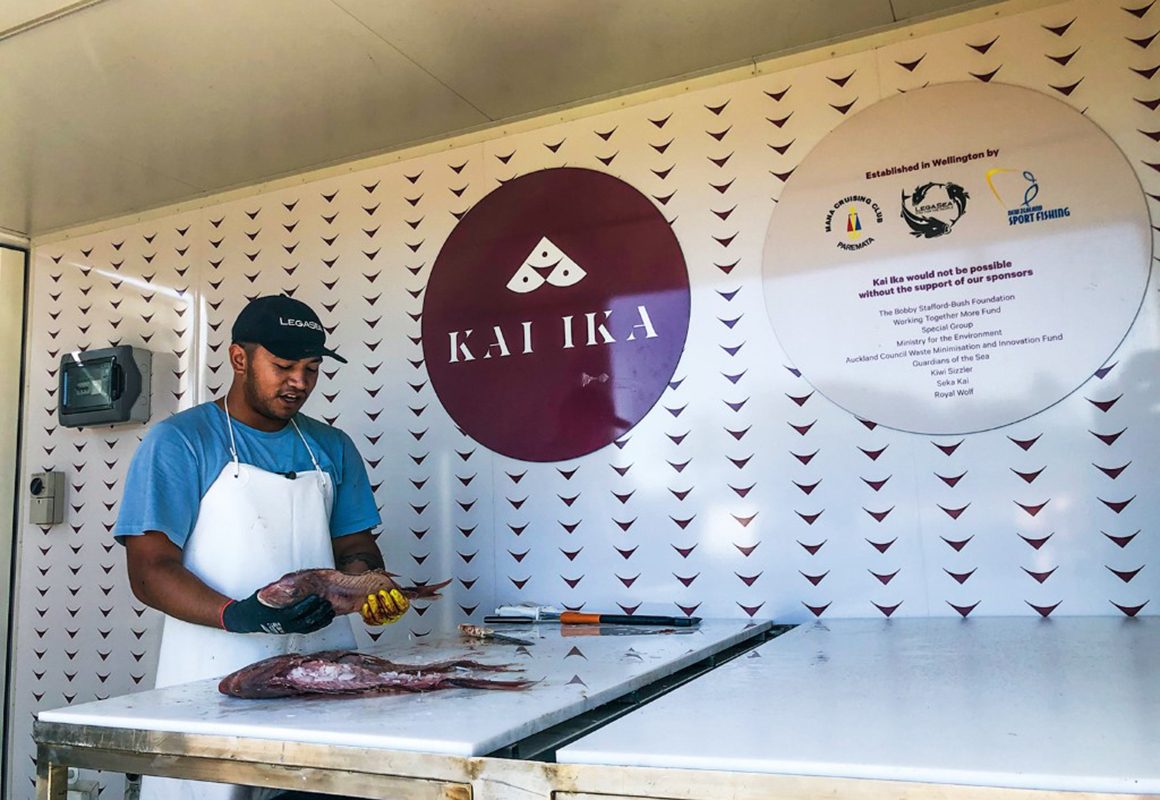
A 20-foot shipping container modified into a fish-filleting station and distribution hub has seen a Mangere marae significantly increase its supply of fish heads and frames to feed families in need.
Located at Papatūānuku Kōkiri Marae, the bespoke structure was created by Royal Wolf (an Australasian company specialising in the hire, sale and modification of new/refurbished shipping containers) for the Kai Ika Project. Kai Ika redistributes fish off-cuts – which would normally go to waste – to the local community.
Project leader Sam Woolford says the container is the centrepiece of Kai Ika’s operation at the marae, and there are plans to roll out the initiative nationwide.
“It’s a practical solution that’s elevated the whole project. It’s allowed us to go from 250 kilos a week through to 1,000 kilos a week and service three other marae.” He adds that the benefit of the container’s increased capacity was underscored during the COVID-19 level 4 lockdown when queues for collecting fish were 400m long.
“Kai Ika is all about kaitiakitanga, or guardianship, but it’s also about manaakitanga – support and caring for others. It shows how a simple adjustment in thinking and behaviour is having a positive impact in the community and helping many families as well as the environment. The container is a gathering place where people come together to fillet and collect the fish heads, frames and offal.”
Lionel Hotene from Papatūānuku Kōkiri Marae says the food the marae produces, which also includes kumara and other vegetables, helps address some of the food insecurities that many people in the community face and encourages a move away from fast food.
“The container takes us to another level by offering a better service to our people. It’s very professional, it’s something you probably wouldn’t [normally] see in South Auckland. This is real top-class, A-grade stuff.”
LegaSea, a not-for-profit organisation raising awareness of issues affecting the marine environment, started Kai Ika in 2016 to help feed communities in need. Kai Ika has been operating in Auckland in partnership with the Outboard Boating Club of Auckland on Tamaki Dr and at the Z Pier Charter Fleet at Westhaven Marina.
The container has easy access from both the front and sides to allow easy movement and loading of bins of fish parts. It is lined internally to create a cooler temperature during summer and the specialist electrical fit-out enables the unit to be washed out daily.
GOLD FOR BOI REGATTA
New Zealand’s biggest multiday keelboat sailing event, CRC Bay of Islands Sailing Week, has received a Gold Level Clean Regattas certification for its “extraordinary waste management efforts” during the January 2020 event.
Ocean conservation group Sailors for the Sea operates the Clean Regattas programme, which it says is ‘the world’s leading sustainability certification for on-water events’. CRC Bay of Islands Sailing Week Chairperson Manuela Gmuer-Hornell says the award is a clear indicator of their commitment to operating in an environmentally responsible way.
“We’re all sailors, organisers and participants, and we all love the ocean,” she says, “so it’s important we do our bit to protect it. The beauty of the local area is a big drawcard for us too, so we want to preserve it for the future.”
The regatta’s sustainability initiatives included waste minimisation, carbon reduction, buying local, educating participants and engaging with sustainability partners.
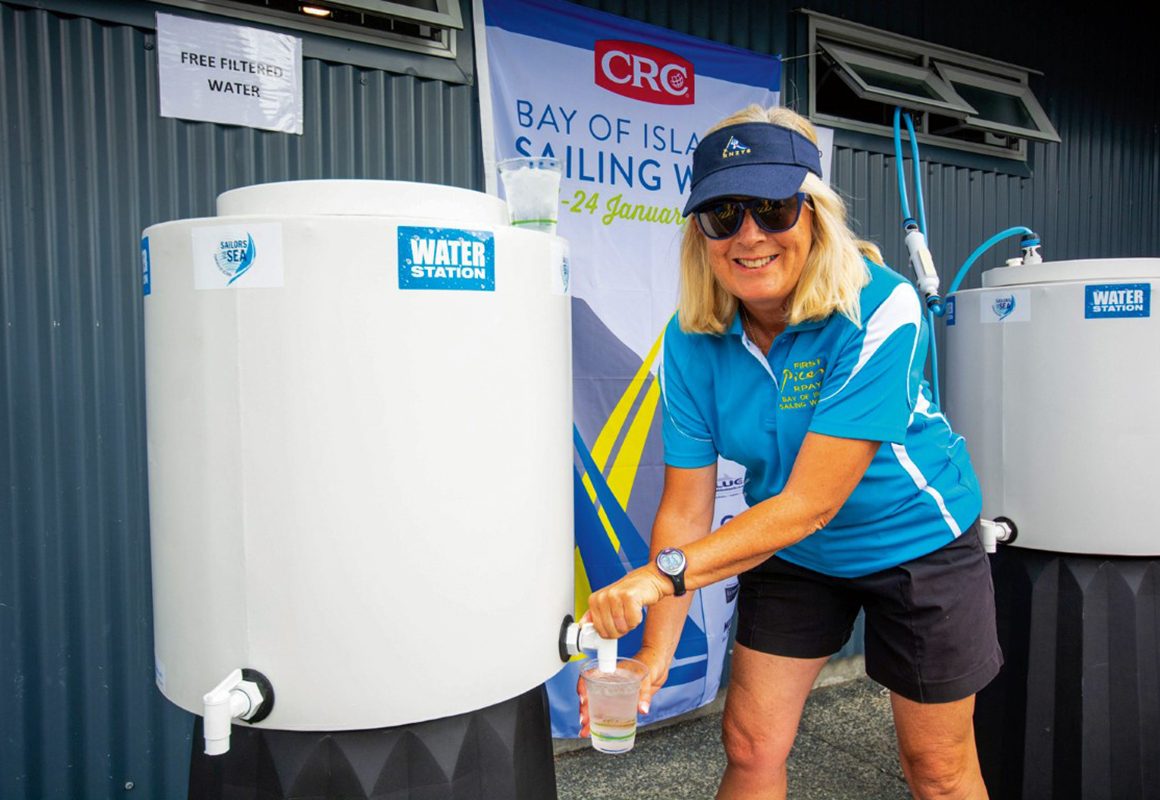
“We looked at every aspect of being more sustainable,” says Gmuer-Hornell. “One of the simpler changes was switching to reusable bottles with free water-refilling stations. Considering that there are probably 1,000 sailors and volunteers drinking at least a couple of bottles of water a day, over three days, that saved 6,000 single-use plastic bottles alone.”
They worked with local community group Russell Recyclers to help with waste minimisation, composting and recycling wherever possible, which resulted in a 75% reduction in waste going to landfill.
The organising committee also used video conferencing for committee meetings (eliminating the need for car travel), created an app to communicate documents digitally instead of printing, and enforced a no-discharge rule for competitors to eliminate pollution from boats entering the water.
The next CRC Bay of Islands Sailing Week is scheduled for 26–29 January, 2021. Organisers say they will be looking for ways to upgrade to Platinum level next year – the highest possible sustainability certification under the Clean Regattas programme.
Photo: Lissa Reydon
MORE FUNDING FOR SAFER BOATING
Maritime NZ (MNZ) has announced $844,249 in funding for 22 safer boating initiatives throughout New Zealand – the most ever distributed – aimed at reducing recreational boating fatalities and injuries.
MNZ Director Keith Manch says boaties contribute to the funding through their activities, given that it is drawn from the Fuel Excise Duty (FED) on petrol, and that the grants are crucial for organisations involved at the grass-roots building a safer boating culture across New Zealand communities.
“It’s an investment – teach someone to boat safely – and you’re protecting their family and friends too.”
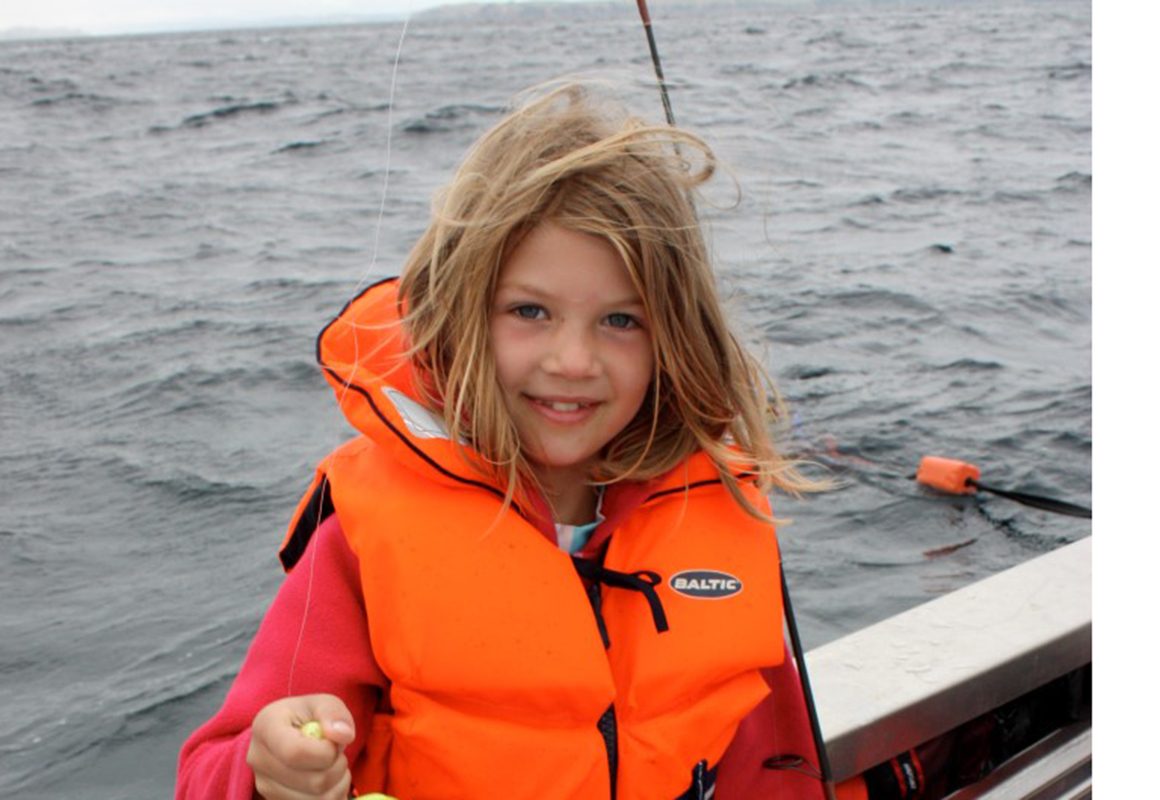
Included are some innovative approaches to promoting water safety – such as jetski training for people in the upper South Island, greater engagement with boaties through the Old4New lifejacket upgrade campaign and expansion of community ‘lifejacket hubs’, where people can loan a lifejacket for a gold coin donation.
Manch says a collaborative approach is being taken with $80,000 allocated to the on-water No Excuses campaign (18 participating councils). The campaign sees MNZ and harbourmasters interacting with boaties to promote lifejacket wearing and safe speed.
The grants provide continued boating education support for Pasifika communities through Coastguard Boating Education’s ground-breaking Folau Malu programme, which has seen community members complete a Day Skipper course.
Coastguard NZ’s Old4New – the campaign to replace unsafe old lifejacket with new ones – is now in its seventh year and bigger than ever. This year will see an extra van on the road, with one crew in the North Island and one in the South Island offering heavily discounted lifejackets to those who upgrade their old or damaged lifejackets.
To date, the programme has removed over 15,000 lifejackets from circulation in New Zealand communities. These jackets have been replaced with brand-new, fit-for-purpose Hutchwilco lifejackets sold at a discounted price. The vans will also be on the road over the four-week school holiday period between mid-December and mid-January, visiting more locations.


