
SAFETY HARNESS GREMLIN
The incident – where crew member, Simon Speirs fell overboard from the yacht CV30 – is being investigated by the UK’s Marine Accident Investigation Branch.
Spiers was participating in the third leg of the Race – between Cape Town and Fremantle – and was attached to the yacht by his safety harness tether. The hook at the end of the tether was clipped to a jack-line, but deformed under load and released, resulting in him falling overboard. He was recovered unconscious but could not be resuscitated.
INITIAL FINDINGS
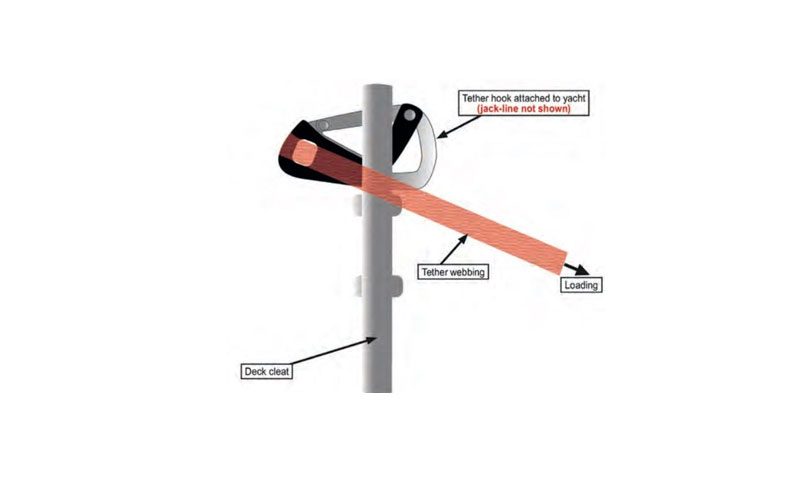
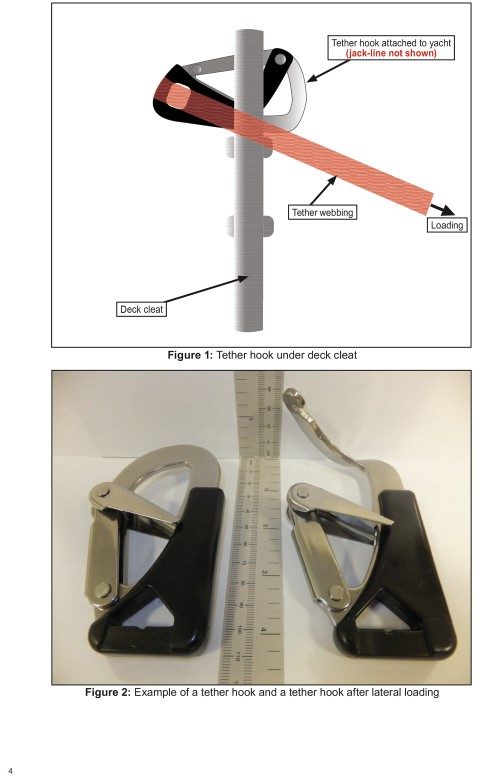
Speirs was using a three-point webbing tether. The hook at the end of the tether became caught under a deck cleat (Figure 1), resulting in a lateral loading that distorted the hook to (Figure 2), causing it to release.
The harness tether was certified under ISO12401 (Small craft – Deck safety harness and safety line – Safety requirements and test methods), the international standard applicable to this equipment.
The standard assumes the tether and its hooks will be loaded longitudinally rather than laterally. When loaded longitudinally, the tether can withstand a load of over 1 tonne. But when loaded laterally it will deform at much less load.
It is important that tether hooks remain clear of obstructions and are free to rotate to align the load longitudinally. For more information visit www.gov.uk/maib.

FINDING ENDURANCE
The loss of the ship under the ice triggered one of history’s greatest survival stories. Shackleton and his 27 men spent weeks on the ice before using the ship’s lifeboats to reach nearby Elephant Island in the South Shetland Islands.

The most remarkable part of the epic, though, saw Shackleton and five others sail the jury-rigged James Caird lifeboat 800 miles from Elephant Island to South Georgia – across treacherous, freezing waters with scant navigational equipment. The remainder of the crew were rescued in August 1916.
A number of previous expeditions to find the Endurance have failed.
Beginning in January next year, a British-led team from Cambridge University’s Scott Polar Research Institute will use autonomous underwater vehicles to travel almost two miles under the ice, using co-ordinates taken by the Endurance’s captain, Frank Worsley, as the ship sunk.
A rival expedition is being launched by US shipwreck hunter David Mearns, who has been studying Endurance for more than 15 years.
FINER POINTS OF ANCHORING
The company’s managing director, Dean Horgan, initiated the seminar after witnessing anchoring carnage during over Christmas holidays, when numerous boats had to contend with cyclone Fehi.
Dragged boats, tangled anchor lines, damaging collisions – you name it, says Dean, I saw it.
A seminar about the better techniques of anchoring – presented by experts – seemed a good idea. He began with the closest group he knew – the owners of the Riviera boats he sells.
The seminar – held in early April – was attended by around 50 people. Guest speaker was Steve Mair from Manson Anchors and Elvis Aitchison from Lusty and Blundell (covering the winch aspects of anchoring).
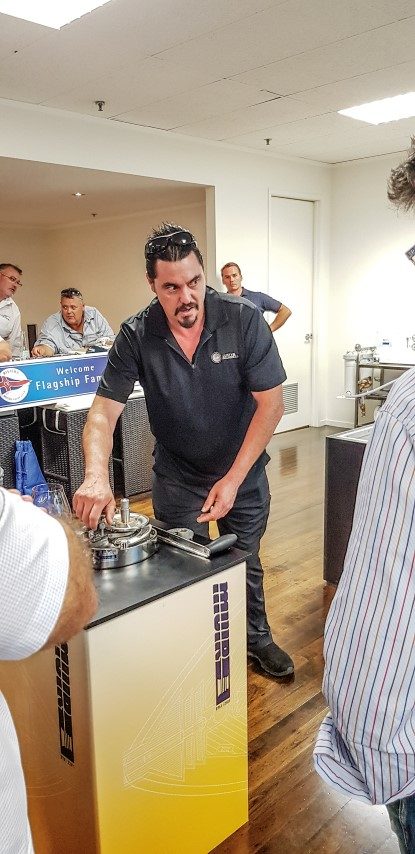
Mini anchors and a sand box were on hand to demonstrate how to drop and set an anchor.
Modern anchors are a lot easier to set than older designs, but the same principles still apply for ensuring the correct amount of rode is let out for the depth of water.
With modern boats and powerful engines care needs to be taken when ‘setting’ the anchor to ensure it and the chain are not overloaded.
Lively discussion ensued, as everyone appreciated that an anchor was often the one piece of equipment that ensured the safety of the vessel, as well as allowing a good night’s sleep.
Steve’s key advice? Choose the right-size anchor. If in doubt go bigger. If you have more doubt – go bigger again! He also strongly advised having a second anchor on board.
Lusty and Blundell’s mobile caravan was available for participants to check out some of the latest electronic equipment available. A good place for learning how to set your GPS anchor alarm!
Additional seminars covering a wide range of topics are being developed by Flagship Marine.
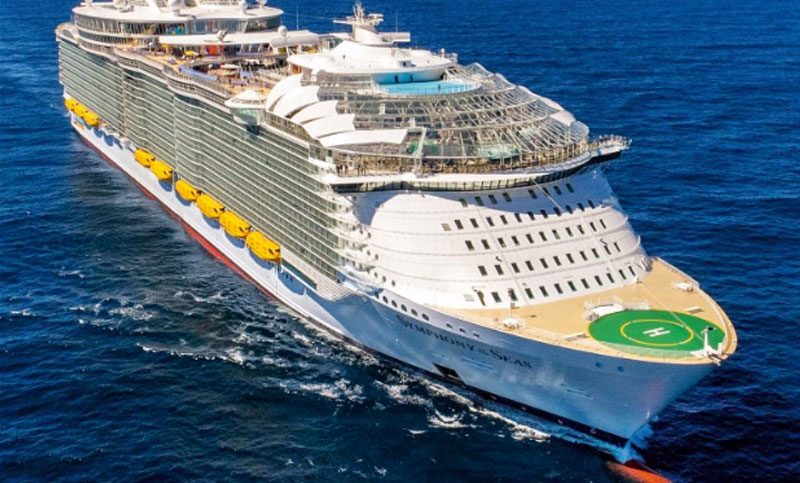
LUXURIOUS BEHEMOTH
Boasting more cabins than any other vessel afloat and with room for 6,680 passengers, the just-launched, 228,081-ton Symphony of the Seas is the world’s largest ocean liner.
She’s a slightly larger version of the third ship in Royal Caribbean’s Oasis Class, the 22-month-old Harmony of the Seas. Harmony, in turn, was a bit bigger than the first two Oasis Class vessels, Oasis of the Seas and Allure of the Seas.
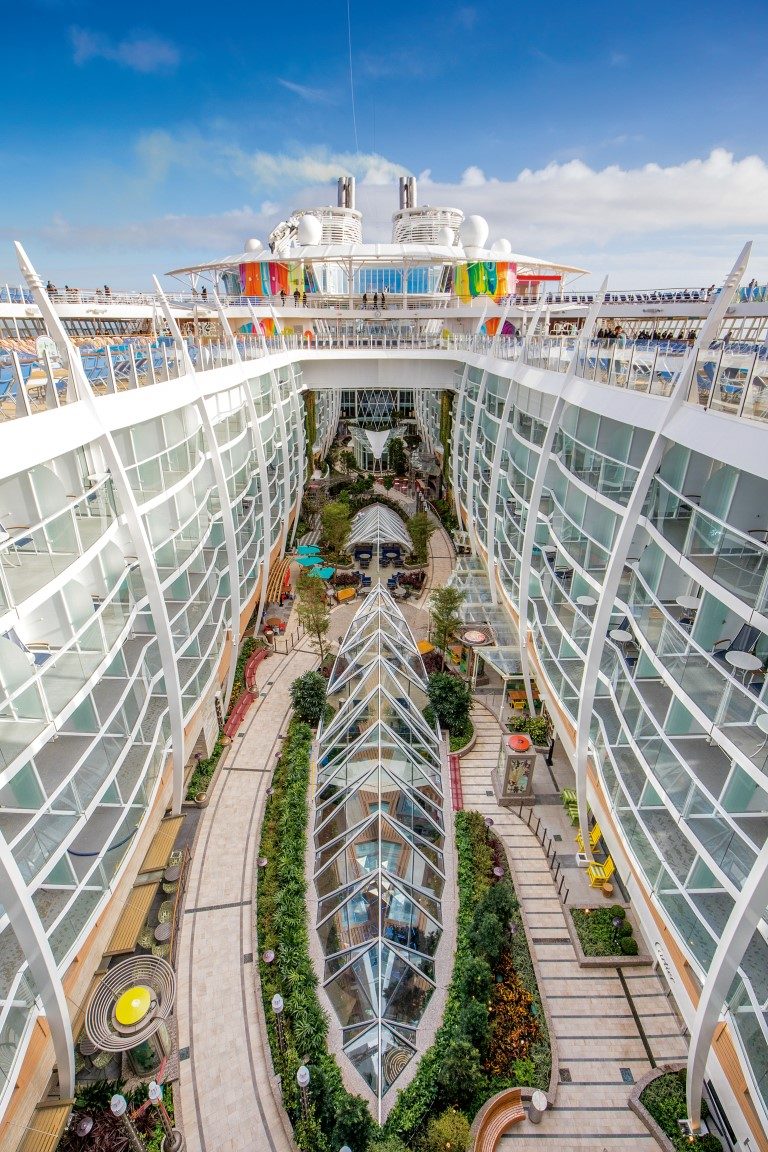
Boardwalk
Designed for vacationers who love big, bustling mega-resorts, the Oasis Class vessels have made waves in the cruise industry since they began debuting in 2009. All of the Oasis Class ships currently at sea are in excess of 225,000 tons — more than 30 percent larger than the next biggest cruise vessels.
Royal Caribbean CEO Michael Bayley says the line’s focus is on building vessels with an ever-growing array of attractions and activities for vacationers – and this inevitably results in ever-bigger ships. “We design for maximum fun, entertainment and vacation experience, and end up with big ships.”
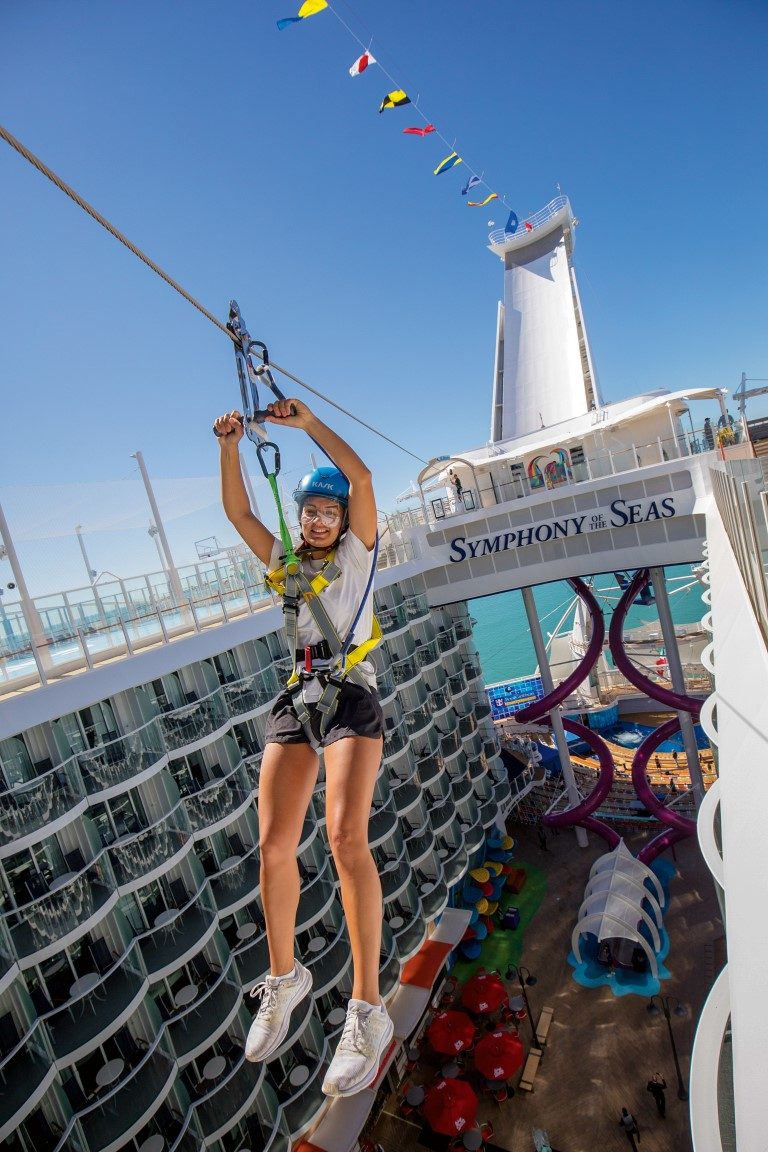
Zip Line
Symphony eclipses Harmony by more than 1,000 tons and offers several new features including a revamped Boardwalk amusement area and a new laser tag attraction. The ship also has a first-of-its-kind, two-deck-high family suite with a slide between floors.
The ship was built at the giant STX France shipyard in St. Nazaire, France – the same shipyard that built Harmony.
Symphony will spend her first few months sailing in the Mediterranean out of Barcelona before moving to Miami to operate cruises to the Caribbean.
She won’t be the world’s biggest cruise ship for long. Bayley says a new vessel scheduled for launching in 2021 will be even bigger.
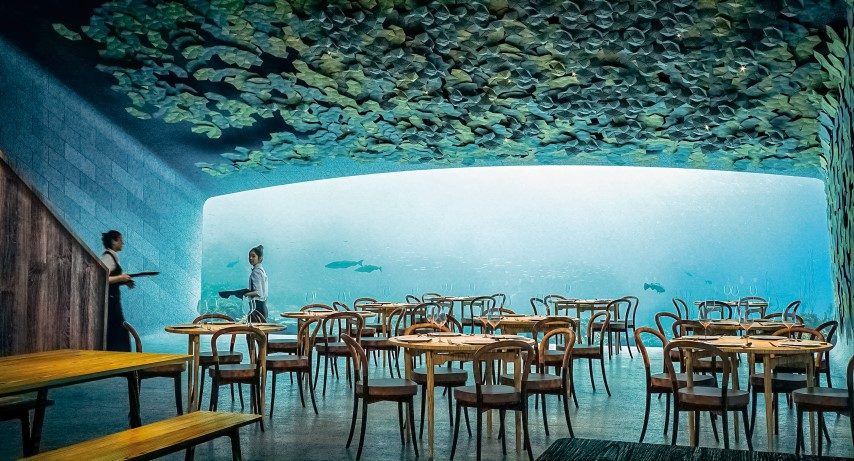
Dining at Under
Billed as the world’s largest underwater restaurant – and the first in Europe – Under is a new, must-visit dining facility nearing completion on Norway’s southern coast. The 600m2 structure – scheduled to open next year – will accommodate 100 diners.
The restaurant’s name is also a play on words: in Norwegian, ‘under’ can also be translated into ‘wonder.’ And the view promises to be wondrous.
Half-submerged, the building’s monolithic form breaks the water surface to lie against the craggy shoreline. A massive 11m x 4m panoramic acrylic window offers a view of the seabed as it changes throughout the seasons and varying weather conditions.
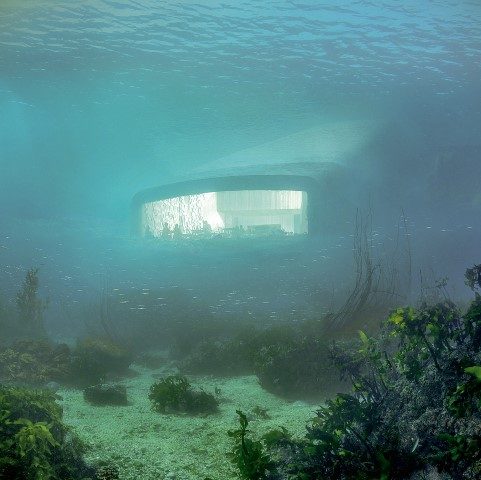
Diners will see all sorts of fish species swimming by, including huge cod, colourful lip fish, lobsters, seals, spiny dogfish and distinctive seaweed and kelp in the changing seasons.
More than a restaurant and aquarium, Under will also become a part of its marine environment and will function as a research centre for marine life. The building’s sleek, streamlined form is encapsulated in a concrete shell with a coarse surface that invites mussels to cling on.
Over time, as the mollusk community densifies, the submerged monolith will become an artificial mussel reef that functions dually to rinse the sea and naturally attract more marine life to its purified waters.
With metre-thick concrete walls, the structure’s built to withstand pressure and shock from the rugged sea conditions. It was designed by Snøhetta – an international, award-winning architectural company.


