
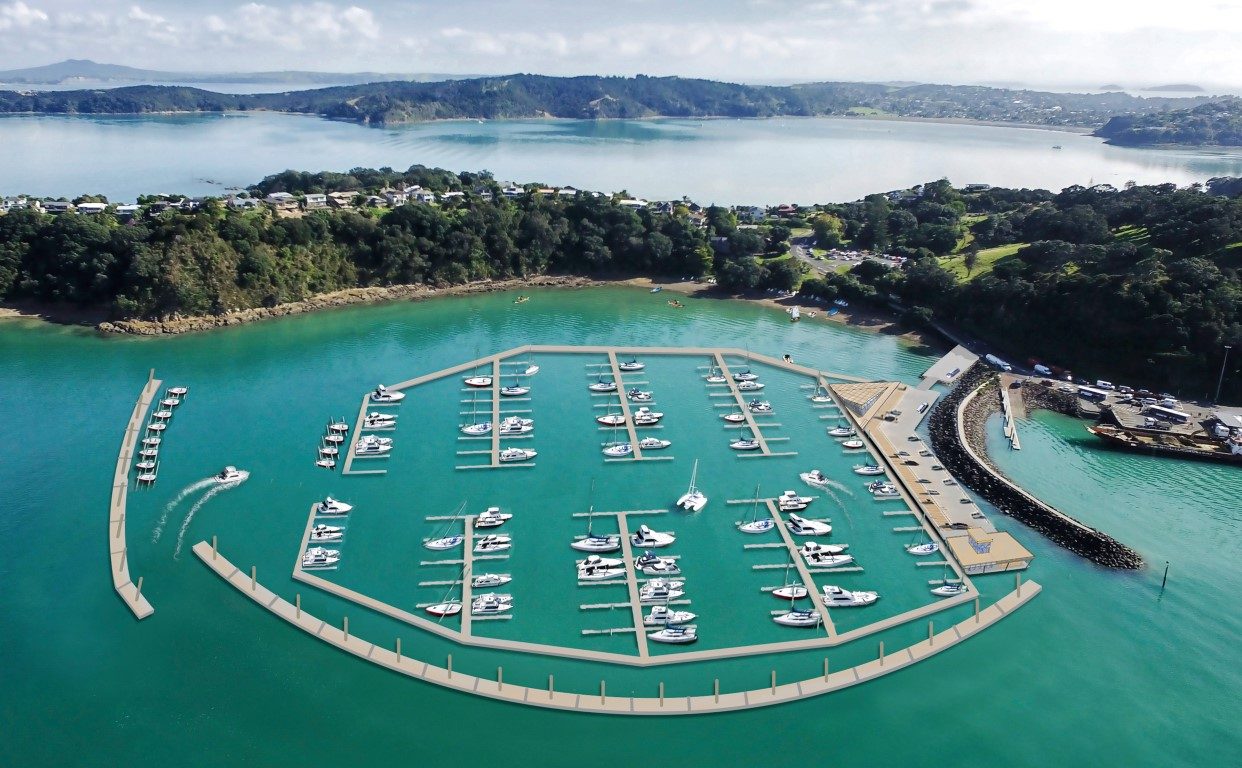
COURT APPROVES WAIHEKE MARINA
Environment Court Judge Laurie Newhook says the “overall outcome concerning natural character, landscape and visual amenity values … is that … the proposal is appropriate development in this location; will have only minor adverse effects on the landscape and natural character of the environment; and will have a range of effects, the great majority of them minor, on visual amenity values present in Kennedy Bay and around Putiki Bay and varying to positive and adverse depending on viewer attitude and visual perception.
“We consider that when analysed in this way, the marina would fit well into the landscape of Kennedy and Putiki Bays, provide a largely positive contribution to the experience and amenities of Waiheke Island, and offer adverse effects that in the round will be no more than minor.”
Tony Mair, director of Kennedy Point Boatharbour Ltd, the successful applicant, is delighted with the decision. “The Court has endorsed all of the effort we put into the project. All of our design innovations and the engagement process we followed with key stakeholders Ngati Paoa and Sealink have been affirmed.”
The marina will use New Zealand-first floating breakwater technology from Sweden, including floating pontoons for access, car-parking and marina buildings. It will include space for public pick-up and drop-off and day berthage for small boats visiting the island. A café, kayak/SUP storage and community meeting space will be developed. Donald Bruce Road will also be widened to improve ferry queuing.
The Court noted that the “proposal is actually and positively notable for the extent to which it offers public access during hours of daylight and other facilities accessible to the public such as community rooms, a café, and carparking. We consider that the Applicant has found a good balance between the needs of safety and security on the one hand, and public access on a managed basis on the other.”
Mair is disappointed with the additional costs and delays incurred due to local opposition, forcing the project to the Environment Court. The appeals cost his company in excess of $300,000.
Final design work will be completed in a few months, after which the marketing and sale of berths will commence. Berths will range from 10-25m in length.
For more information visit www.kennedypointmarina.co.nz
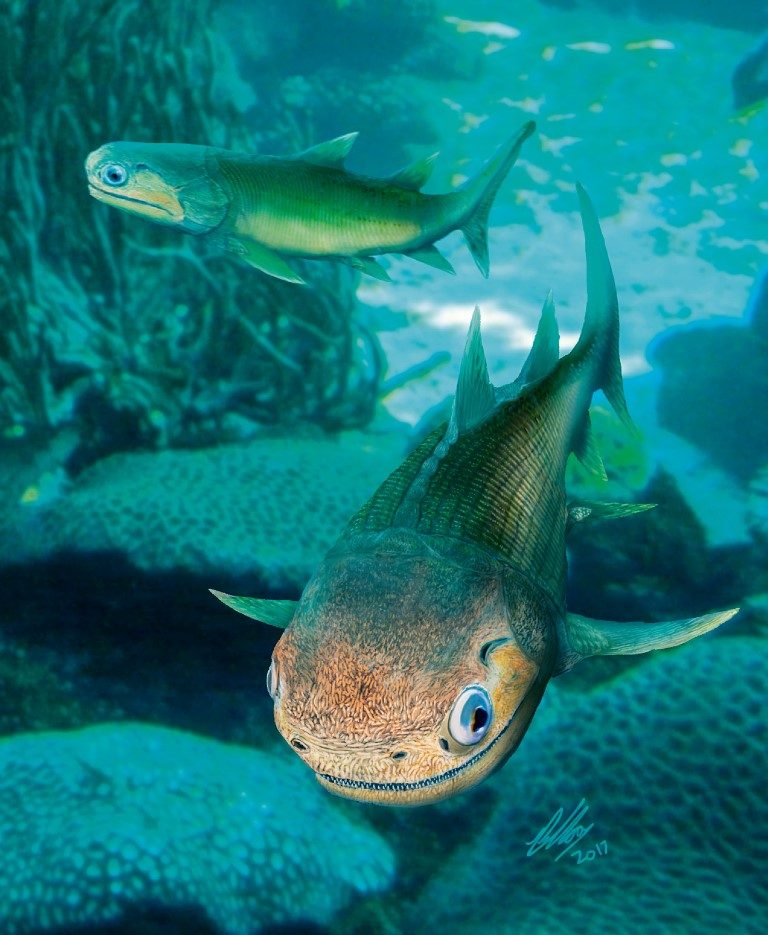
MEET YOUR DISTANT NANA
Researchers from Flinders University, along with colleagues in the UK and Sweden, used the scanning to uncover the origins of a 400-million-year-old fossil fish called Ligulalepis. The technology has also revealed a 3D-model of the fish’s ancient brain and confirms it as the ancestor of all modern bony fish.
The fossil’s also linked to the bone structure of human skeletons, providing anatomical evidence about human evolution from fish which can today be found within the makeup of our own bodies.
Flinders University Research Associate, Dr Alice Clement, says the discovery of two 3D-preserved fossils in Australia allowed the team to scan hidden features inside the skull and lead to the reconstruction of an ancient brain cavity.
“Our research reveals previously unknown details about the pattern of dermal skull bones, the shape of the brain and other soft tissue features. It resolves the big question about what the ancestor of all modern bony fish looked like,” Clement says.
“Understanding the structure is important because Ligulalepis is in a crucial position on the evolutionary tree. This discovery identified this fish as being the ancestor of all bony fish right before two major groups split and evolved different bodies.”
The University’s palaeontology professor, John Long, says bony fish are an important group because land animals such as mammals, reptiles and amphibians evolved from them.
“Not many people would think humans evolved parts of their bone structure from a fish. We are all just highly advanced fishes, that’s the point of our story. Four hundred million years ago, some of these fish started to develop fins at the front with bones that would eventually become the humerus, ulna and radius that forms our arm.”
Flinders University’s research has highlighted the evolutionary relationships of the first bony fishes and demonstrated the importance of palaeontology to help accurately understand our distant origins.
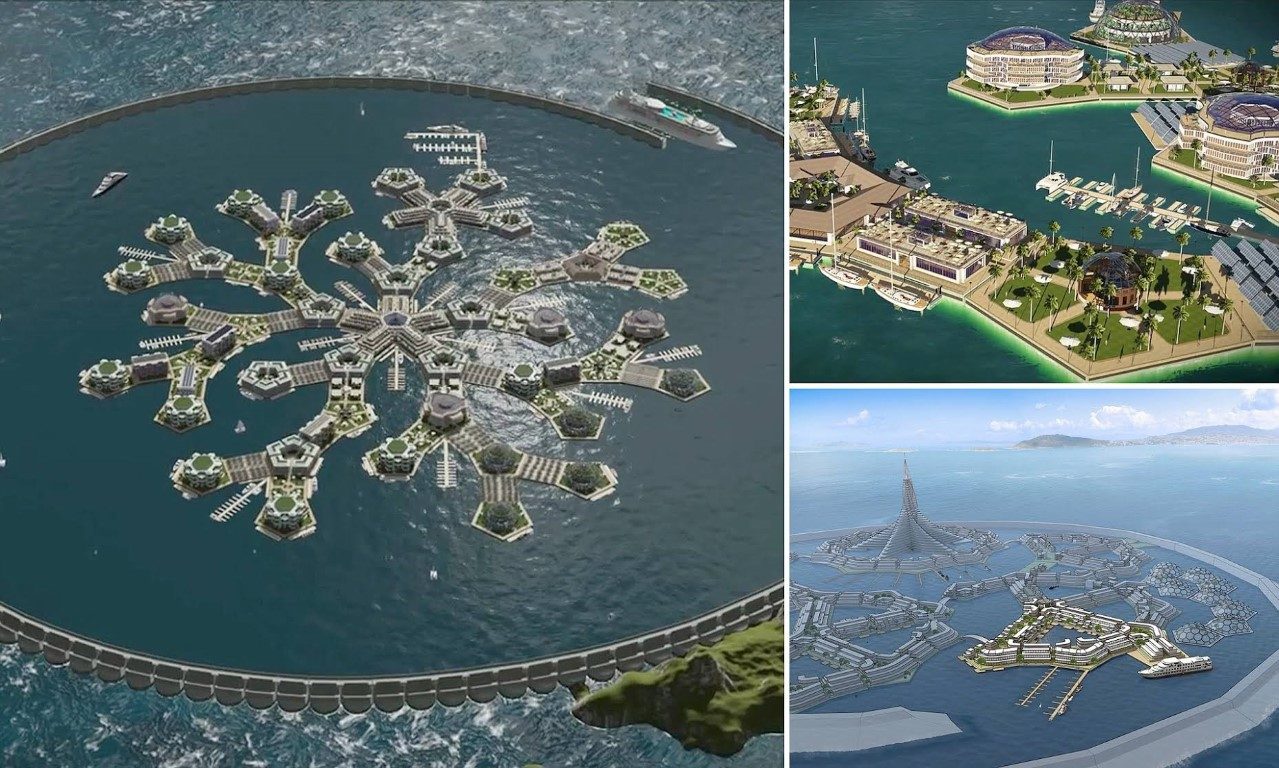
Floating Nation
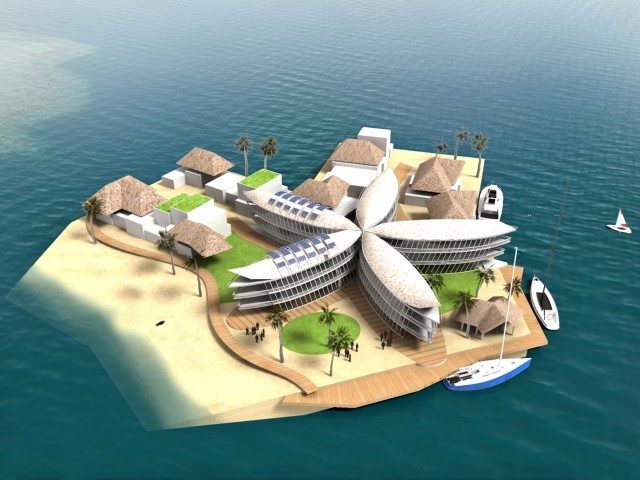
An independent floating nation is only a concept at this stage, but essentially, it’s a proposal for a cluster of floating pontoons tethered together to create a base for a community of like-minded individuals.Thanks to the geometric shape of the pontoons – pentagons and rectangles – they’re a bit like a floating jigsaw, easily arranged into different patterns to suit the specific needs of individual communities.
They could be established anywhere on the planet’s oceans, with the platforms oriented to the prevailing wind, to minimise the effects of the waves.
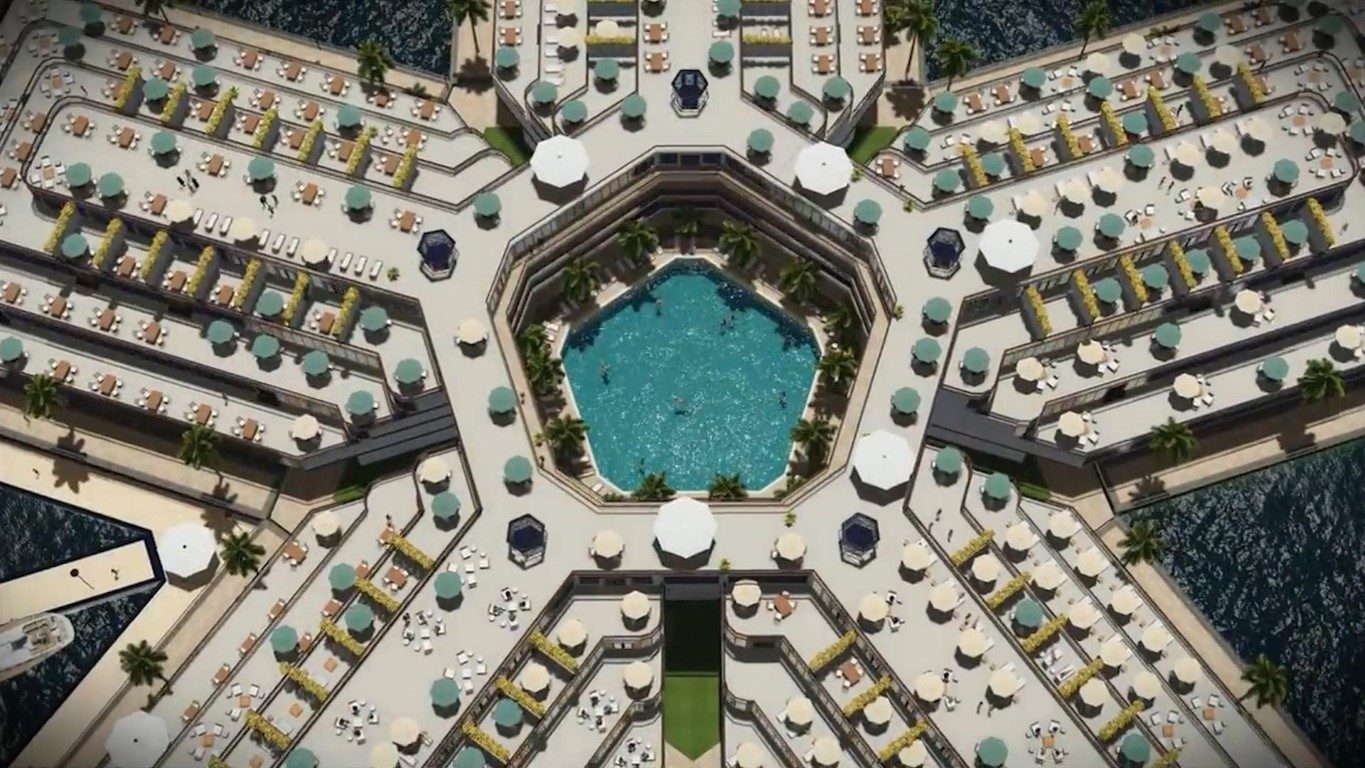
Typically, each of these sea-bound, city-states would feature 300 homes as well as a handful of hotels, restaurants and offices. It would also be equipped with aquaculture farms, healthcare and medical research facilities, as well as sustainable energy powerhouses. In other words, the inhabitants would be pretty much self-sufficient.
Floating in international waters and operating within its own laws, an island community would be ‘liberated from politicians’. And with a number of the buildings functioning as business centres, companies would be free from conventional government regulations and shackles. The island nations would even use a unique cryptocurrency – the ‘Vayron’.
Apart from the utopian appeal, the concept is also likely to resonate with countries/communities affected by global warming and rising sea levels. The artificial islands offer a lifeline to existing island nations – many in the South Pacific – where the prospect of homes disappearing under the waves is a real possibility.
Whose idea is this?
It’s the brainchild of a Dutch-based, non-profit organisation – the Seasteading Institute. It describes its members as a diverse, global team of marine biologists, nautical engineers, aquaculture farmers, medical researchers, investors, environmentalists and artists.
The Institute was co-founded in 2008 by Peter Thiel – the gent who set up PayPal – together with Patri Friedman, a software engineer and political economic theorist. He is also the grandson of Nobel Prize-winning economist, Milton Friedman.
Thiel has seed-funded the Institute to the tune of $1.25 million, and it’s estimated that the development of plans for the prototype island nation will cost around $50 million.
Institute president, Joe Quirk, wants to see ‘thousands’ of these rogue, floating cities by 2050, each offering different ways of governance. As you may have guessed, he has a dim view of politicians. “They just don’t get better. They’re stuck in previous centuries. That’s because land incentivises a violent monopoly to control it.”
In January last year a feasibility report into the floating island concept – by Dutch engineering firm Deltasync – proposed that the floating platforms would measure 50m in length, with 50m-tall sides to protect buildings and residents. It also calculated the price of each platform at around $15 million – similar to the price of land in London or New York.
The Institute has established a separate company – Blue Frontiers – a new start-up specialising in the actual construction of the floating islands.
Hiccup
The first of the prototype island nations was on track for establishment near Tahiti by 2022, in partnership with the French Polynesian government. Concerned about the dangers from rising sea levels to its 118 South Pacific islands, the government agreed to create a special economic zone, allowing the floating nation to operate under its own trade laws.
But after protests that the floating island would only cater to the privileged and wealthy, the government subsequently changed its mind. With this rejection, Seasteading and Blue Frontier have now developed a different strategy: a global competition offering $100,000 to any entrepreneur able to convince his/her government to host a nearby floating island.
To enter you have to obtain “a general letter of invitation from a government official” in your home country, together with photos and videos of the proposed floating island site. And you will have to pass a background check. The winner will be awarded 100,000 Vayron immediately, and a further US$100,000 once the prototype is built.
Hmmmm. Sounds interesting but could get a little lonely – and dicey for anyone with a delicate tummy. My biggest concern though is the lack of a golf course. Virtual golf just doesn’t cut it!
Ditch vintage lifejackets
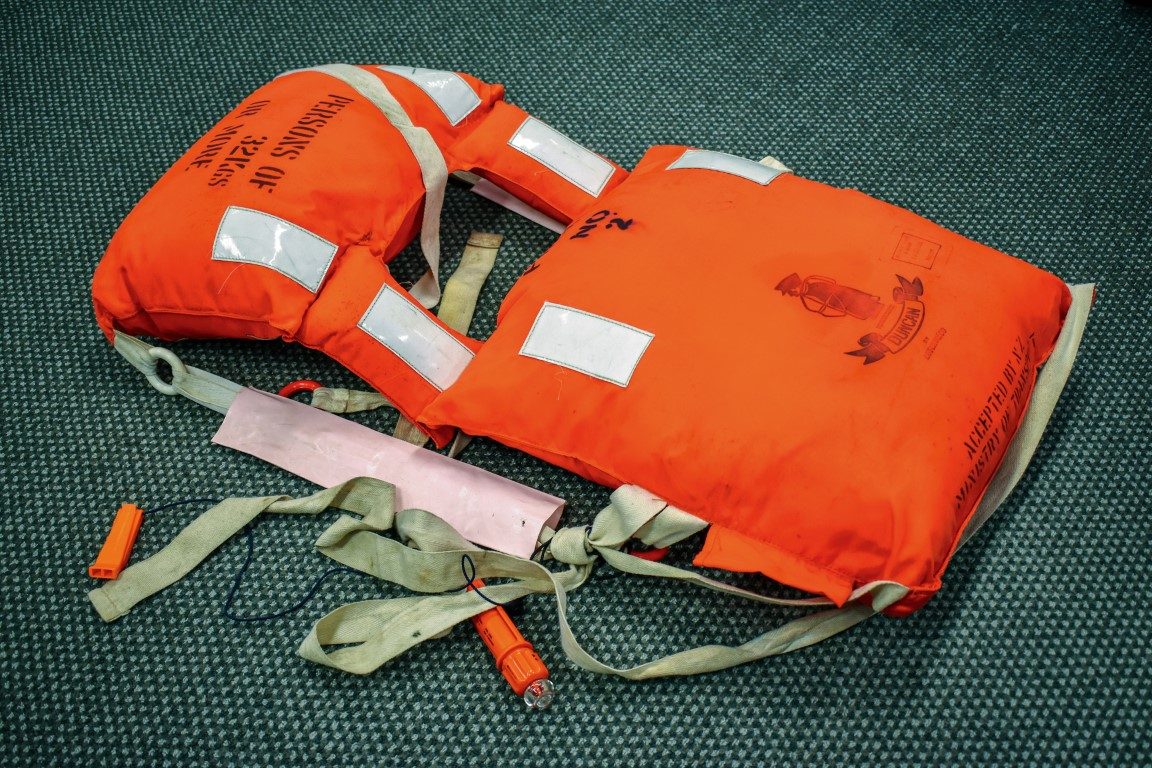
Kenny Crawford – general manager Maritime Compliance – says the old lifejackets should be replaced as soon as possible with modern foam-filled or inflatable lifejackets and destroyed so they cannot be reused or on-sold.
The manufacture of these lifejackets stopped in the 1980s, but an unknown number are still being used.
“Kapok,” says Crawford, “is a cotton-like fluff that’s no longer used in lifejackets because it naturally loses buoyancy over time and if it gets wet it will absorb water and pull you down. Cotton straps rot over time, even if the lifejacket’s not used, and will tear or break off the lifejacket. The lifejacket will come off in the water.

“Even if these lifejackets are in their original packaging, have never been used and look in perfect condition, replace and destroy them. They are unsafe.”
Crawford says the old lifejackets complied with international rules when they were manufactured, and many carry the old standards ‘S’ logo. But they no longer comply with the modern New Zealand standard for lifejackets.
Trade Me, Coastguard and many other organisations are helping to get rid of the old lifejackets. On Maritime NZ’s advice, Trade Me has removed several old lifejackets from auctions and will continue to do so as they are posted.
Volvo Penta self-docking technology
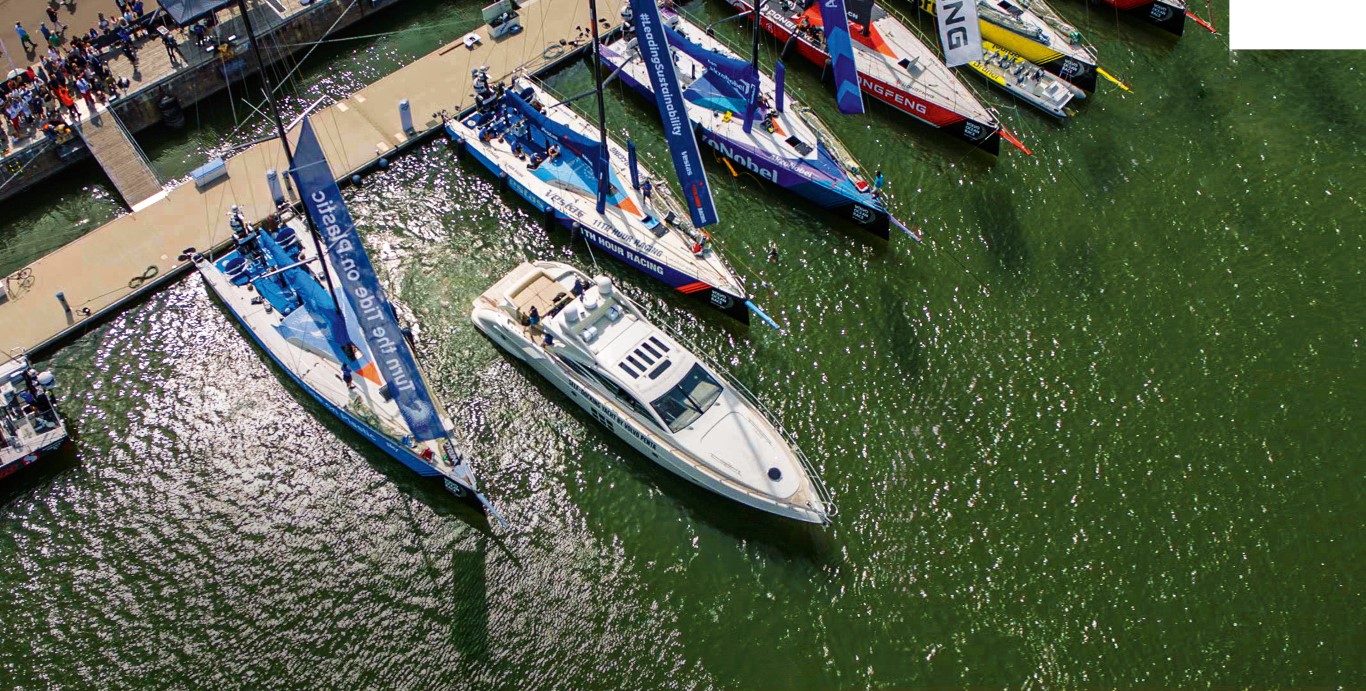
Gothenburg, Sweden – the June stopover of the Volvo Ocean Race – was the scene for a live demonstration of the self-docking system. A 68-foot launch fitted with the technology skillfully maneuvered itself into the tightest of spaces between two of the Volvo Ocean Race 65 racing yachts.
The pioneering technology is the latest in the company’s ongoing ‘Easy Boating’ philosophy to make boating simple, enjoyable and accessible to more people.
At its heart is the joystick-controlled Inboard Performance System (IPS), a complete, integrated propulsion system – from the helm station, via the engine, all the way to the propellers.
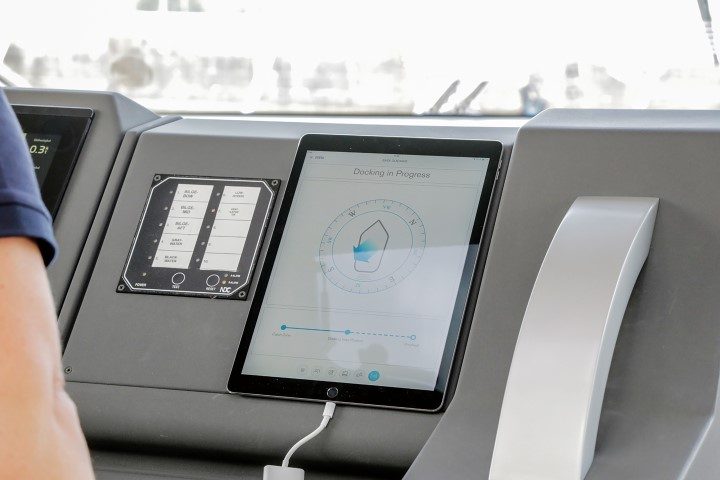
Narrow berths, changing wind and sea conditions and congested marinas will all soon be less of a challenge when docking. Thanks to the responsiveness of the IPS system, coupled with sensors and advanced navigation processing power, the system helps get the boat into the dock easily and safely. It also helps with leaving the dock.
The automated docking capability uses an onboard electronic vessel control system (EVC). It computes steering and drive calculations in relation to the boat’s actual position, and four sensors located at the intended berth.
“Docking,” says Björn Ingemanson, President of Volvo Penta, “is one of the most challenging boat handling manoeuvres – getting it wrong can be embarrassing and expensive.
“This new self-docking feature uses sensors and onboard computers to react in milliseconds to changing wind and sea conditions.
“It constantly makes micro adjustments in power and steering angle of the IPS drive to keep the boat on its intended course. If necessary, the docking process can be paused, and the system will hold the boat stationary in the water.”
How it works
Automating the docking process involves three distinct phases. First, as the boat nears its berth, the system recognises that it has entered a ‘catch zone’ and sends out a signal to the captain that it is ready to dock.
Once the skipper activates the self-docking function, the boat is (aided by GPS) automatically moved into a ‘docking ready’ position. When he initiates the final stage, the system uses a combination of GPS and sensors – both those fitted onboard and on the destination dock – to automatically move the boat.
“We have long had the ambition to make docking as easy as possible,” says Johan Inden, Chief Technology Officer at Volvo Penta.
“The first step towards this was in 2006, with the launch of our joystick docking technology. This was followed by the Dynamic Positioning System, which automatically maintains a boat’s heading and position, even in strong currents or windy conditions – ideal when preparing for docking. Now, we are taking the next important step by enabling the boat to dock itself.”
Upgrade option
The new technology will also be available as a retrofit version – something that would make it an attractive upgrade to thousands of boat owners.
The initial focus for Volvo Penta’s self-docking system will be individuals who can install the system on their own private docks. Longer term, it is believed the technology will be of considerable interest to harbours and marinas, allowing IPS-equipped boats fitted with the system to dock in complete safety and accuracy.
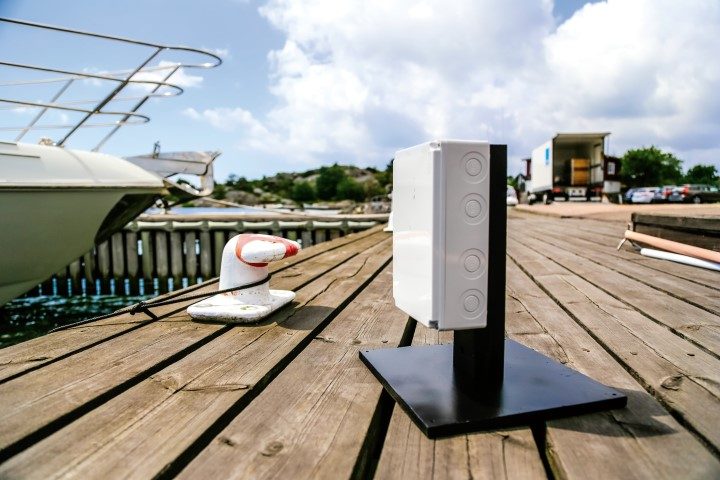
A future scenario for the self-docking system is that it could be integrated with Volvo Penta’s Easy Connect App. The App could allow users to check if the nearest marina is equipped with the appropriate self-docking technology – or even perhaps use it to secure a parking space.
007s new toy
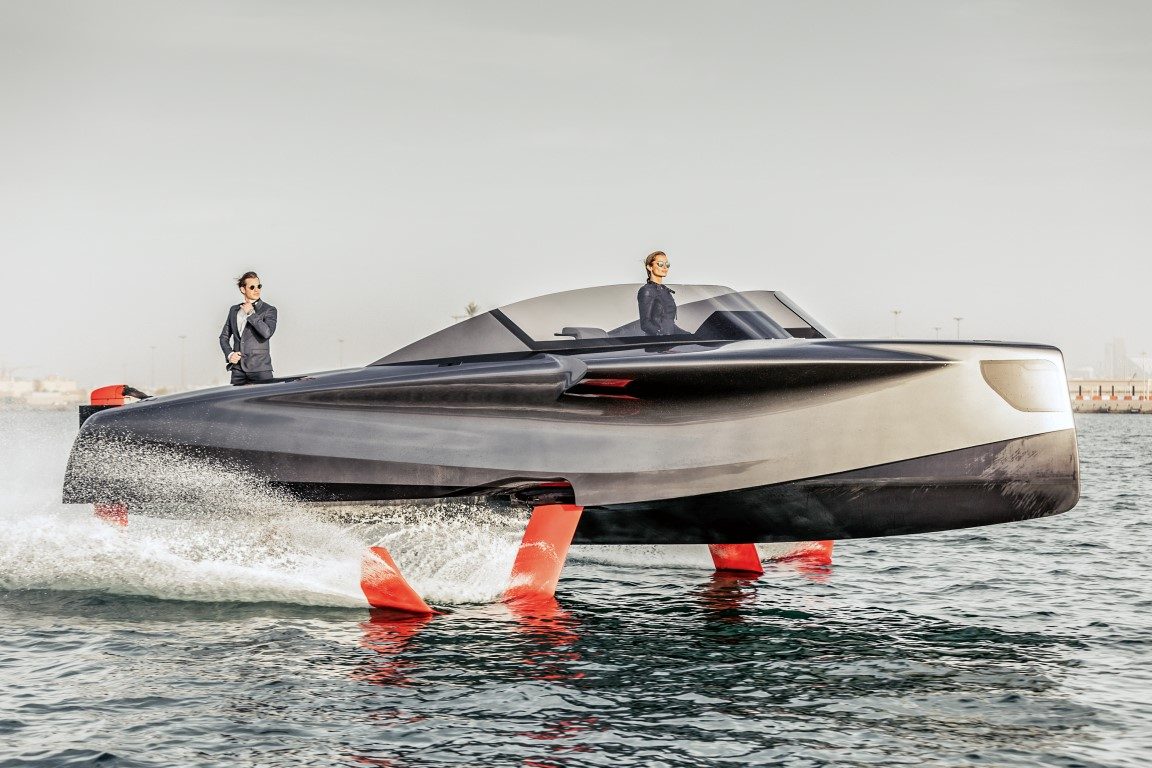
Making its world debut at the Dubai International Boat Show earlier this year, the 9.6m Foiler’s equipped with retractable carbon-fibre hydrofoils. When deployed, the boat flies 1.5m above the water.
Enata says using the boat is easy – it’s just like a sports car. You press a button to deploy the foils, push the throttles forward and you’re on your way. The foils are able to handle waves up to 3m (Force 5 to 6), while providing a comfortorable ride for up to eight passengers (skipper and seven guests). The foils are retracted in more extreme conditions, and the vessel is used as a conventional monohull.
The foils offer a wide operational window – the boat starts to foil at 12 knots and is completely out of the water at 17 knots. In flight mode maximum speed is 40 knots.
Enata general manager Alois Vieujot says the development of the Foiler was a very natural step. “We are a family of sailors and kite-surfers and have been foiling with kites and catamarans for about 10 years.
“We produce large competition and professional drones, as well as racing sailing boats and kitefoils. The Foiler is really a blend of all those technologies. To start this project, we merged our R&D with the Swiss company Hydros. It had already produced a working foiling prototype in 2015.”
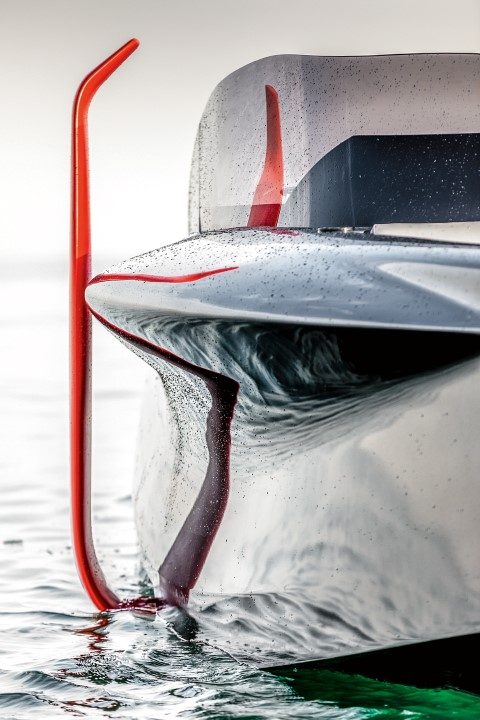
The Foiler switches between foiling and conventional boating mode in a few seconds. When moored or in a marina, the foils are out of the water. That way they stay dry and clean, thereby reducing maintenance.
Hull design ensures a smooth take-off and landing, bringing advantages such as comfort and excellent fuel efficiency thanks to minimal drag.
A hybrid propulsion system comprises two diesel engines and a large battery for the electric drives. The combination of these technologies make the Foiler about 20-50 percent more fuel efficient than conventional launches of a similar size. Users can opt for completely silent mode (full electric) for up to 10 minutes at 10 knots, with a larger range at lower speeds. This is ideal for maneuvering around a marina.
Foils also offer the advantage of a minimal wake – which means less irritation for moored vessels and less impact on sensitive environments along the shoreline. And because of the hybrid system and the boat being above the water, it generates very little noise. Without any water hitting the hull, noise levels inside are also very low. “The best word to describe driving the Foiler is tranquility,” says Vieujot. “It’s like sitting on a flying carpet – sweeping over the ocean.”
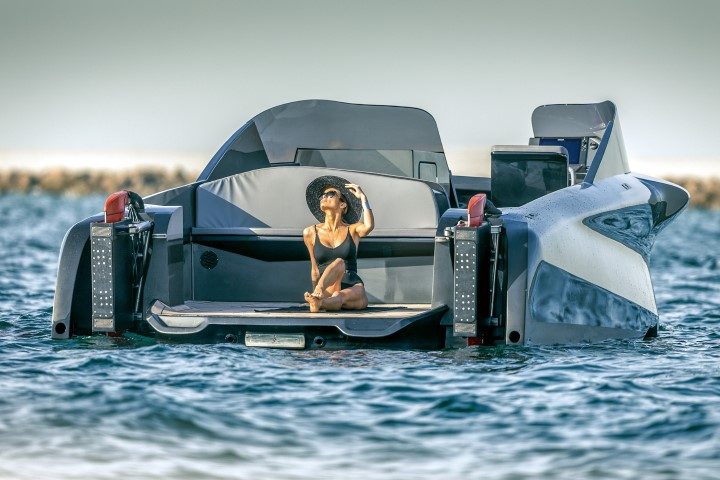
The company specialises in innovative, high performance, composite products. Boats it has produced include the GTCat and Multi50 – as well as the SR71 Blackbird model airplane.
The GTCat is a carbon-fibre catamaran fitted with large curved foils. The Multi50 is a trimaran, designed to compete in the TransAtlantic race La Route du Rhum. The SR71 Blackbird is a 4m remote-control carbon-fibre plane which in May won the World TopGun competition for replica model airplanes. The event was held in Florida.
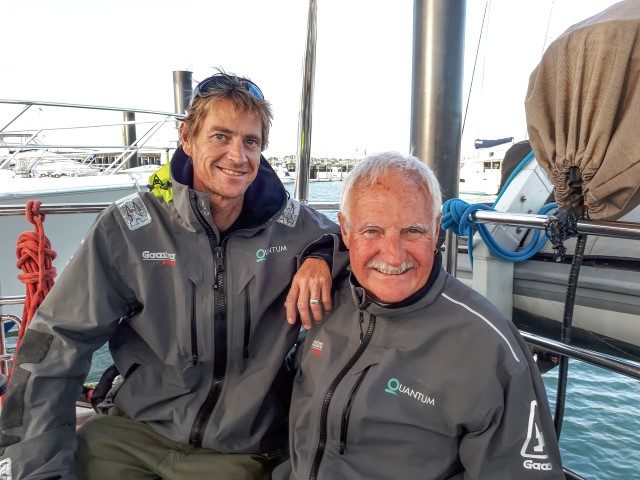
DICKSON DOUBLE IN TASMAN CHALLENGE
“I was pretty pleased to beat him,” said Hamish. “He’s a very good sailor.” Malcolm crossed the line 12 hours later in Sarau. “It’s good to be beaten by your son in a boat you designed-and-built yourself,” he smiled.
The two led the six-boat fleet that started from New Plymouth on 1 April for the 13th singlehanded trans-Tasman yacht race between New Plymouth and Mooloolaba, Queenland. The 1300nm race has been held every four years since 1970. It is the second longest, continually competed singlehanded ocean race in the world (after the OSTAR) and the only one of its kind in the southern hemisphere.
Bad weather prevented five Australian entrants for this year’s race from sailing across for the start but, in the event, the race developed into a bit of a light air drifter with tail-ended Graeme Francis in Robbery taking 17 days to make the crossing, a week behind the first yachts.
Malcolm sailed the 1978 solo Tasman race and tussled with David How in Ocean Gem, a Beneteau 445, for second place, swapping positions several times.
Diehard Aussie, Kevin le Poidevin, sailed the same Sigma 36 Rogue Wave, which he skippered in the 2014 event and kept close cover on Wellingtonian Geoff Thorn in his Bavaria 38 Am Meer.
The 1986 race record set by Ian Johnstone sailing the trimaran Bullfrog Sunblock was six days, eight hours and 50 mins which was only just eclipsed in 2014 by Austrian circumnavigator, Reini Gelder. He completed the course in six days, seven hours and 13 mins in Ave Gitana – a Lock Crowther-designed sistership of the previous record holder.
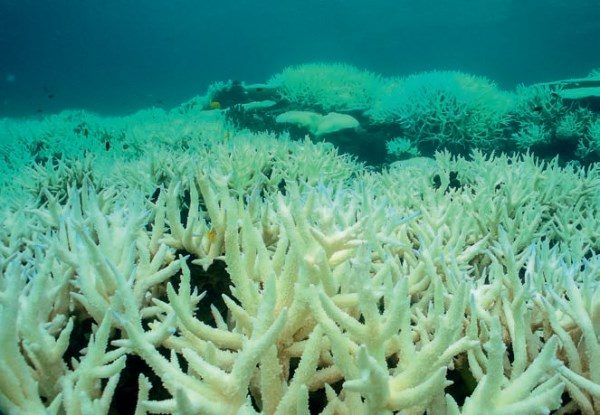
$500M LIFELINE FOR GREAT BARRIER REEF
The funding, confirmed in the May budget, follows a recent study which found that 30 percent of the reef’s coral died in a nine-month marine heatwave in 2016.
In partnership with the Great Barrier Reef Foundation, the funds will tackle crown-of-thorns starfish, reduce pollution and mitigate the impacts of climate change.
The Marine Park Authority will also receive an additional $42.7 million for its joint field management program over the next six years. After that, the Marine Park Authority will receive a guaranteed ongoing funding increase of more than $10 million per year for field management – doubling the Australian Government’s contribution to the program in the long-term.
Great Barrier Reef Marine Park Authority Chairman Dr Russell Reichelt welcomed the funding, saying it was a “game changer” as it significantly ramped up reef programs and protection and provided an ability to seek co-funding from private investors and philanthropists.
“This is a hugely positive outcome for the Great Barrier Reef and comes at a critical time after back-to-back mass coral bleaching triggered by the increasing pressure of global warming.”
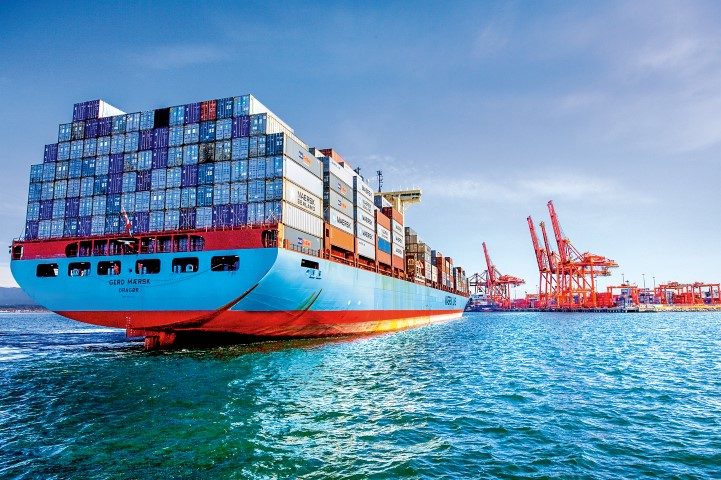
SHIPPING TO SLASH EMISSIONS
The new international agreement follows a recent meeting of representatives from more than 170 nations at the International Maritime Organisation (IMO) in London. Countries that voted against the move included Brazil, Saudi Arabia and the US.
Like aviation, the global shipping industry has traditionally been excluded from climate change initiatives such as the Paris Agreement because they’re deemed to be an international activity. But shipping is a major pollution problem.
The International Council on Clean Transportation estimates that, if treated as a country, shipping would be the world’s sixth largest emitter of carbon dioxide – about the same as Germany.
This new development agreement is widely interpreted as the global shipping industry finally acknowledging that the move away from fossil fuels is inevitable and fast approaching.
A recent study by the Organisation for Economic Cooperation and Development found that using known technologies, including alternative fuels – and even electric or wind-assisted ships – could almost completely decarbonise the sector by 2035.
The UK’s shipping minister, Nusrat Ghani, says his government will be supporting the industry in the development of green technologies and fuels, and that these would provide opportunities for growth for UK maritime companies.
The IMO agreement is seen as particularly significant for Pacific island nations threatened by rising sea levels. Says the Marshall Islands’ environment minister, David Paul: “[This agreement] will determine whether Marshallese children born today will have the chance of a secure and prosperous life or will have to leave the land of their ancestors and set sail across the oceans to an uncertain future.”
Meanwhile, a new EU satellite tasked with tracking dirty air will become a powerful tool to monitor shipping emissions.
Sentinel-5P-Tropomi (S5P) was launched in October last year and recently completed its commissioning phase and has been monitoring nitrogen dioxide emissions.
Nitrogen dioxide is a product of marine diesel combustion, as well as the diesel used by motor vehicles. The new satellite allows operators to monitor emissions in far greater detail than before.
“The resolution from our previous instruments was about 20km by 20km,” says Pepijn Veefkind, an investigator with the Dutch met office. “Now, we’ve gone down to 7km by 3.5km, and we are thinking of going to even smaller pixels.”
By knowing the size of the global fleet, where it moves, the ships’ specifications and how much fuel they are likely consuming – it is possible to estimate how much CO₂, or indeed NO₂, is being pumped into the atmosphere from exhausts.
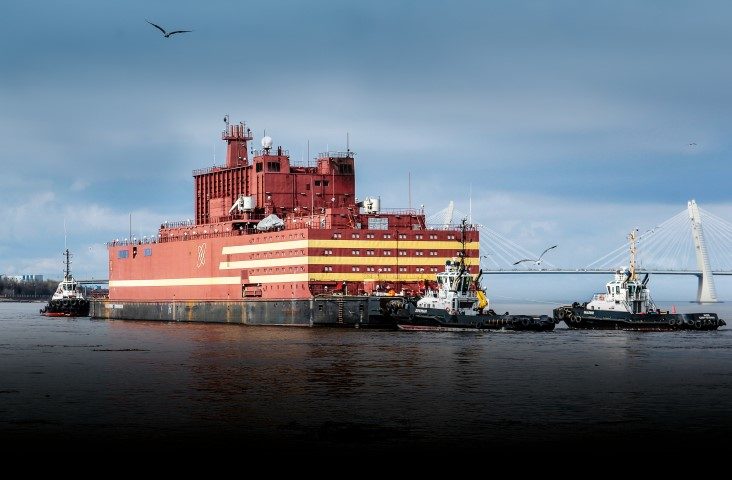
FLOATING NUKE STATION
The 21,500-tonne Akademik Lomonosov – equipped with two nuclear reactors – is headed to the port town of Pevek where it will power the town and oil rigs when its reactor shuts down next year.
The 144m behemoth has a crew of 69 and provides 70 megawatts of electricity. It will eliminate the need for about 45,000 tons of fuel or diesel oil, says its manufacturer, OKBM Afrikantov.
Greenpeace has condemned the project as a ‘floating Chernobyl’ and ‘nuclear Titanic’, but the ship’s owner Rosatom says the design is considered very effective for generating electricity in remote areas and can be moved on if not required or be used to power desalination plants.
Russia has at least another seven floating nuclear reactors planned and China is working on building its own for launching in 2020.
Countries such as Algeria, Indonesia, Malaysia, and Argentina have shown interest in hiring the ships.
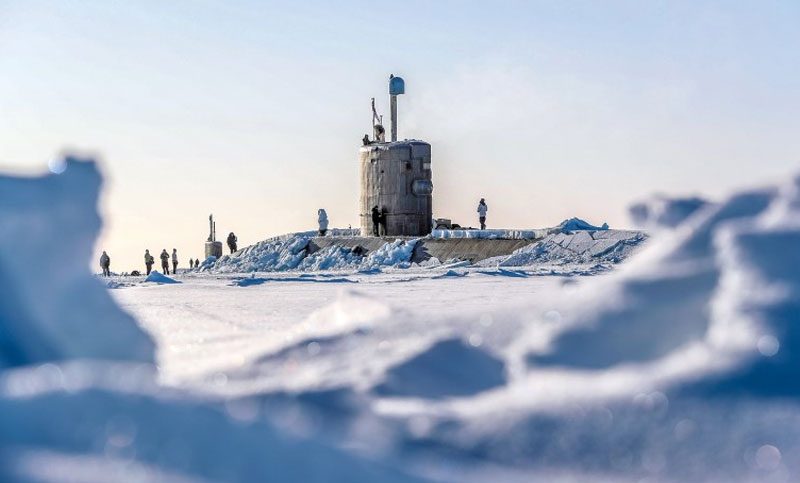
HOWZAT ON TOP OF THE WORLD
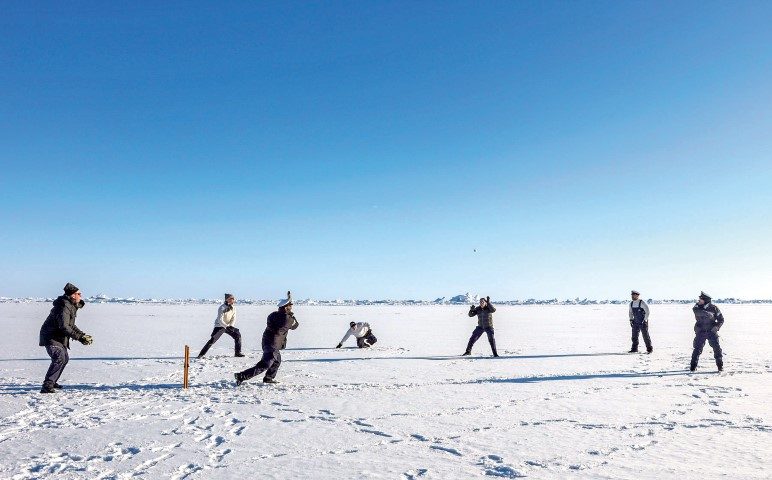
This impromptu game took place near the North Pole in April when the Royal Navy submarine HMS Trenchant broke through the ice.
The hunter-killer sub was training with two US subs – the USS Connecticut and USS Hartford – an exercise co-ordinated by the US Navy’s Arctic Submarine Laboratory. The trials were designed to test submariners’ skills in operating in the frigid climate of the Arctic Circle.
They also allowed the crew to test a range of equipment, notably sonar, against live ‘targets’ and to practice tracking and simulating attacks against other submarines.
Batting and bowling through freezing temperatures, the team enjoyed the clear blue skies in one of the coldest places on earth.
Photo: HMS Trenchant was one of three submarines that broke through the Arctic ice – triggering an impromptu game of cricket.
ORAMS NOMINATED FOR TOP AWARD
The extensive refit included a full repaint, engineering and major structural work on the vessel, which has traversed the North West Passage twice. She had covered 40,000 nautical miles through some of the world’s harshest conditions prior to reaching Auckland.
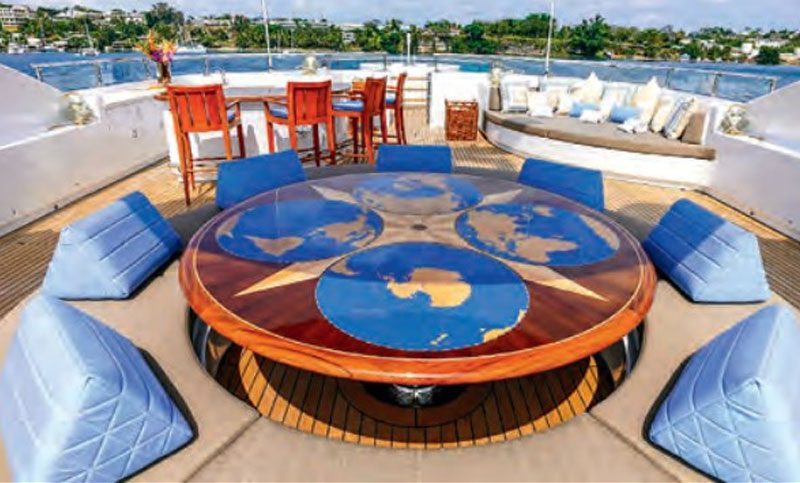
The interior of the flybridge was removed in its entirety so that the structure and joinery could be completely remodelled. The addition of a bar and jacuzzi as well as mood lighting created a completely new space, and the structure was rebuilt in composite to reduce the weight of the upper deck and future-proofed it against corrosion.
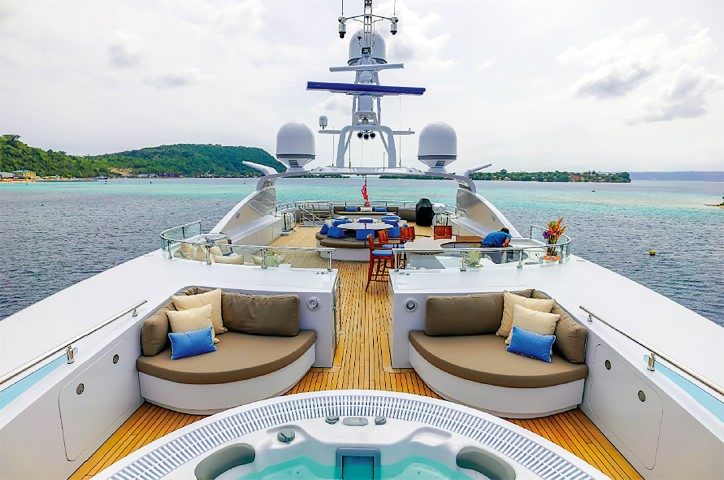
The refit also saw the two main engines rebuilt, two generator replacements, shaft seal and bearing replacements, hydraulic system overhaul, bow thruster overhaul and watermaker overhaul.
The project saw 12 months of work completed in 184 days – an ambitious target time frame set before work began.
This isn’t the first time Orams’ refit work has drawn accolades. It’s refit of the 44m Shenandoah of Sark reached the finals of the 2010 World Superyacht Awards.


