
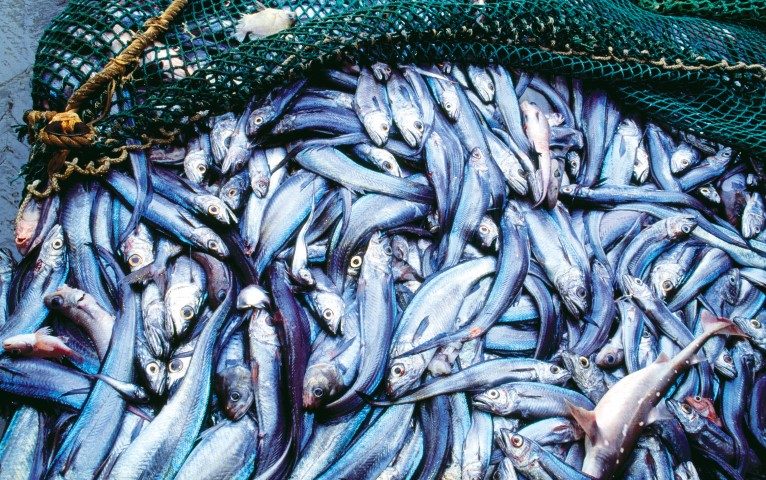
HOKI CUTS TOO LITTLE TOO LATE?
“For years we’ve known that warmer sea temperatures mean less successful breeding for hoki,” says Forest & Bird’s chief conservation adviser Kevin Hackwell.
Hackwell says that in the late 1990s and early 2000s, when sea temperatures warmed over the main hoki breeding grounds off south Westland, scientists warned that hoki stocks were going to collapse due to poor breeding.
“Back then, the industry fought tooth and nail to retain their quota levels rather than respond responsibly to a changing environment. What happened? The hoki fishery plummeted, as predicted.”
During the early 2000s, Forest & Bird fought against the Marine Stewardship Council’s ‘green tick’ certification of hoki because the fishery was collapsing, and the industry was making things worse by opposing moves to reduce its catch levels.
“We therefore commend the industry for taking a different approach this time. However, the worry is that the voluntary cuts may not be enough to maintain the hoki stocks if the breeding has failed.”
Hackwell says this is a stark reminder of the reality of climate change as we continue to have record warm years.
“Climate change is having big impacts on our natural environment, and therefore our key primary industries and therefore on people’s livelihoods. To protect nature and people, it’s critical we do all we can to keep warming to no more than 1.5 degrees, and this means making big emissions cuts, now.”

LESS MEAT, AND PARK THE CAR
We – humanity – have 12 years to change our lifestyle in unprecedented ways if we are to avoid catastrophic climate change – and changes include eating less meat and abandoning our cars.
So says the United Nations’ recently-released Intergovernmental Panel on Climate Change (IPCC) report, which warns that 2030 is the point-of-no-return for us to adopt changes that will help to avoid a plague of droughts, heavy flooding, extreme heat and poverty.
On our current trajectory, says the 400-page report, earth is likely to warm by 3°C. We need to cut that to around 1.5°C – as outlined in the Paris Agreement earlier this year.
Scientists believe the effects of climate change – and these effects include droughts on one end of the spectrum to rising seas on the other – will be less extreme if temperature rises are curbed at 1.5°C above pre-industrial levels. Greenhouse gas emissions were stable prior to the Industrial Revolution – the climate has warmed by 1°C since the mid-1800s.
Some 6,000 scientific works were referenced in the IPCC report, and its specific recommendations include:
- Global CO² emissions must fall 45% by 2030
- The use of coal needs to decline from 38% to nearly zero by 2050. This will require shutting down hundreds of coal-fired power stations
- Renewables should provide 85% of global electricity by 2050
- We need to change our diet: eating meat creates more CO² than vegetables
- The planet needs major reforestation to absorb CO2 from the atmosphere
- We’ll have to start storing carbon underground, a process called BECCS (bioenergy and carbon capture and storage)
Apart from the inconvenience, says the IPCC report, these changes will come with a cost: limiting global warming to 1.5°C has an annual price tag of around $3.6 trillion over the next two decades.
Says Jim Skea, a co-chair of the working group on mitigation: “We have presented governments with pretty hard choices. We have pointed out the enormous benefits of keeping [temperature rises] to 1.5°C, and also the unprecedented shift in energy systems and transport that would be needed to achieve that. We show it can be done within laws of physics and chemistry. Then the final tick box is political will. We cannot answer that. Only our audience can – and that is the governments that receive it.”
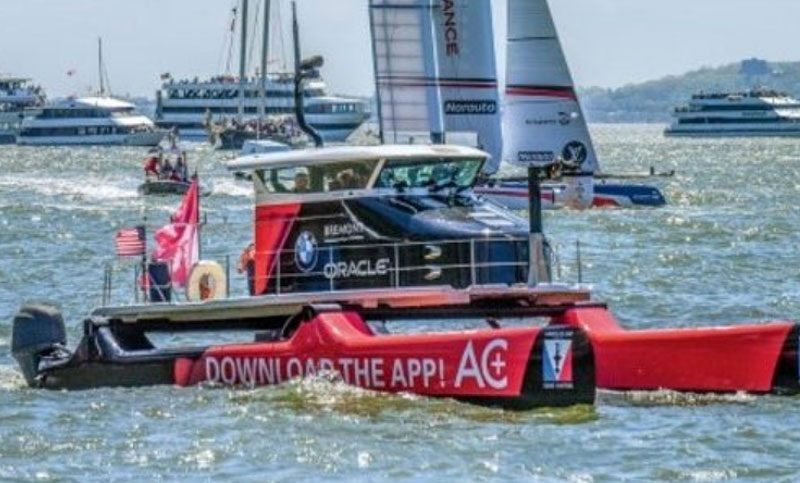
ANOTHER LIFE FOR AC35 FOILING CATS
The series – comprising five grand prix events featuring six national teams on identical wing-sailed F50s – will take place in Sydney, San Francisco, New York, Cowes (UK) and Marseille (France), as crews compete for the championship trophy and a $1 million prize.
Kicking off in February next year, SailGP’s inaugural season will feature teams representing six countries – Australia, China, France, Great Britain, Japan and the United States.
Each five-person crew will race on identical 50-foot foiling catamarans. A new boat class, the F50 is a redesigned, supercharged incarnation of the AC50. Twelve months in development by technicians and engineers at Core Builders Composites north of Auckland, the F50s are expected to break the 50-knot barrier.
Sanctioned by World Sailing, each grand prix will comprise two competition days with five fleet races, culminating in a final match race between the two leaders.
After SailGP’s Sydney inauguration in February (15–16), the league moves on to San Francisco in May (4–5), New York in June (21–22), and Cowes in August (10–11), before the Marseille final in September (20–22).
The final event features a winner-takes-all, $1 million championship match-race between the season’s top two teams to conclude three days of racing.
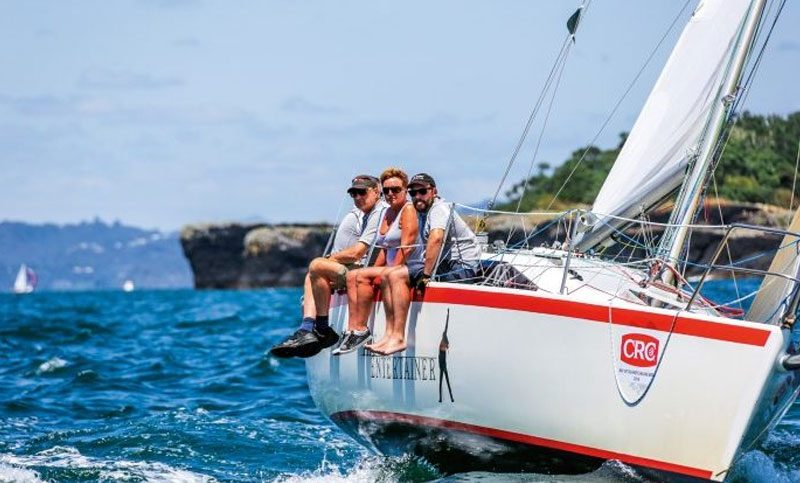
BOI Sailing Week
A multihull has become the first boat to enter the 2019 edition of the CRC Bay of Islands Sailing Week regatta – again expected to attract more than 100 entries from around New Zealand and overseas.
Boat 2, a Diam 24 trimaran owned by New Zealand Multihull Yacht Club Commodore Greer Houston, has registered for the event – scheduled for 22–25 January. Boat 2 will race in the Island Racing Multihull division.
Other confirmed entries so far include TP52s, sport boats, cruiser/racers and production boats. B division, in particular, is showing early promise, with regular starters Anarchy and Icebreaker in for another round, and Steve Mair’s Clockwork back for more too, facing off against local Shaw 9.1 Deep Throttle.
CRC Bay of Islands Sailing Week is the country’s biggest event of its kind, offering three days of racing with options for everyone – from fiercely competitive TP52 racing, to longer, scenic races around the Bay of Islands, along with dedicated divisions for classes like Young 88s and Wetas.
Organisers are already advising participants to plan ahead by entering early and booking a berth at the Bay of Islands Marina before the summer rush. Entries received before the end of December will also avoid the $75 late entry fee, so it pays to be ahead of the game.
For Auckland-based sailors, a free Rally to Kawau after CRC Bay of Islands Sailing Week will offer a fun way to make the trip back down to Auckland in company. Departing Opua on Saturday, January 26, and finishing at Kawau Boating Club with breakfast on Sunday morning, the rally will also put participants in prime position to join the Kawau-to-Westhaven Passage Race – part of the iconic Auckland Anniversary Day Regatta.
Notice of Race and full details, plus online entry for CRC Bay of Islands Sailing Week, can be found at www.bayofislandssailingweek.org.nz
Follow Bay of Islands Sailing Week on Facebook to stay up to date with all the latest regatta news.
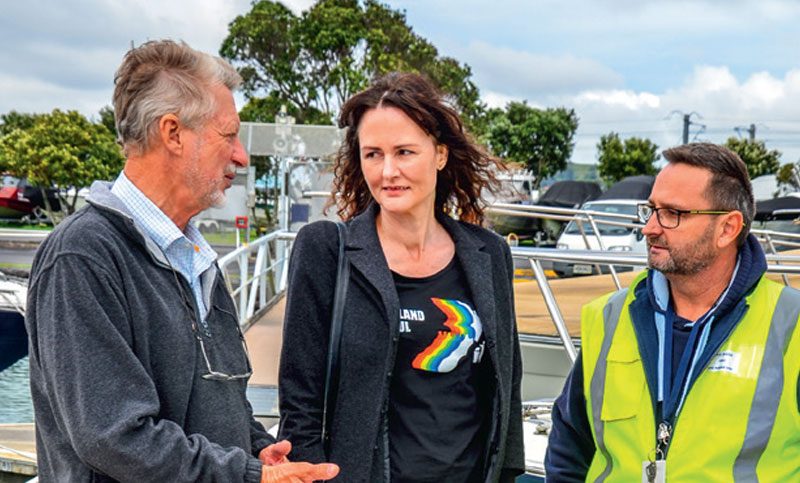
BLUE FLAG FLIES AGAIN
OBC first received accreditation in 2017. Renewal for the 2018–19 year followed a recent inspection by Malcolm Powell, a representative from the Foundation for Environmental Education, a Blue Flag agency. In New Zealand the Blue Flag programme is managed by Keep New Zealand Beautiful.
Copenhagen-based Blue Flag is one of the world’s most recognised voluntary eco-labels awarded to beaches, marinas, and sustainable boating tourism operators. To qualify for the Blue Flag, a series of stringent environmental, educational, safety and accessibility criteria must be met and maintained.
OBC first received accreditation in 2017. Renewal for the 2018–19 year followed a recent inspection by Malcolm Powell, a representative from the Foundation for Environmental Education, a Blue Flag agency. In New Zealand the Blue Flag programme is managed by Keep New Zealand Beautiful.
The programme aims to connect the public with its surroundings and encouraging people to learn more about their environment. As such, environmental education activities must be offered and promoted in addition to a permanent display of information relevant to the site in terms of biodiversity, ecosystems and environmental phenomena.
OBC is one of three New Zealand marinas with Blue Flag accreditation – Westhaven and The Landing are the other two.
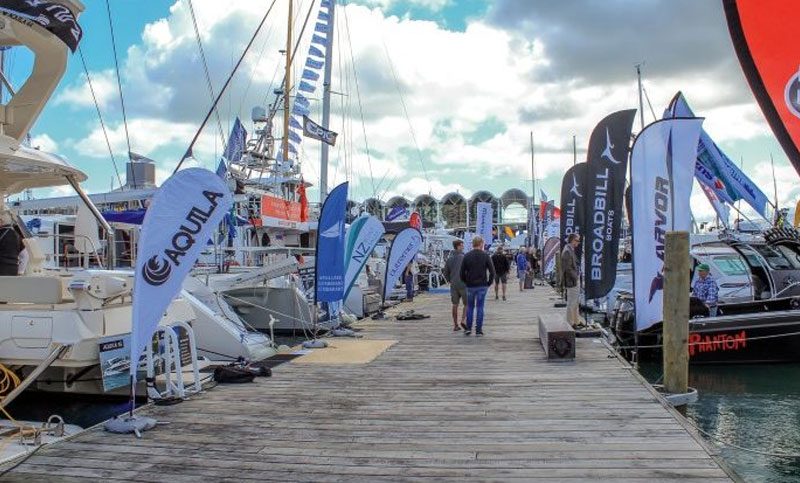
BOAT TAX FUNDS ROADS
The NZ Marine Industry Association and Coastguard New Zealand are urging the Government to take a closer look at the Auckland regional fuel tax which will hit Auckland-based boat owners twice – once when they fill up their cars, and again when they fill up their boats.
The tax sees boaties paying more for their on-water recreation to fund roads and the consequences, says NZ Marine executive director Peter Busfield, go beyond introducing a barrier to recreational boating.
“While it’s clearly unfair to tax a recreational group to pay for another sector’s infrastructure, the effects will be felt far more widely than solely in boaters’ wallets. The Auckland recreational boating industry contributes [to the economy] significantly, providing jobs and apprentice training.”
The tax puts an extra burden on boaters without any mitigating factors. Such mitigating factors might see some of the funds being pushed back into marine environmental projects, boating safety or extra marine facilities. Nationwide, more people than ever are going boating yet many regions have limited boat ramps, with little car and trailer parking.
According to a recent Maritime NZ report on recreational boating, more than 1.5 million adults in New Zealand are involved in recreational boating; 37% of those are Aucklanders, with additional boaties travelling to the city from other regions. More people per capita go boating in Auckland than in any other region.
That means approximately 219,000 people are affected by the regional fuel tax as applied to boaties in Auckland.
NZ Marine estimates those Auckland recreational boat users (mostly with trailer boats) are paying regional petrol fuel tax of $5,864,0400, while diesel launch and keel boats are being charged $1,092,500. Users across the categories include powerboats, launches, keel yachts with engines, jet skis, RIBS and dinghies and 64% of them share their boating time with family and friends.
While commercial vessels can apply for a rebate, recreational users cannot, leaving the association concerned with the effect on the marine industry New Zealand-wide.
NZ Marine says the extra tax may be the tipping point which dampens new boat sales and the industries they support by making boating less affordable for the consumer – particularly in the smaller boat range.
“Getting out on the water is a national pastime,” says Busfield. “We believe it’s not in the best interests of Kiwi families to make time spent in the family dinghy, or weekends heading out in a RIB to go fishing, an unaffordable hobby.
“As an industry we strongly feel this disincentive to boaters in Auckland will have harmful and wide-reaching consequences for our member companies.”
Between central government and the Auckland regional fuel tax, Aucklanders are paying $108,000,000 in fuel tax.
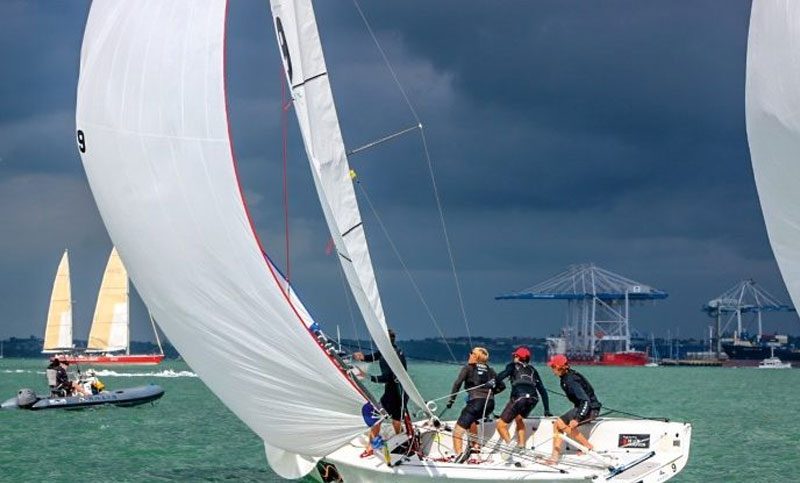
JOSH JUNIOR CLAIMS CROWN
Josh Junior won his second New Zealand Match Racing crown after beating Chris Steele 3–2 after a long, tricky day of match racing at the RNZYS.
Junior had eaten Nick Egnot-Johnson and his Knots Racing team earlier in the morning, which left the second semi-final between Chris Steele and Leonard Takahashi’s Pacific Racing Team. Both semi-finals were close, but it was small mistakes from the younger skippers Egnot-Johnson and Takahashi which cost them against their more experienced opponents. Both contests ended 3–0.
This put Steele up against Junior in a battle of past champions. In what were very shifty conditions, Steele took the first match quite convincingly and it looked like the final could be over sooner than envisaged. But Junior fired back in the next match to tie it up at one apiece.
The wind then shifted completely and resulted in a course change, and when racing got back underway it was Junior who took the win and found himself on match point. After yet another course change, Steele came back strong and showed some great tactics in the lighter, shifty conditions to even the final up yet again.
It was down to a do-or-die final match to decide the regatta.
Conditions were even harder for the final, with the wind going home early and forcing the two past champions to a virtual ‘drift off’. Junior crossed the line first.
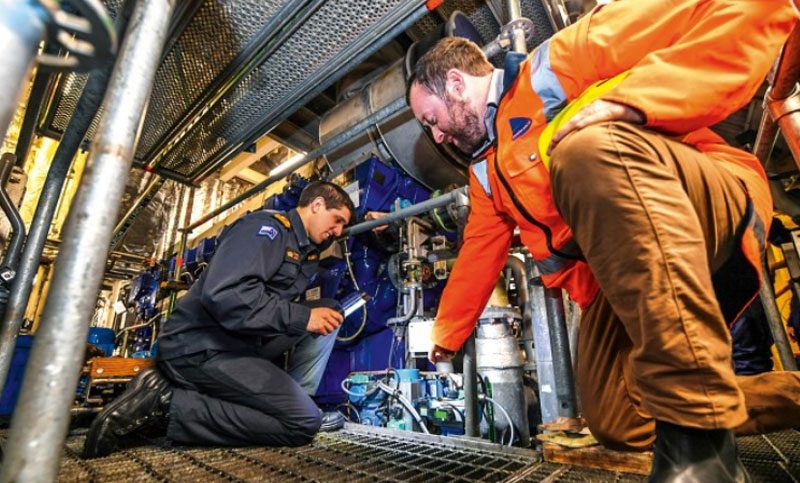
NAVY’S COOL SOLUTION TO OVERHEATING
Offshore patrol vessels HMNZS Otago and HMNZS Wellington were designed to run (mostly) on just one of their two main engines. The speed generated by one engine is generally enough for operational requirements.
But the issue with this, says RNZN Logistics Commander Maritime, Captain Andrew Nuttall, is that the trailing shaft, even though not powered by an engine, still turns because of the windmilling effect of the propeller through the water. This generates heat in the gearbox.
“The pump supplying coolant to remove the heat is driven by the engine and, with it shut down various components began overheating. To avoid that, both engines were run most of the time, even though only one was required.”
This translated into $200,000 of ‘wasted’ fuel used for every 1,000 hours of running. Having both engines operational also required more maintenance.
RNZN and Babcock developed a system that cross-connected the cooling system, so that when an engine was shut down the propeller could still rotate, while the heat generated was cooled through the diversion of coolant.
“The saving in fuel alone is impressive. Combine that with the reduced maintenance costs and this solution represents an excellent example of the value our engineering team can add.”
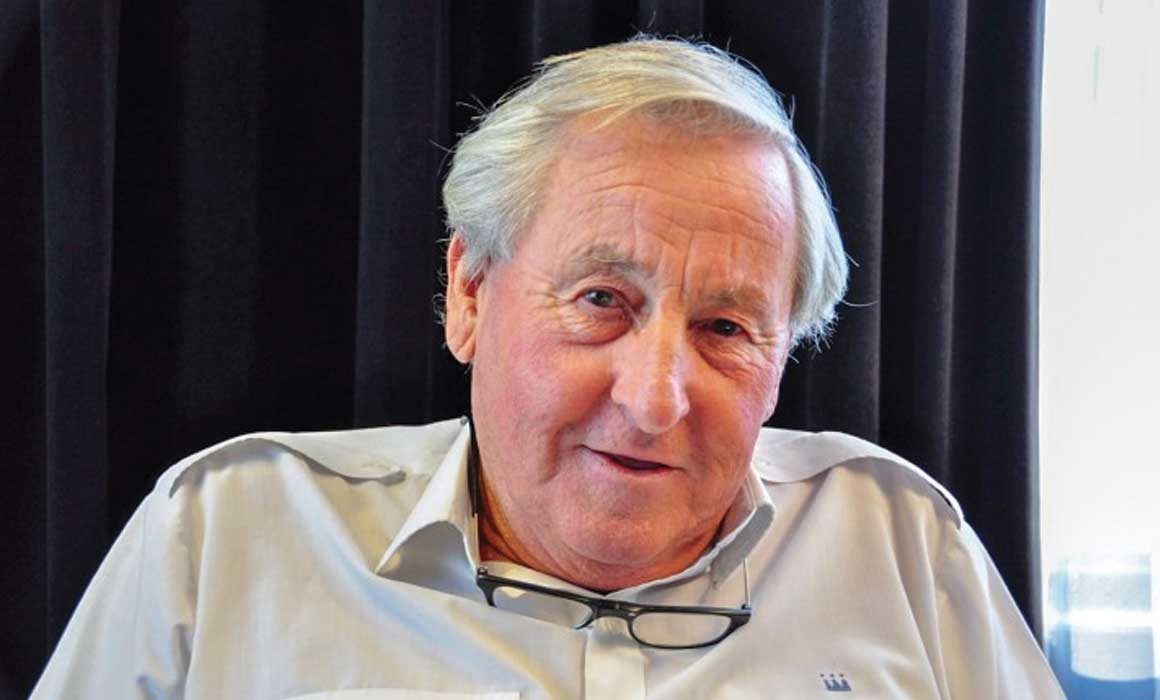
ALAN WARWICK 1934–2018
Born in Wellington in 1934, Warwick moved to Auckland in 1952 to begin an architectural degree.
He started sailing in M Class yachts and, after buying and sailing a Des Townson Zephyr, began building his first keeler in 1962, a 6.7m Townson Pied Piper.
Warwick joined Chris Bouzaid’s Rainbow II campaign to win the 1969 One Ton Cup (OTC), before heading up Lou Fisher’s Young Nick campaign for the 1971 OTC.
He also worked with Laurie Davidson on the design of the Half Tonner Swooper of Cox’s Creek, which later became the basis for the GRP production Davidson 31.
His first commission was the IOR quarter tonner, Quarter Pint, while his second was the well-known Longfellow.
He also designed the 747 and 927 Stratus cruiser/ racers, the Trojan 750 trailer-sailer, numerous sailing dinghies and a number of powerboats for Sea Nymph.
His first major offshore success was the Cardinal range of yachts, built in Taiwan, the success of which led him to found Warwick Yacht Design (WYD) in 1980.
Over the years WYD designed performance sloops, monohulls, multihulls, sportsfishers, luxury super yachts, high-speed launches, long-distance displacement cruisers, commercial boats and, increasingly, luxury, one-off commissions.
Many luxury commissions were built in Europe and Turkey. In all, Warwick and his team designed more than 500 boats, making him one of this country’s most prolific and successful yacht designers.
To him, boat design was as much about the form as the function. Attention to detail was paramount.
WYD was a family business, with wife Gael having considerable input into interior design and son Bruce specialising in CAD design. This gave Warwick the freedom to focus on client relationships, overall concepts and mentoring staff.
Like everyone in the industry, the 2008 GFC impacted on WYD’s business and it had to retrench. Over the last few years, Warwick had increasingly been passing the baton to Bruce although he continued to take a keen interest in all aspects of WYD.
Warwick unexpectedly died on September 20 at North Shore Hospital following complications from an injury suffered in Samoa. He’s survived by his wife Gael, children Bruce, David, Malcolm and Sondra, and numerous grandchildren and great-grandchildren.
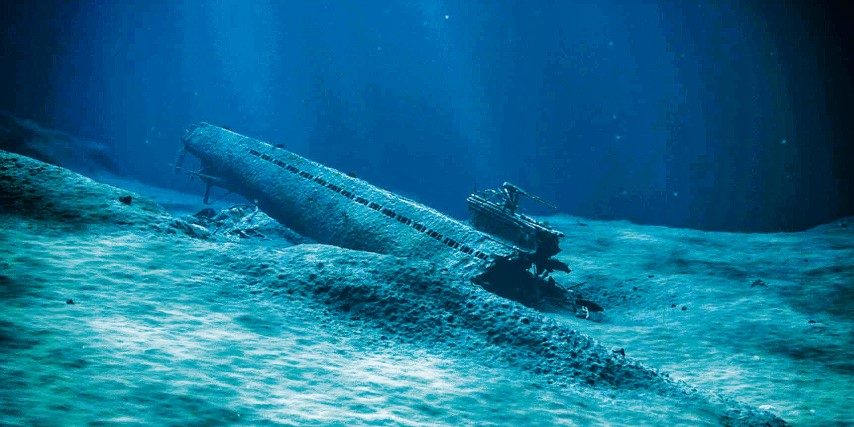
NAZI SUB TO BE ENTOMBED
U-864 was torpedoed off the coast of Bergen, Norway, by British sub HMS Venturer in 1945. Among U-864’s cargo were 1,800 canisters – around 65 tonnes – of mercury.
An estimated four kilograms of mercury has been oozing into the water every year – forcing authorities to ban boating and fishing in the area. The mercury has caused high levels of contamination in cod, torsk and edible crab.
The Norwegian government now plans to cover the 11 acres of seabed around the 2400-tonne wreck with up to 40ft of rubble to contain the leaking mercury. Expected to cost up to $50 million, the operation will start next year and finish in 2020.
Researchers say similar entombing projects to contain mercury-contaminated sites have been used around 30 times over the last
20 years and have worked well. Campaigners wanted the submarine salvaged and brought ashore but the authorities say the canisters could break if they are moved.
The shipwreck was first discovered in March 2003 by a Royal Norwegian Navy minesweeper after being alerted by local fishermen.
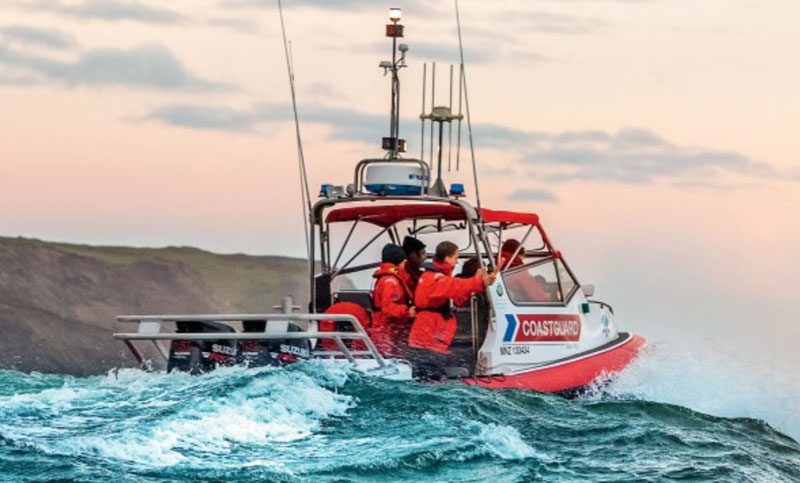
BOATIES BEHAVING MORE SAFELY
The Ipsos 2018 Recreational Boating Survey canvassed adult members of the general public regarding their boating habits. It examined the extent to which the population participates in recreational boating activities, with a focus on safetyrelated attitudes and behaviours, and awareness of Maritime NZ’s recent recreational boating safety campaigns and related activities.
Maritime NZ Deputy Director (and Incoming Chair of the Safer Boating Forum) Sharyn Forsyth says the results are encouraging.
BOATING BY THE NUMBERS 2018
- 1.5 million adults (42% of New Zealanders) were involved in recreational boating last year
- Kayaks remain the most popular craft used by boaties (33%), followed by power boats under 6m (22%), and dinghies (11%)
- Last year 19 people died in recreational boating accidents. Of these, 18 were men – 14 over 40 years (the highest fatality group)
- The percentage of boaties having at least two ways to signal or call for help if needed ‘every time’ has risen to 43% in 2018 from 38% in 2017
- The decision to avoid alcohol ‘every time’ either before or during time on the water has risen from 61% in 2017 to 67% in 2018“It’s fantastic to see that 92% of boaties say that boating safety is personally important to them because attitude influences behaviour. The decade spent by the Safer Boating Forum and councils promoting safer boating is really increasing boaties’ safety awareness.”
Lifejackets remain the most prevalent form of safety device taken on boating trips and the number of boaties wearing their lifejackets on the water all or most of the time remains stable at 75%.
“Most encouraging are the significant increases from last year in the three other risk areas – checking the weather, taking communications and avoiding alcohol before going out on the water.”Boaties checking the weather has risen to 85%; 67% are avoiding alcohol ‘every time’; and 43% of have at least two ways to signal or call for help if needed.
TALL ORDER
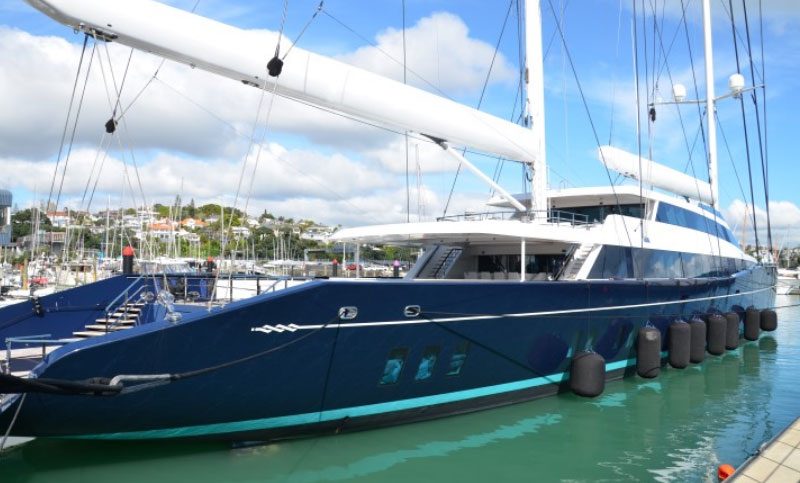
At 86m LOA, the Dutch-built Aquijo is so large that she is unable to sail under the Harbour Bridge – her 91m carbon fibre masts rise more than 25m over the bridge’s central span. Those masts – carrying some 5000m2 of sail – were built by Southern Spars.
Her 3Di mainsails – weighing around two tonnes each – had to be lifted off the vessel by crane and are being serviced by North Sails. Her 200-tonne lifting keel is the largest ever designed and has an 11.6m draught (5.2m when retracted). Even when moving her into position alongside her berth at Orams at high tide, she cleared the mud bottom by just 200mm.
Launched in 2016, Aquijo can accommodate up to 12 guests in seven cabins. She has a crew of 17 from all corners of the globe – South Africa, Australia, England, Estonia, Barbados, Brazil, the US, Canada, the Netherlands – as well as three New Zealanders.
Her website says she is available for charter at €450,000 per week (low season) or €550,000 per week in high season.


