
BOEING, BOEING GONE
Airbus has announced it is scrapping its formidable A380 programme – and many of the mammoth carriers are heading for the scrap heap. Some Boeing 747s, by contrast, enjoy a more colourful afterlife.
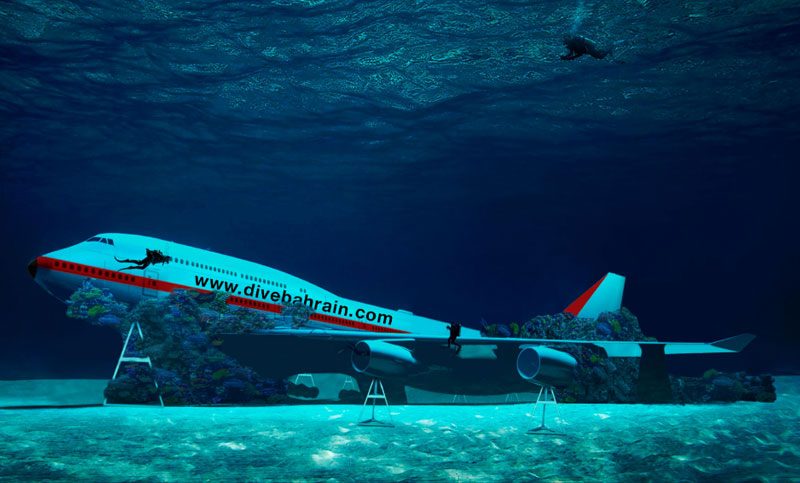
Bahrain is sinking a retired 747 in the Persian Gulf in a bid to attract divers to a new 100,000m2 ‘underwater theme park’ – and the plane is to be the pièce de résistance.
The Bahrain Tourism and Exhibitions Authority (BTEA) says the plane will be decommissioned correctly and will be eco-friendly to promote marine life growth. This involves removing all toxins and contaminants such as wiring, hydraulics, pneumatic and fuel systems – as well as all adhesives, insulation and chemicals.
The dive site will be ready by mid-year.
OYSTERS FIX BIG APPLE
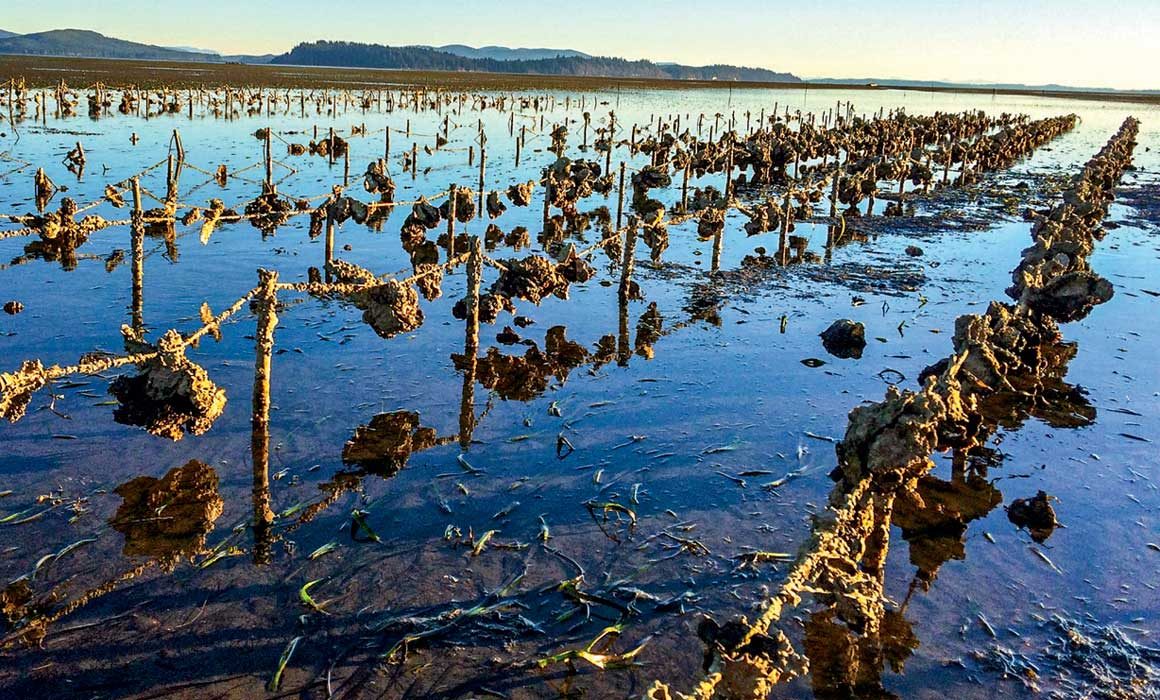
An organisation called – well, The Billion Oyster Project (BOP) – is working with hundreds of partners, schools and volunteers to build new oyster reefs in the harbour. The project – launched four years ago – has so far ‘deployed’ 28 million oysters and they are already having an impact.
“The water,” says Katie Mosher, BOP’s restoration manager, “has never been better in 150 years. We’ve definitely noticed an improvement when putting oysters on the bottom. There’s more fish, more crabs. It happens right away.”
Oysters, she adds, are ecosystem engineers which create a 3D reef habitat. “It’s full of different shapes and sizes of oysters that other species love to hunt in and live in and to search for prey. Oysters filter and clean the water when they breathe, making it clearer. This enables light to penetrate more easily to the bottom and allows more plants to grow on the seabed.”
The molluscs recycle nutrients and nitrogen, and can even mitigate the energy of large waves, reducing flooding and preventing erosion during storms or hurricanes.
New York once supported a flourishing oyster population – but it was driven to near extinction in the early 1900s, a victim of overfishing, pollution and sewage. Marine life slowly returned following the introduction of the 1972 Clean Water Act which outlawed the dumping of untreated wastewater and garbage.
OBC GETS BEHIND RESCUE HELICOPTER
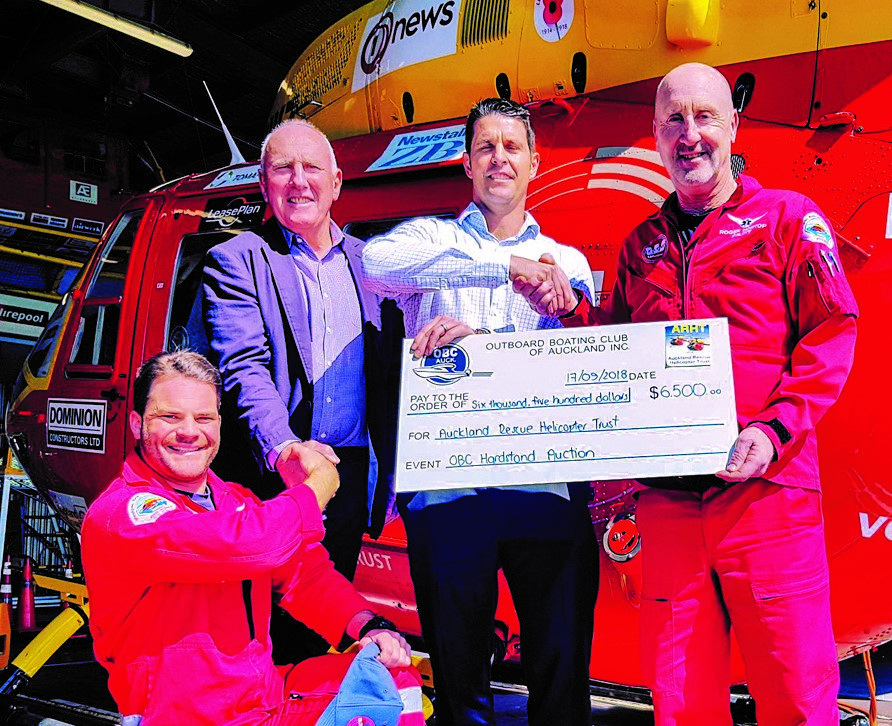
The OBC raised $6,500 during its annual hardstand auction at the club on Monday September 3, which was donated to the Trust. ARHT relies on people to help it save lives. Sponsoring a rescue mission means you contribute funds directly to a specific mission flown by one of its helicopters, potentially saving someone’s life.
www.rescuehelicopter.org.nz/ www.obc.co.nz
INTERNATIONAL SCHOONER ASSOCIATION FOUNDED
Which is why owners and enthusiasts of these vessels have just launched a new initiative – the formation of the International Schooner Association.
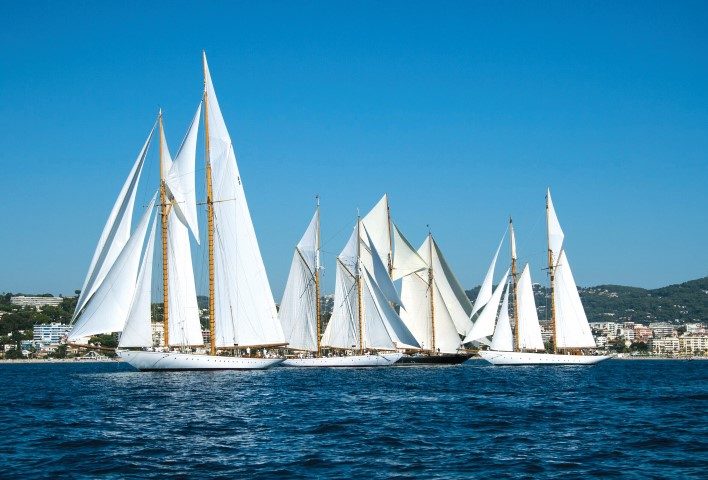
In late September the 40th edition of the Régates Royales in Cannes attracted what was possibly the greatest group of classic schooners gathered together in modern times. At a reception and dinner hosted by one of the vessel’s owners – Tomas de Vargas Machuca – owners or representatives of 10 schooners signed up to the launch of the new association.
The intention is for the association to run events specifically and exclusively for classic schooners. The hope is to build a programme and a series such that, as well as individual regatta prizes, there can be an annual perpetual trophy awarded to the ‘Schooner of the Year’.
Plans are afoot for the first event to be held in Capri next spring. The formation of the association is supported by the International Maxi Association, whose function is to guide, structure and encourage all types of maxi yacht racing.
These 10 founder members of the International Schooner Association are the owners of:
Invader 1905, Orion 1910, Mariette of 1915, Puritan 1931, Orianda 1937, Aschanti IV of Vegesack (1954), Elena of London 2009 (replica of 1910 design), Atlantic 2010 (replica of 1903 design), Germania Nova 2011 (replica of 1907 Germania), Naema 2013 (inspired by an Alfred Mylne design).
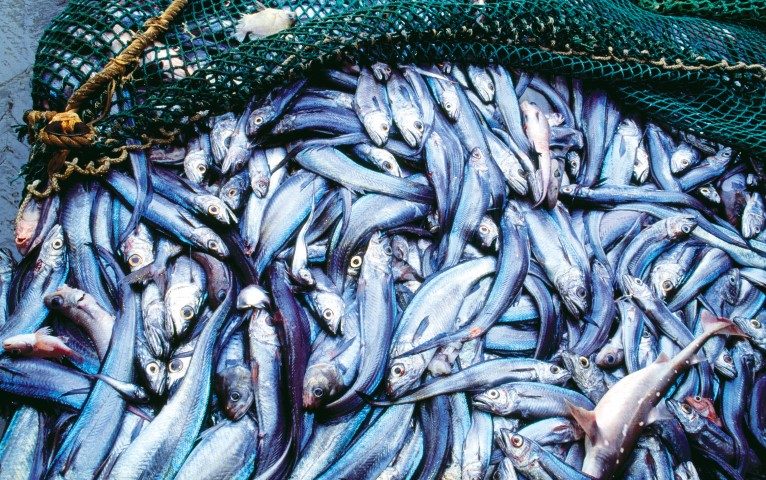
HOKI CUTS TOO LITTLE TOO LATE?
“For years we’ve known that warmer sea temperatures mean less successful breeding for hoki,” says Forest & Bird’s chief conservation adviser Kevin Hackwell.
Hackwell says that in the late 1990s and early 2000s, when sea temperatures warmed over the main hoki breeding grounds off south Westland, scientists warned that hoki stocks were going to collapse due to poor breeding.
“Back then, the industry fought tooth and nail to retain their quota levels rather than respond responsibly to a changing environment. What happened? The hoki fishery plummeted, as predicted.”
During the early 2000s, Forest & Bird fought against the Marine Stewardship Council’s ‘green tick’ certification of hoki because the fishery was collapsing, and the industry was making things worse by opposing moves to reduce its catch levels.
“We therefore commend the industry for taking a different approach this time. However, the worry is that the voluntary cuts may not be enough to maintain the hoki stocks if the breeding has failed.”
Hackwell says this is a stark reminder of the reality of climate change as we continue to have record warm years.
“Climate change is having big impacts on our natural environment, and therefore our key primary industries and therefore on people’s livelihoods. To protect nature and people, it’s critical we do all we can to keep warming to no more than 1.5 degrees, and this means making big emissions cuts, now.”

LESS MEAT, AND PARK THE CAR
We – humanity – have 12 years to change our lifestyle in unprecedented ways if we are to avoid catastrophic climate change – and changes include eating less meat and abandoning our cars.
So says the United Nations’ recently-released Intergovernmental Panel on Climate Change (IPCC) report, which warns that 2030 is the point-of-no-return for us to adopt changes that will help to avoid a plague of droughts, heavy flooding, extreme heat and poverty.
On our current trajectory, says the 400-page report, earth is likely to warm by 3°C. We need to cut that to around 1.5°C – as outlined in the Paris Agreement earlier this year.
Scientists believe the effects of climate change – and these effects include droughts on one end of the spectrum to rising seas on the other – will be less extreme if temperature rises are curbed at 1.5°C above pre-industrial levels. Greenhouse gas emissions were stable prior to the Industrial Revolution – the climate has warmed by 1°C since the mid-1800s.
Some 6,000 scientific works were referenced in the IPCC report, and its specific recommendations include:
- Global CO² emissions must fall 45% by 2030
- The use of coal needs to decline from 38% to nearly zero by 2050. This will require shutting down hundreds of coal-fired power stations
- Renewables should provide 85% of global electricity by 2050
- We need to change our diet: eating meat creates more CO² than vegetables
- The planet needs major reforestation to absorb CO2 from the atmosphere
- We’ll have to start storing carbon underground, a process called BECCS (bioenergy and carbon capture and storage)
Apart from the inconvenience, says the IPCC report, these changes will come with a cost: limiting global warming to 1.5°C has an annual price tag of around $3.6 trillion over the next two decades.
Says Jim Skea, a co-chair of the working group on mitigation: “We have presented governments with pretty hard choices. We have pointed out the enormous benefits of keeping [temperature rises] to 1.5°C, and also the unprecedented shift in energy systems and transport that would be needed to achieve that. We show it can be done within laws of physics and chemistry. Then the final tick box is political will. We cannot answer that. Only our audience can – and that is the governments that receive it.”
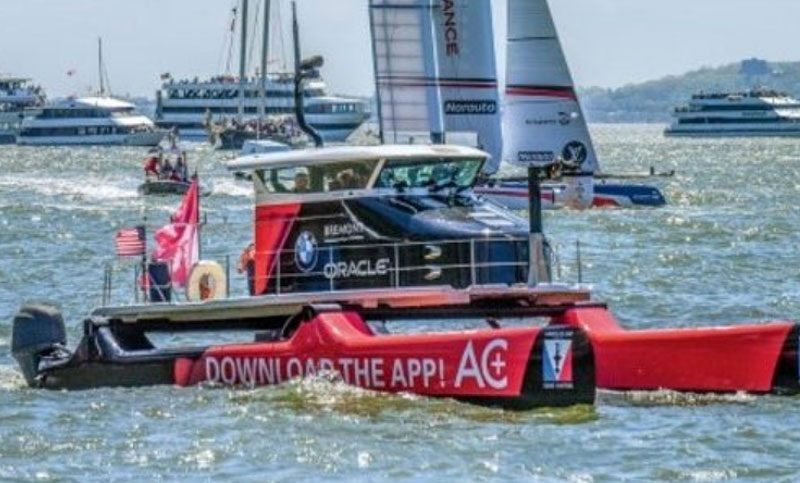
ANOTHER LIFE FOR AC35 FOILING CATS
The series – comprising five grand prix events featuring six national teams on identical wing-sailed F50s – will take place in Sydney, San Francisco, New York, Cowes (UK) and Marseille (France), as crews compete for the championship trophy and a $1 million prize.
Kicking off in February next year, SailGP’s inaugural season will feature teams representing six countries – Australia, China, France, Great Britain, Japan and the United States.
Each five-person crew will race on identical 50-foot foiling catamarans. A new boat class, the F50 is a redesigned, supercharged incarnation of the AC50. Twelve months in development by technicians and engineers at Core Builders Composites north of Auckland, the F50s are expected to break the 50-knot barrier.
Sanctioned by World Sailing, each grand prix will comprise two competition days with five fleet races, culminating in a final match race between the two leaders.
After SailGP’s Sydney inauguration in February (15–16), the league moves on to San Francisco in May (4–5), New York in June (21–22), and Cowes in August (10–11), before the Marseille final in September (20–22).
The final event features a winner-takes-all, $1 million championship match-race between the season’s top two teams to conclude three days of racing.
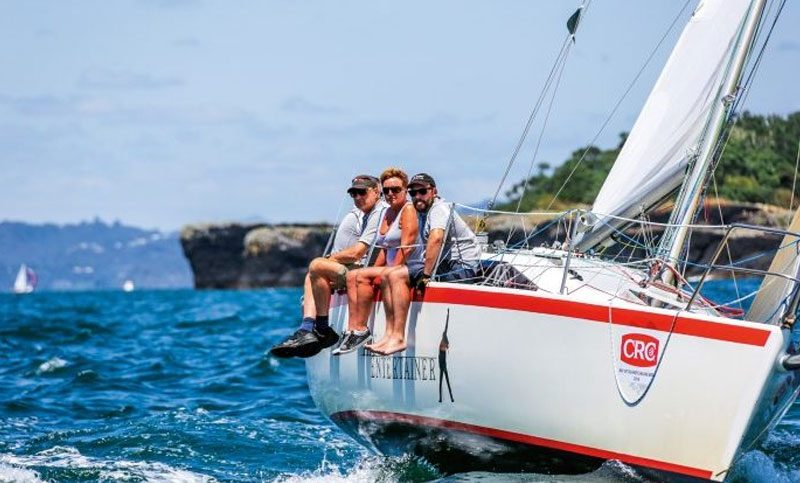
BOI Sailing Week
A multihull has become the first boat to enter the 2019 edition of the CRC Bay of Islands Sailing Week regatta – again expected to attract more than 100 entries from around New Zealand and overseas.
Boat 2, a Diam 24 trimaran owned by New Zealand Multihull Yacht Club Commodore Greer Houston, has registered for the event – scheduled for 22–25 January. Boat 2 will race in the Island Racing Multihull division.
Other confirmed entries so far include TP52s, sport boats, cruiser/racers and production boats. B division, in particular, is showing early promise, with regular starters Anarchy and Icebreaker in for another round, and Steve Mair’s Clockwork back for more too, facing off against local Shaw 9.1 Deep Throttle.
CRC Bay of Islands Sailing Week is the country’s biggest event of its kind, offering three days of racing with options for everyone – from fiercely competitive TP52 racing, to longer, scenic races around the Bay of Islands, along with dedicated divisions for classes like Young 88s and Wetas.
Organisers are already advising participants to plan ahead by entering early and booking a berth at the Bay of Islands Marina before the summer rush. Entries received before the end of December will also avoid the $75 late entry fee, so it pays to be ahead of the game.
For Auckland-based sailors, a free Rally to Kawau after CRC Bay of Islands Sailing Week will offer a fun way to make the trip back down to Auckland in company. Departing Opua on Saturday, January 26, and finishing at Kawau Boating Club with breakfast on Sunday morning, the rally will also put participants in prime position to join the Kawau-to-Westhaven Passage Race – part of the iconic Auckland Anniversary Day Regatta.
Notice of Race and full details, plus online entry for CRC Bay of Islands Sailing Week, can be found at www.bayofislandssailingweek.org.nz
Follow Bay of Islands Sailing Week on Facebook to stay up to date with all the latest regatta news.
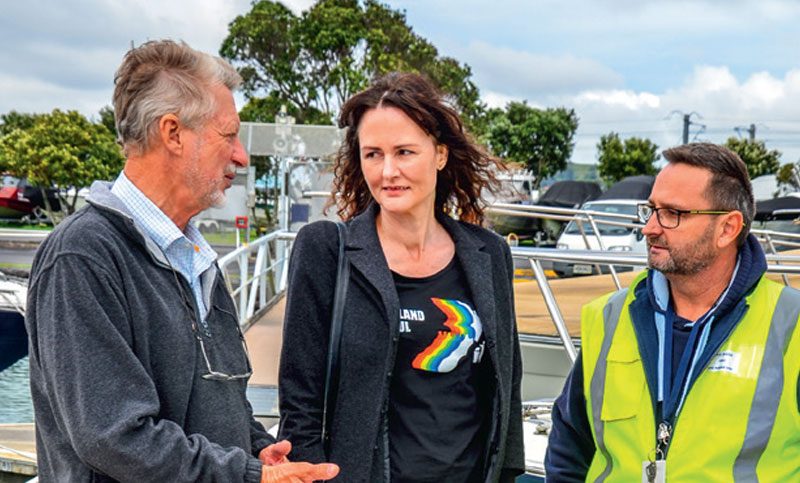
BLUE FLAG FLIES AGAIN
OBC first received accreditation in 2017. Renewal for the 2018–19 year followed a recent inspection by Malcolm Powell, a representative from the Foundation for Environmental Education, a Blue Flag agency. In New Zealand the Blue Flag programme is managed by Keep New Zealand Beautiful.
Copenhagen-based Blue Flag is one of the world’s most recognised voluntary eco-labels awarded to beaches, marinas, and sustainable boating tourism operators. To qualify for the Blue Flag, a series of stringent environmental, educational, safety and accessibility criteria must be met and maintained.
OBC first received accreditation in 2017. Renewal for the 2018–19 year followed a recent inspection by Malcolm Powell, a representative from the Foundation for Environmental Education, a Blue Flag agency. In New Zealand the Blue Flag programme is managed by Keep New Zealand Beautiful.
The programme aims to connect the public with its surroundings and encouraging people to learn more about their environment. As such, environmental education activities must be offered and promoted in addition to a permanent display of information relevant to the site in terms of biodiversity, ecosystems and environmental phenomena.
OBC is one of three New Zealand marinas with Blue Flag accreditation – Westhaven and The Landing are the other two.
BOAT TAX FUNDS ROADS
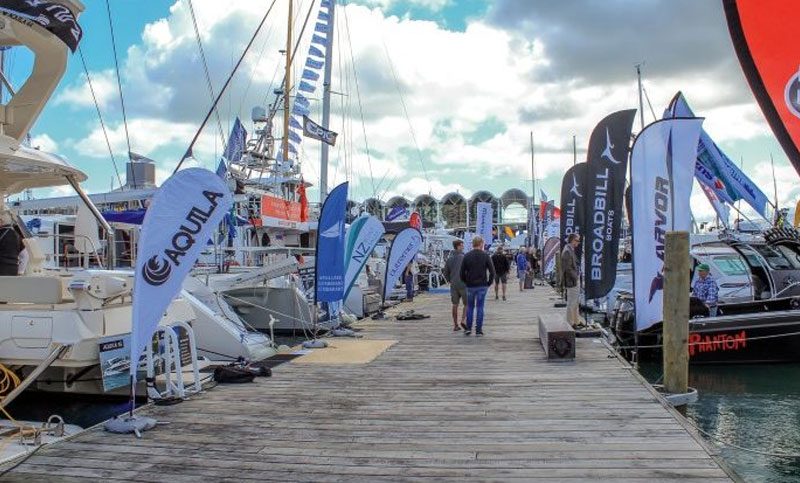
The NZ Marine Industry Association and Coastguard New Zealand are urging the Government to take a closer look at the Auckland regional fuel tax which will hit Auckland-based boat owners twice – once when they fill up their cars, and again when they fill up their boats.
The tax sees boaties paying more for their on-water recreation to fund roads and the consequences, says NZ Marine executive director Peter Busfield, go beyond introducing a barrier to recreational boating.
“While it’s clearly unfair to tax a recreational group to pay for another sector’s infrastructure, the effects will be felt far more widely than solely in boaters’ wallets. The Auckland recreational boating industry contributes [to the economy] significantly, providing jobs and apprentice training.”
The tax puts an extra burden on boaters without any mitigating factors. Such mitigating factors might see some of the funds being pushed back into marine environmental projects, boating safety or extra marine facilities. Nationwide, more people than ever are going boating yet many regions have limited boat ramps, with little car and trailer parking.
According to a recent Maritime NZ report on recreational boating, more than 1.5 million adults in New Zealand are involved in recreational boating; 37% of those are Aucklanders, with additional boaties travelling to the city from other regions. More people per capita go boating in Auckland than in any other region.
That means approximately 219,000 people are affected by the regional fuel tax as applied to boaties in Auckland.
NZ Marine estimates those Auckland recreational boat users (mostly with trailer boats) are paying regional petrol fuel tax of $5,864,0400, while diesel launch and keel boats are being charged $1,092,500. Users across the categories include powerboats, launches, keel yachts with engines, jet skis, RIBS and dinghies and 64% of them share their boating time with family and friends.
While commercial vessels can apply for a rebate, recreational users cannot, leaving the association concerned with the effect on the marine industry New Zealand-wide.
NZ Marine says the extra tax may be the tipping point which dampens new boat sales and the industries they support by making boating less affordable for the consumer – particularly in the smaller boat range.
“Getting out on the water is a national pastime,” says Busfield. “We believe it’s not in the best interests of Kiwi families to make time spent in the family dinghy, or weekends heading out in a RIB to go fishing, an unaffordable hobby.
“As an industry we strongly feel this disincentive to boaters in Auckland will have harmful and wide-reaching consequences for our member companies.”
Between central government and the Auckland regional fuel tax, Aucklanders are paying $108,000,000 in fuel tax.
JOSH JUNIOR CLAIMS CROWN
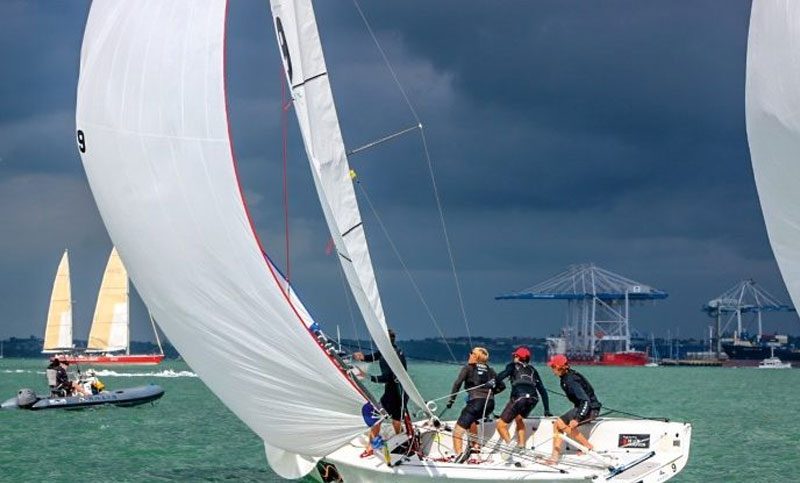
Josh Junior won his second New Zealand Match Racing crown after beating Chris Steele 3–2 after a long, tricky day of match racing at the RNZYS.
Junior had eaten Nick Egnot-Johnson and his Knots Racing team earlier in the morning, which left the second semi-final between Chris Steele and Leonard Takahashi’s Pacific Racing Team. Both semi-finals were close, but it was small mistakes from the younger skippers Egnot-Johnson and Takahashi which cost them against their more experienced opponents. Both contests ended 3–0.
This put Steele up against Junior in a battle of past champions. In what were very shifty conditions, Steele took the first match quite convincingly and it looked like the final could be over sooner than envisaged. But Junior fired back in the next match to tie it up at one apiece.
The wind then shifted completely and resulted in a course change, and when racing got back underway it was Junior who took the win and found himself on match point. After yet another course change, Steele came back strong and showed some great tactics in the lighter, shifty conditions to even the final up yet again.
It was down to a do-or-die final match to decide the regatta.
Conditions were even harder for the final, with the wind going home early and forcing the two past champions to a virtual ‘drift off’. Junior crossed the line first.
NAVY’S COOL SOLUTION TO OVERHEATING
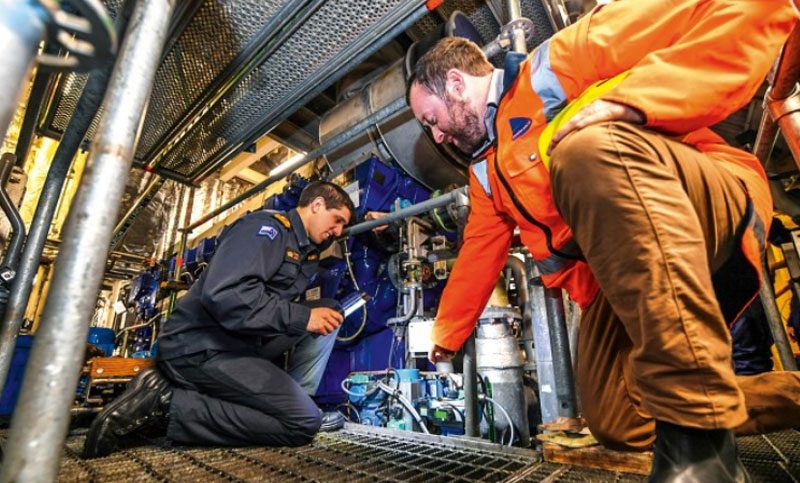
Offshore patrol vessels HMNZS Otago and HMNZS Wellington were designed to run (mostly) on just one of their two main engines. The speed generated by one engine is generally enough for operational requirements.
But the issue with this, says RNZN Logistics Commander Maritime, Captain Andrew Nuttall, is that the trailing shaft, even though not powered by an engine, still turns because of the windmilling effect of the propeller through the water. This generates heat in the gearbox.
“The pump supplying coolant to remove the heat is driven by the engine and, with it shut down various components began overheating. To avoid that, both engines were run most of the time, even though only one was required.”
This translated into $200,000 of ‘wasted’ fuel used for every 1,000 hours of running. Having both engines operational also required more maintenance.
RNZN and Babcock developed a system that cross-connected the cooling system, so that when an engine was shut down the propeller could still rotate, while the heat generated was cooled through the diversion of coolant.
“The saving in fuel alone is impressive. Combine that with the reduced maintenance costs and this solution represents an excellent example of the value our engineering team can add.”


