
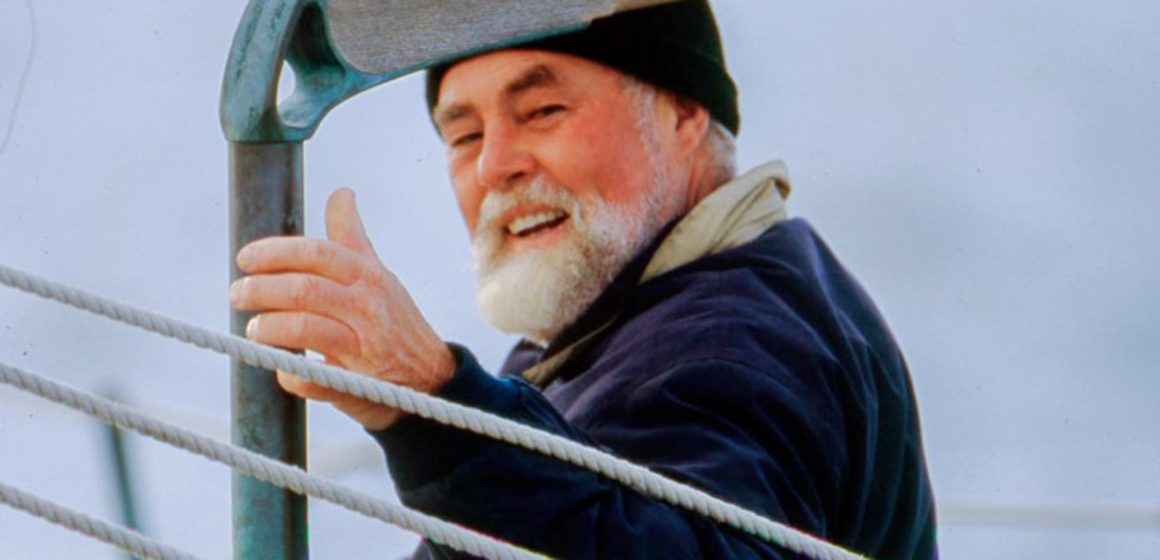
LARRY PARDEY 1939–2020: FAMED CRUISER CROSSES THE BAR
Larry Pardey – Canadian sailor, boatbuilder and author – died earlier this year in a Northland rest home after a life of sailing and building boats.
Pardey – who with wife Lin coauthored 12 books on their voyaging – was one of the first people to sail across the Sahara Desert. In 1967, as part of an expedition organised by the French and sponsored by National Geographic, he captained a North American team sailing land yachts from Colum Bechar in Algeria to Noachott in Mauritania, a distance of approximately 2735 kms.
Pardey began sailing at age 17 in Vancouver. He purchased and restored a 28-foot Tumlaren sloop, Annalisa. In 1964 he sold her and went to California in search of an affordable cruising boat.
Instead, he signed as first mate on the 85-foot schooner, Double Eagle and sailed to Hawaii on a movie-making charter. On his return he began building his first cruising boat, Seraffyn – a 24’ 6” Lyle Hess-designed, engineless cutter. Five months into the project he met Lin Zatkin who joined him to finish building what became their first cruising boat.
Together they eventually sailed more than 200,000 miles, including both an eastabout and westabout circumnavigation. To earn their way they delivered boats, restored boats and worked as riggers. Lin’s writing skills covered their cruising costs.
The couple opted for another Lyle Hess design for their next boat, the 29’ Taleisin, also built by Pardey and also engineless. In 1985, during a voyage to New Zealand, the two purchased a small boatyard and cottage on Kawau Island, 30 miles north of Auckland. This became their home and base but did not stop them from voyaging onward.
In 2009 the Pardeys made their last ocean passage together and Larry developed Parkinson’s Disease in 2015.
Together they wrote 12 books and created five instructional DVDs.
Among the numerous awards they’ve received is the Cruising Club of America’s prestigious Far Horizon Award for 2009 in recognition of their combined voyaging. They were also presented with the SSCA award from the Seven Seas Cruising Association in recognition of their contributions to the sport of sailing and the cruising community – only the 16th time in the club’s 60-year history this has occurred.
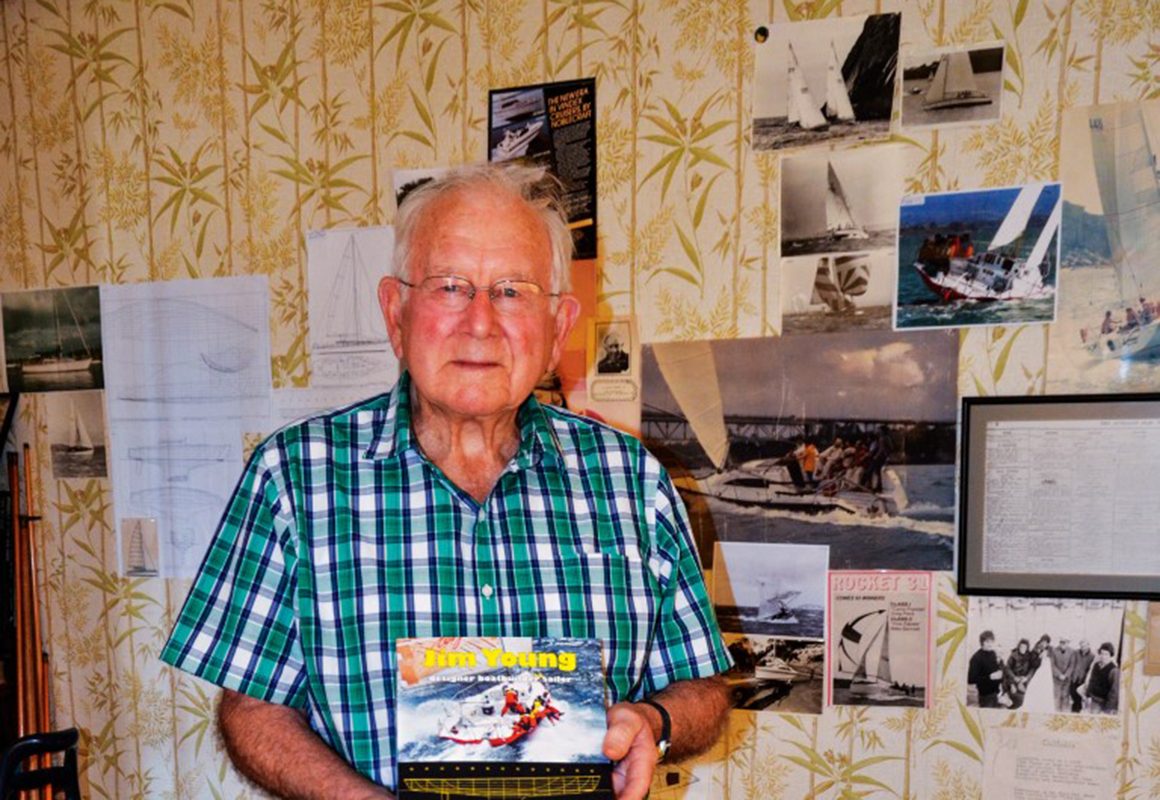
JIM YOUNG ONZM
Boating New Zealand was saddened to hear of Jim Young’s final bar crossing on 18th June. One of this country’s most innovative designer/boatbuilders, summarising Young’s career in a few words is a difficult task.
Born in Wellington in 1925, he began his boatbuilding apprenticeship with Shipbuilders Ltd in 1940 and spent the latter part of WWII working at Associated Boatbuilders building Fairmile launches.
After the war he served with the J Force in Japan for 18 months, before going into partnership to build dinghies with the late Jack Taylor.
Young went out on his own in 1949 and within a short time was making a name for designing and building innovative boats. Keelers such as Tango and Fiery Cross had features – a spade rudder and a canting keel respectively – years ahead of their time. A pioneer advocate of multihulls, Young built his first catamaran in 1953. His 1958 3.6m Kitty catamaran was so fast it was banned from the Q Class. Young later designed numerous fast cruising multihulls.
In 1961 he designed and built the 10m planing launch Vindex, which became the archetypal launch of this type. He eventually designed a whole range of launches including GRP production versions based on Vindex.
In the 1970s Young designed, built and skippered the IOR racing keelers Checkmate and Heatwave, the lessons learned being incorporated into hugely successful racing yachts such as Positive Touch, Extreme and Camp Freddy.
He also developed a comprehensive range of stitch-and-tape trailer sailers and dinghies for amateur builders, with many hundreds being built.
His cruiser/racer keelers such as Namu and Jipco were so successful they became stock production boats, while his 8.8m cruiser/racer Tickled Pink became the plug for the GRP production Young 88. Designed in 1980, over 180 Y88s were built and the class remains hugely popular today.
While he officially retired in 1990, he never stopped designing. Sadly, few of his later designs were built.
“Most of my ideas just sail across the drawing board these days,” he wryly told me a few years ago. But he remained keenly interested in boats – from classics to the latest AC creations – right to the end of his life.
Young was highly regarded by his peers, who typically described him as “brilliant”, “genius”, “lateral thinker”, “innovative” and “fearless.” He was awarded an Officer of the New Zealand Order of Merit in 2012.
He’s survived by his wife Anne; children Frank, Adrienne and Wendy; grandchildren Arron, Stephen, Jenni, James, Alix and Kelsey; and 11 grandchildren.
By John Macfarlane
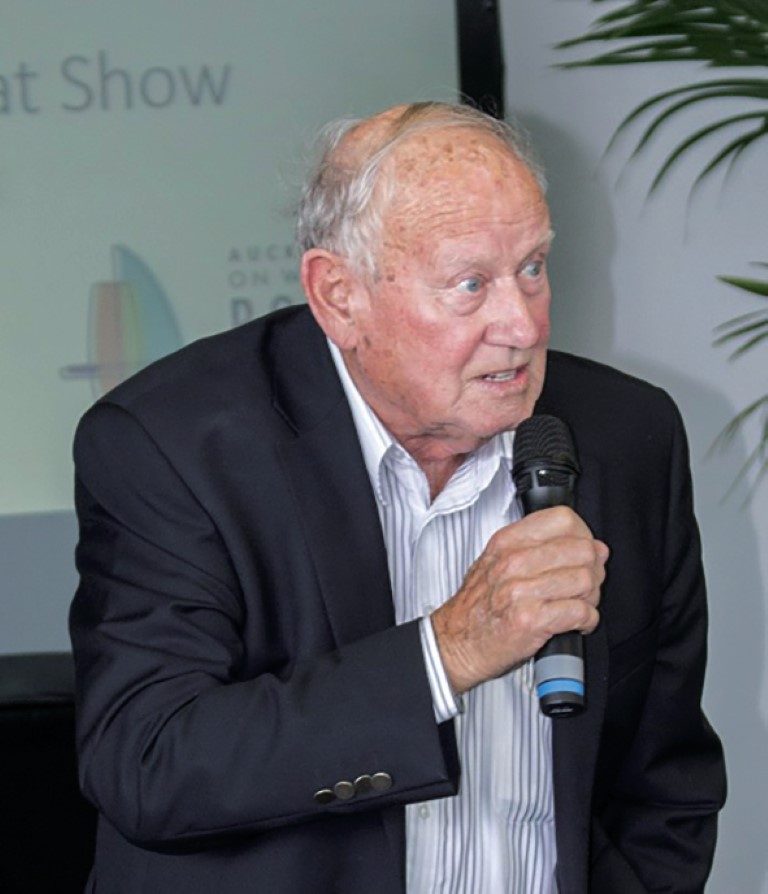
AN ICON PASSES ON
One of New Zealand’s most prolific boat designers and builders – Bob Salthouse – died in June aged 83. He had been in poor health for some time.
Though the exact number is unclear, it’s estimated that in a career spanning more than half a century Bob designed over 750 boats – and impressively – most are still afloat. They covered the entire spectrum of vessels – yachts, launches, wooden boats, workboats charter boats and luxury pleasure boats.
They include the 32m alloy superyacht Pacific Mermaid and some of the most successful production designs New Zealand has seen – the Cavalier 32 and 39, both launched in the 1970s. Around 170 of the 32s were built and 84 of the 39s.
Equally successful was the Corsair range of 10.9m launches, with more than 150 produced in three models from 1973. One-off commissions included the famous game-fisher Te Ariki Nui in 1983 and the 27.4m Pacific Challenge for the America’s Cup in Fremantle in 1985.
Bob – together with brother John – began building boats in the early 1950s before Bob left to start up his own company, Salthouse Marine, in 1983.
Dean Salthouse is the youngest of Bob’s three sons and is the only one to follow in his dad’s footsteps, completing a boatbuilding apprenticeship. Dean founded Salthouse Next Generation Boats after he and his father successfully revamped the original Corsair design into a wider-bodied Cabriolet-styled motor yacht.
Bob’s brother John died earlier this year.

Blanche Cook
Blanche and husband Ian backed their instincts when, more than 30 years ago, they established Yachting Developments, forging it into one of the world’s most respected composite specialists and one of the last family-owned superyacht yards.
Blanche was an integral member of the Yachting Developments family. Owner, mentor, mother-figure and friend, her larger-than-life presence pervaded the entire yard. She was heavily involved in New Zealand’s marine community, serving as vice chairperson of the NZ Marine Export Group, supporting the yard’s busy apprenticeship scheme and providing her support to a wide range of yachting causes, particularly the rescue and restoration of numerous classic yachts.
She was particularly involved with the rescue and restoration of numerous classic yachts, including Ranger which was restored by the team at Yachting Developments and is now regularly raced around Auckland.
John Salthouse
The Salthouse name is synonymous with New Zealand sailing and boating and John Salthouse was a leading figure.
He founded Salthouse Boatbuilders in 1956 in a makeshift tin shed at Stanley Bay on the northern shores of the Waitemata Harbour, but the business soon moved to Greenhithe where it remains to this day.
The company builds luxury and high-performance yachts and powerboats for customers worldwide. Salthouse Boatbuilders is still a family business, now run by sons Greg and Chris (Curly) Salthouse.

Mick Ashcroft
Many of New Zealand’s sailors got to the Olympics with the help of Graeme ‘Mick’ Ashcroft. He played a leading hand in securing funding for talented youngsters to help them get to overseas events, and was heavily involved with the St John’s Rotary, offering scholarships to young sailors since 1996.
But Mick’s commitment went beyond securing money and he regularly caught up with sailors and their families. He kept photos on the walls of his office of all the sailors he’d helped.
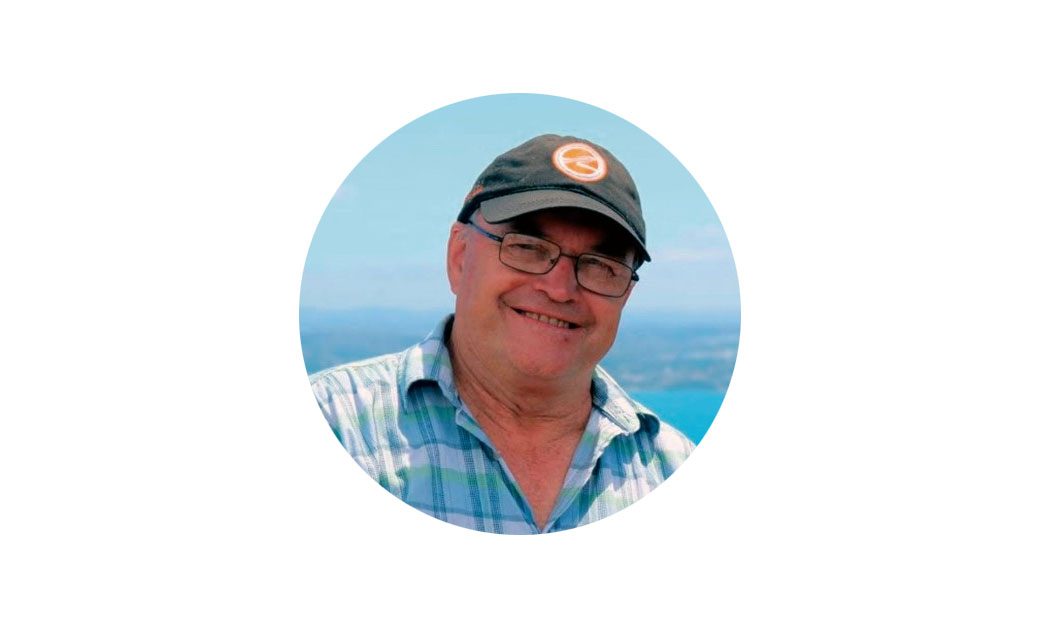
OBITUARY: PETER BELL
Sports Marine’s Peter Bell – ‘PB’ as he was known to family and friends – passed away after suddenly falling sick with severe pancreatitis while in Queenstown on a boat delivery trip.
He was air-lifted to Dunedin Hospital where unfortunately his condition worsened and he passed away on Sunday afternoon, February 24, 2019, surrounded by family.
Sports Marine principal Scott Williamson acknowledged PB as part of the fabric of Sports Marine, having worked for the company for nearly 40 years and selling thousands of boats over that time.
“Peter had a wide network of friends, colleagues and customers throughout the industry and his positive energy and endless enthusiasm will be sorely missed.”
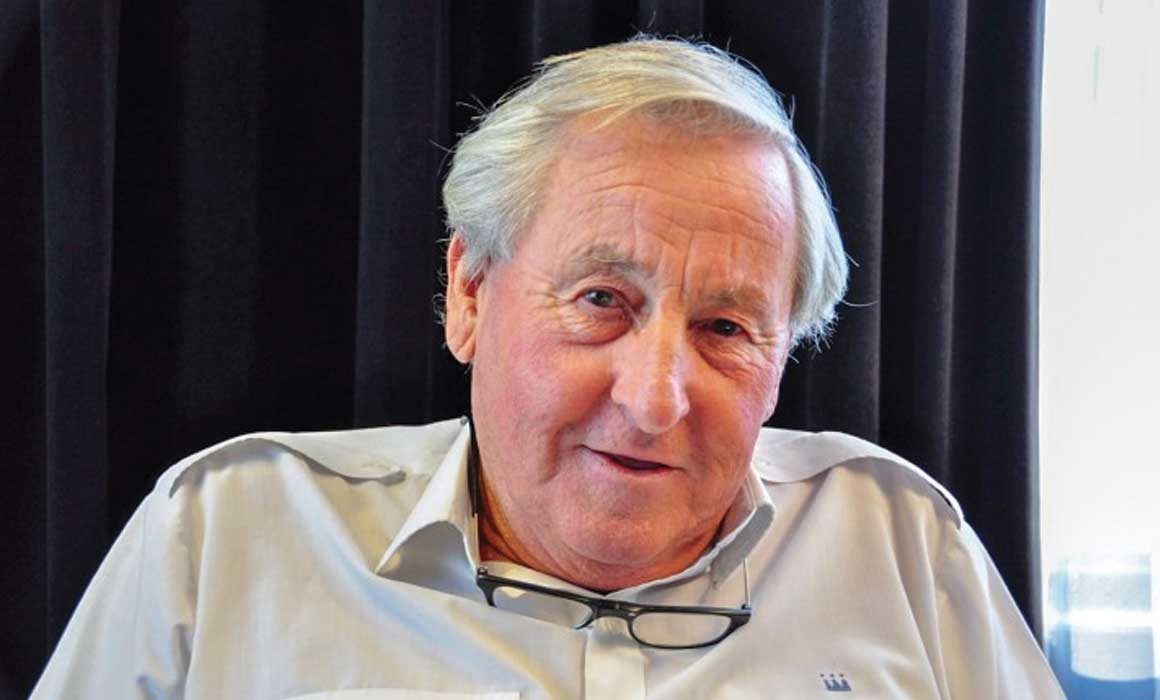
ALAN WARWICK 1934–2018
Born in Wellington in 1934, Warwick moved to Auckland in 1952 to begin an architectural degree.
He started sailing in M Class yachts and, after buying and sailing a Des Townson Zephyr, began building his first keeler in 1962, a 6.7m Townson Pied Piper.
Warwick joined Chris Bouzaid’s Rainbow II campaign to win the 1969 One Ton Cup (OTC), before heading up Lou Fisher’s Young Nick campaign for the 1971 OTC.
He also worked with Laurie Davidson on the design of the Half Tonner Swooper of Cox’s Creek, which later became the basis for the GRP production Davidson 31.
His first commission was the IOR quarter tonner, Quarter Pint, while his second was the well-known Longfellow.
He also designed the 747 and 927 Stratus cruiser/ racers, the Trojan 750 trailer-sailer, numerous sailing dinghies and a number of powerboats for Sea Nymph.
His first major offshore success was the Cardinal range of yachts, built in Taiwan, the success of which led him to found Warwick Yacht Design (WYD) in 1980.
Over the years WYD designed performance sloops, monohulls, multihulls, sportsfishers, luxury super yachts, high-speed launches, long-distance displacement cruisers, commercial boats and, increasingly, luxury, one-off commissions.
Many luxury commissions were built in Europe and Turkey. In all, Warwick and his team designed more than 500 boats, making him one of this country’s most prolific and successful yacht designers.
To him, boat design was as much about the form as the function. Attention to detail was paramount.
WYD was a family business, with wife Gael having considerable input into interior design and son Bruce specialising in CAD design. This gave Warwick the freedom to focus on client relationships, overall concepts and mentoring staff.
Like everyone in the industry, the 2008 GFC impacted on WYD’s business and it had to retrench. Over the last few years, Warwick had increasingly been passing the baton to Bruce although he continued to take a keen interest in all aspects of WYD.
Warwick unexpectedly died on September 20 at North Shore Hospital following complications from an injury suffered in Samoa. He’s survived by his wife Gael, children Bruce, David, Malcolm and Sondra, and numerous grandchildren and great-grandchildren.


