
BIOBANK TO SAVE CORAL
Facing diverse threats ranging from pollution through acidic oceans to global warming, the planet’s coral beds will hopefully receive a helping hand from the world’s first coral biobank, proposed for Port Douglas in Queensland, Australia.
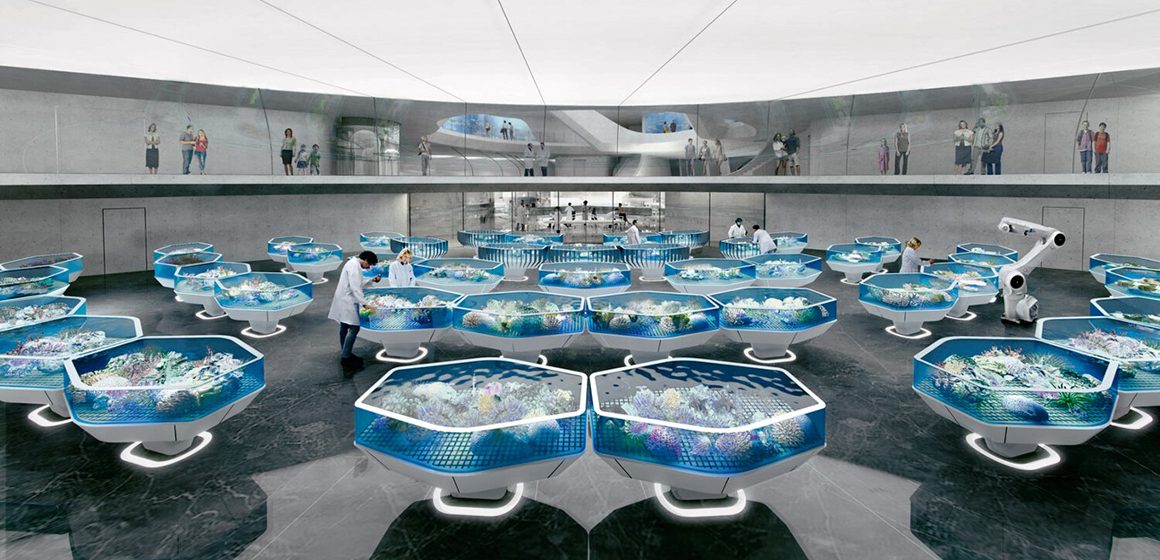
The conservation facility will house some 800 coral species from around the world. It has been described as a ‘Noah’s Ark’ for the planet’s coral, fitted with hundreds of tanks with temperature and light control.
Designed by Sydney’s Contreras Earl Architecture, the four-storey centre mimicks a mushroom coral head. Inside, facilities include an exhibition centre and auditorium – and research laboratories over four levels. The facility would also be an interactive space so visitors can view corals and learn about the reef.
The project is led by the Great Barrier Reef Legacy – a non-profit organisation seeking philanthropic backing to fund construction. Graphics supplied by Contreras Earl Architecture.
OYSTERS FIX BIG APPLE
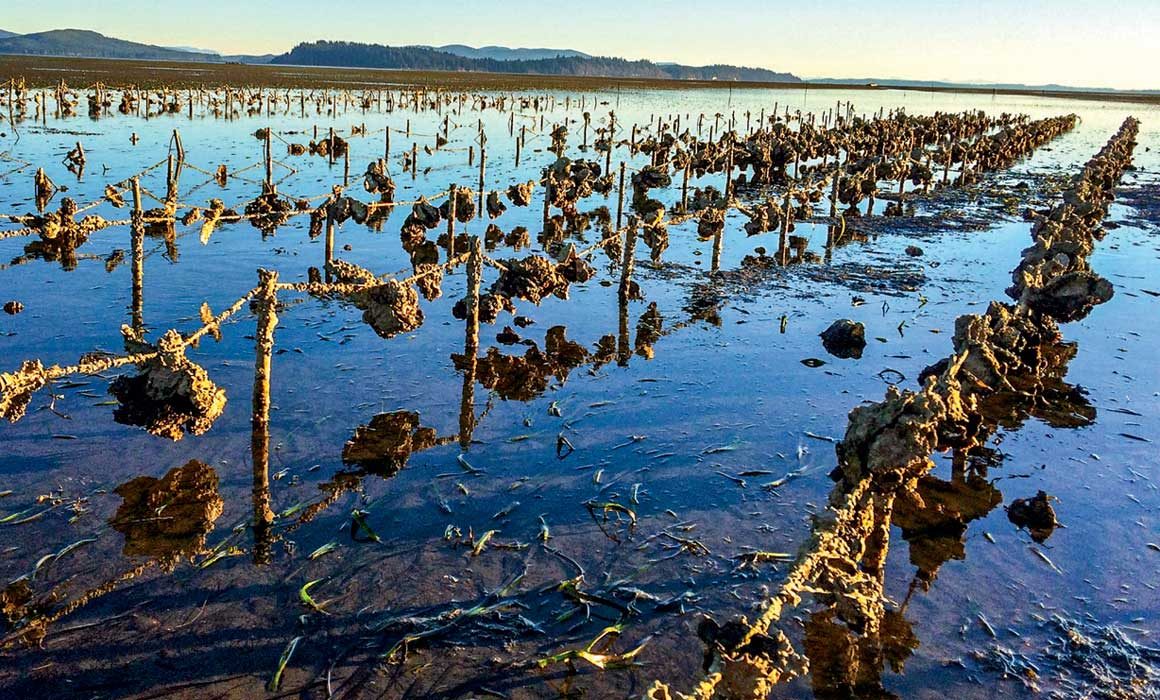
An organisation called – well, The Billion Oyster Project (BOP) – is working with hundreds of partners, schools and volunteers to build new oyster reefs in the harbour. The project – launched four years ago – has so far ‘deployed’ 28 million oysters and they are already having an impact.
“The water,” says Katie Mosher, BOP’s restoration manager, “has never been better in 150 years. We’ve definitely noticed an improvement when putting oysters on the bottom. There’s more fish, more crabs. It happens right away.”
Oysters, she adds, are ecosystem engineers which create a 3D reef habitat. “It’s full of different shapes and sizes of oysters that other species love to hunt in and live in and to search for prey. Oysters filter and clean the water when they breathe, making it clearer. This enables light to penetrate more easily to the bottom and allows more plants to grow on the seabed.”
The molluscs recycle nutrients and nitrogen, and can even mitigate the energy of large waves, reducing flooding and preventing erosion during storms or hurricanes.
New York once supported a flourishing oyster population – but it was driven to near extinction in the early 1900s, a victim of overfishing, pollution and sewage. Marine life slowly returned following the introduction of the 1972 Clean Water Act which outlawed the dumping of untreated wastewater and garbage.
LESS MEAT, AND PARK THE CAR
We – humanity – have 12 years to change our lifestyle in unprecedented ways if we are to avoid catastrophic climate change – and changes include eating less meat and abandoning our cars.
So says the United Nations’ recently-released Intergovernmental Panel on Climate Change (IPCC) report, which warns that 2030 is the point-of-no-return for us to adopt changes that will help to avoid a plague of droughts, heavy flooding, extreme heat and poverty.
On our current trajectory, says the 400-page report, earth is likely to warm by 3°C. We need to cut that to around 1.5°C – as outlined in the Paris Agreement earlier this year.
Scientists believe the effects of climate change – and these effects include droughts on one end of the spectrum to rising seas on the other – will be less extreme if temperature rises are curbed at 1.5°C above pre-industrial levels. Greenhouse gas emissions were stable prior to the Industrial Revolution – the climate has warmed by 1°C since the mid-1800s.
Some 6,000 scientific works were referenced in the IPCC report, and its specific recommendations include:
- Global CO² emissions must fall 45% by 2030
- The use of coal needs to decline from 38% to nearly zero by 2050. This will require shutting down hundreds of coal-fired power stations
- Renewables should provide 85% of global electricity by 2050
- We need to change our diet: eating meat creates more CO² than vegetables
- The planet needs major reforestation to absorb CO2 from the atmosphere
- We’ll have to start storing carbon underground, a process called BECCS (bioenergy and carbon capture and storage)
Apart from the inconvenience, says the IPCC report, these changes will come with a cost: limiting global warming to 1.5°C has an annual price tag of around $3.6 trillion over the next two decades.
Says Jim Skea, a co-chair of the working group on mitigation: “We have presented governments with pretty hard choices. We have pointed out the enormous benefits of keeping [temperature rises] to 1.5°C, and also the unprecedented shift in energy systems and transport that would be needed to achieve that. We show it can be done within laws of physics and chemistry. Then the final tick box is political will. We cannot answer that. Only our audience can – and that is the governments that receive it.”
BLUE FLAG FLIES AGAIN
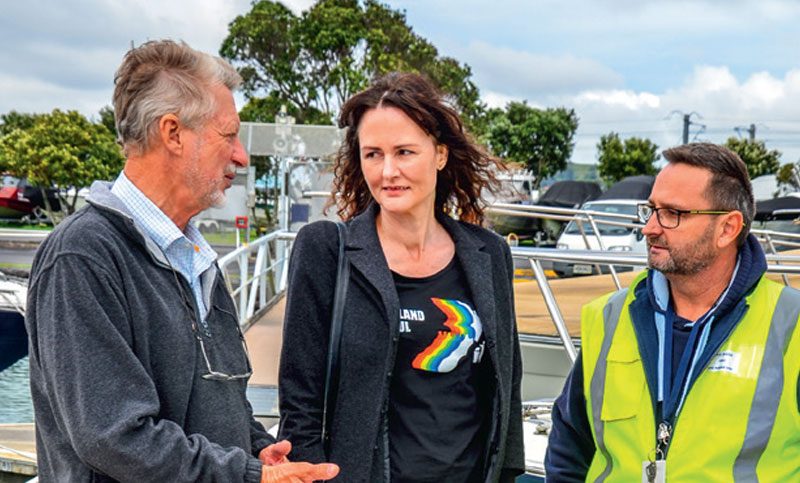
OBC first received accreditation in 2017. Renewal for the 2018–19 year followed a recent inspection by Malcolm Powell, a representative from the Foundation for Environmental Education, a Blue Flag agency. In New Zealand the Blue Flag programme is managed by Keep New Zealand Beautiful.
Copenhagen-based Blue Flag is one of the world’s most recognised voluntary eco-labels awarded to beaches, marinas, and sustainable boating tourism operators. To qualify for the Blue Flag, a series of stringent environmental, educational, safety and accessibility criteria must be met and maintained.
OBC first received accreditation in 2017. Renewal for the 2018–19 year followed a recent inspection by Malcolm Powell, a representative from the Foundation for Environmental Education, a Blue Flag agency. In New Zealand the Blue Flag programme is managed by Keep New Zealand Beautiful.
The programme aims to connect the public with its surroundings and encouraging people to learn more about their environment. As such, environmental education activities must be offered and promoted in addition to a permanent display of information relevant to the site in terms of biodiversity, ecosystems and environmental phenomena.
OBC is one of three New Zealand marinas with Blue Flag accreditation – Westhaven and The Landing are the other two.
BOOM TO CORRAL PLASTIC LITTER
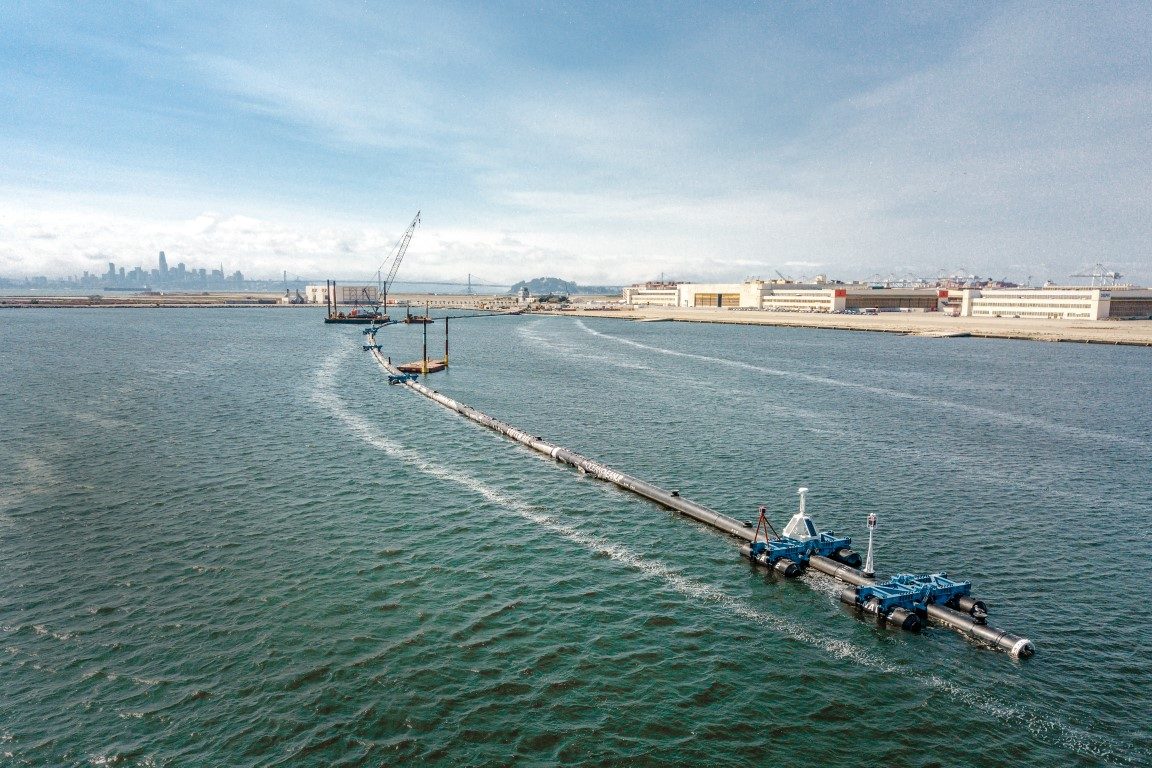
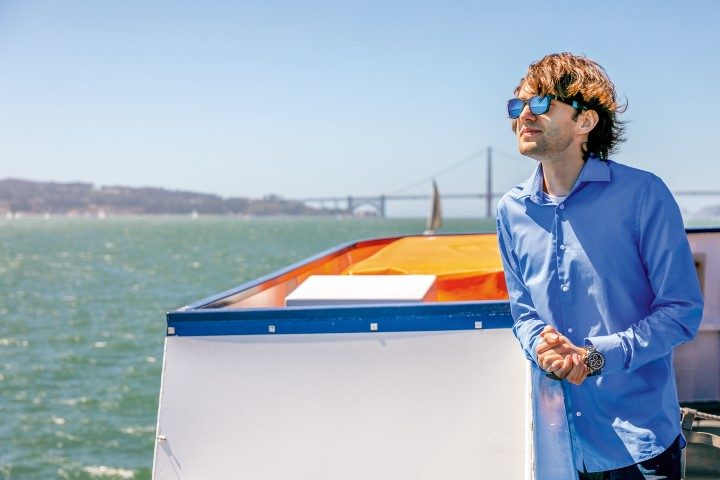
The system was created by The Ocean Cleanup, an organisation founded by Boyan Slat, a 24-year-old innovator from the Netherlands. Boyan became passionate about cleaning the oceans at age 16 after seeing more plastic bags than fish while scuba diving in the Mediterranean Sea.
Researchers with Slat’s organisation found plastic going back to the 1960s and 1970s bobbing in the garbage patch, illustrating how persistent plastic is in the environment.
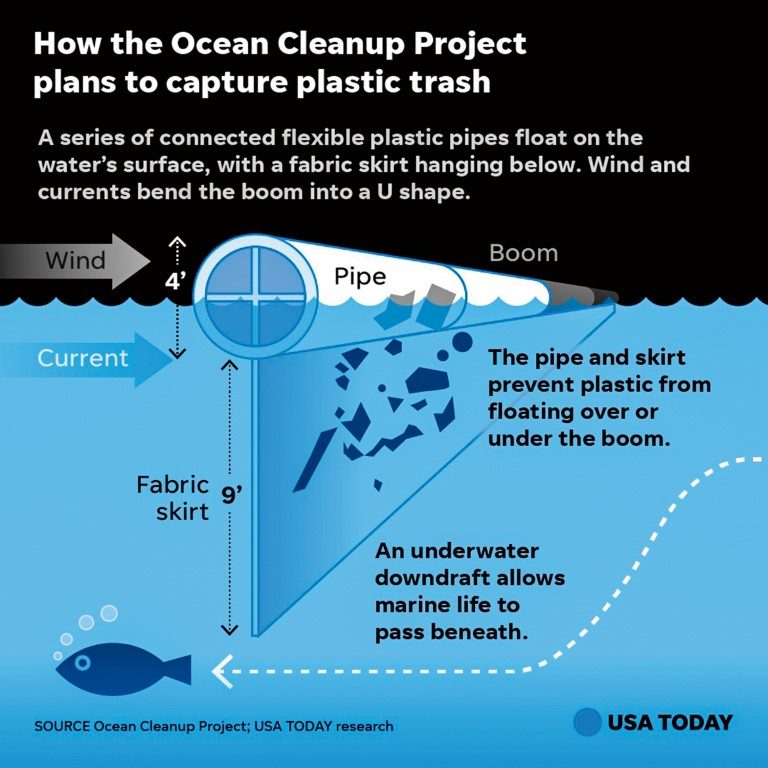
The buoyant, U-shaped barrier with a tapered 3m-deep screen is intended to act like a coastline, trapping some of the 1.8 trillion pieces of plastic that scientists estimate swirl around in the North Pacific gyre. Marine life can safely swim beneath it.
A support vessel will fish out the collected plastic every few months and transport it to dry land where it will be recycled.
The Ocean Cleanup, which has raised millions in donations to fund the project, including from Salesforce. com chief executive Marc Benioff and PayPal co-founder Peter Thiel, intends to deploy 60 free-floating barriers in the Pacific Ocean by 2020.
“One of our goals is to remove 50% of the Great Pacific Garbage Patch in five years,” Slat said.
The free-floating barriers are made to withstand harsh weather conditions and constant wear and tear. If everything goes to plan, they will stay in the water for 20 years, collecting 90% of the rubbish in the patch.
Not everyone is convinced the booms will work, however, pointing out that even if plastic rubbish can be taken out of the ocean, a lot more is pouring in each year.
$500M LIFELINE FOR GREAT BARRIER REEF
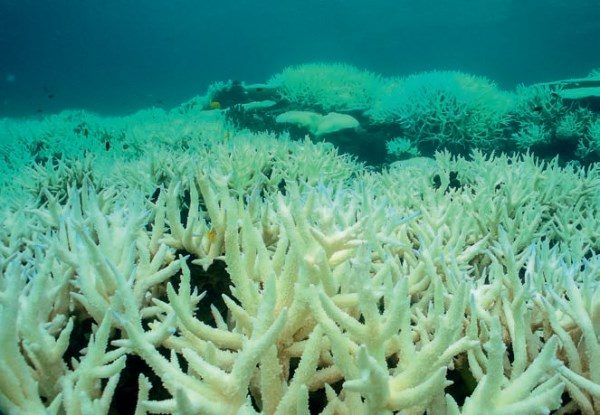
The funding, confirmed in the May budget, follows a recent study which found that 30 percent of the reef’s coral died in a nine-month marine heatwave in 2016.
In partnership with the Great Barrier Reef Foundation, the funds will tackle crown-of-thorns starfish, reduce pollution and mitigate the impacts of climate change.
The Marine Park Authority will also receive an additional $42.7 million for its joint field management program over the next six years. After that, the Marine Park Authority will receive a guaranteed ongoing funding increase of more than $10 million per year for field management – doubling the Australian Government’s contribution to the program in the long-term.
Great Barrier Reef Marine Park Authority Chairman Dr Russell Reichelt welcomed the funding, saying it was a “game changer” as it significantly ramped up reef programs and protection and provided an ability to seek co-funding from private investors and philanthropists.
“This is a hugely positive outcome for the Great Barrier Reef and comes at a critical time after back-to-back mass coral bleaching triggered by the increasing pressure of global warming.”
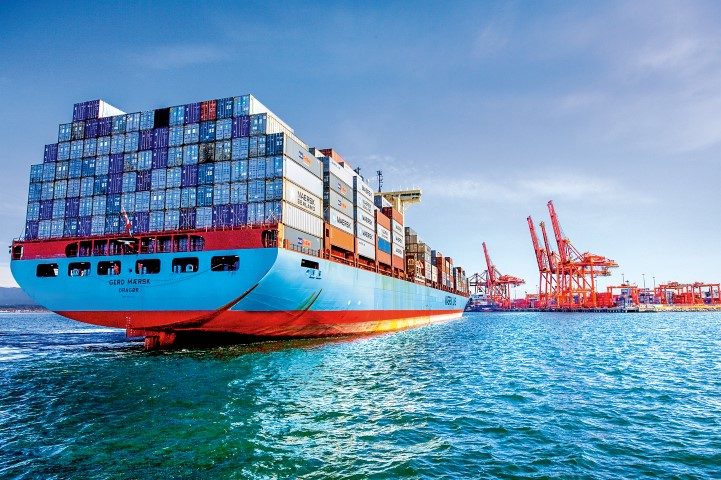
SHIPPING TO SLASH EMISSIONS
The new international agreement follows a recent meeting of representatives from more than 170 nations at the International Maritime Organisation (IMO) in London. Countries that voted against the move included Brazil, Saudi Arabia and the US.
Like aviation, the global shipping industry has traditionally been excluded from climate change initiatives such as the Paris Agreement because they’re deemed to be an international activity. But shipping is a major pollution problem.
The International Council on Clean Transportation estimates that, if treated as a country, shipping would be the world’s sixth largest emitter of carbon dioxide – about the same as Germany.
This new development agreement is widely interpreted as the global shipping industry finally acknowledging that the move away from fossil fuels is inevitable and fast approaching.
A recent study by the Organisation for Economic Cooperation and Development found that using known technologies, including alternative fuels – and even electric or wind-assisted ships – could almost completely decarbonise the sector by 2035.
The UK’s shipping minister, Nusrat Ghani, says his government will be supporting the industry in the development of green technologies and fuels, and that these would provide opportunities for growth for UK maritime companies.
The IMO agreement is seen as particularly significant for Pacific island nations threatened by rising sea levels. Says the Marshall Islands’ environment minister, David Paul: “[This agreement] will determine whether Marshallese children born today will have the chance of a secure and prosperous life or will have to leave the land of their ancestors and set sail across the oceans to an uncertain future.”
Meanwhile, a new EU satellite tasked with tracking dirty air will become a powerful tool to monitor shipping emissions.
Sentinel-5P-Tropomi (S5P) was launched in October last year and recently completed its commissioning phase and has been monitoring nitrogen dioxide emissions.
Nitrogen dioxide is a product of marine diesel combustion, as well as the diesel used by motor vehicles. The new satellite allows operators to monitor emissions in far greater detail than before.
“The resolution from our previous instruments was about 20km by 20km,” says Pepijn Veefkind, an investigator with the Dutch met office. “Now, we’ve gone down to 7km by 3.5km, and we are thinking of going to even smaller pixels.”
By knowing the size of the global fleet, where it moves, the ships’ specifications and how much fuel they are likely consuming – it is possible to estimate how much CO₂, or indeed NO₂, is being pumped into the atmosphere from exhausts.


