
GOLD FOR BOI REGATTA
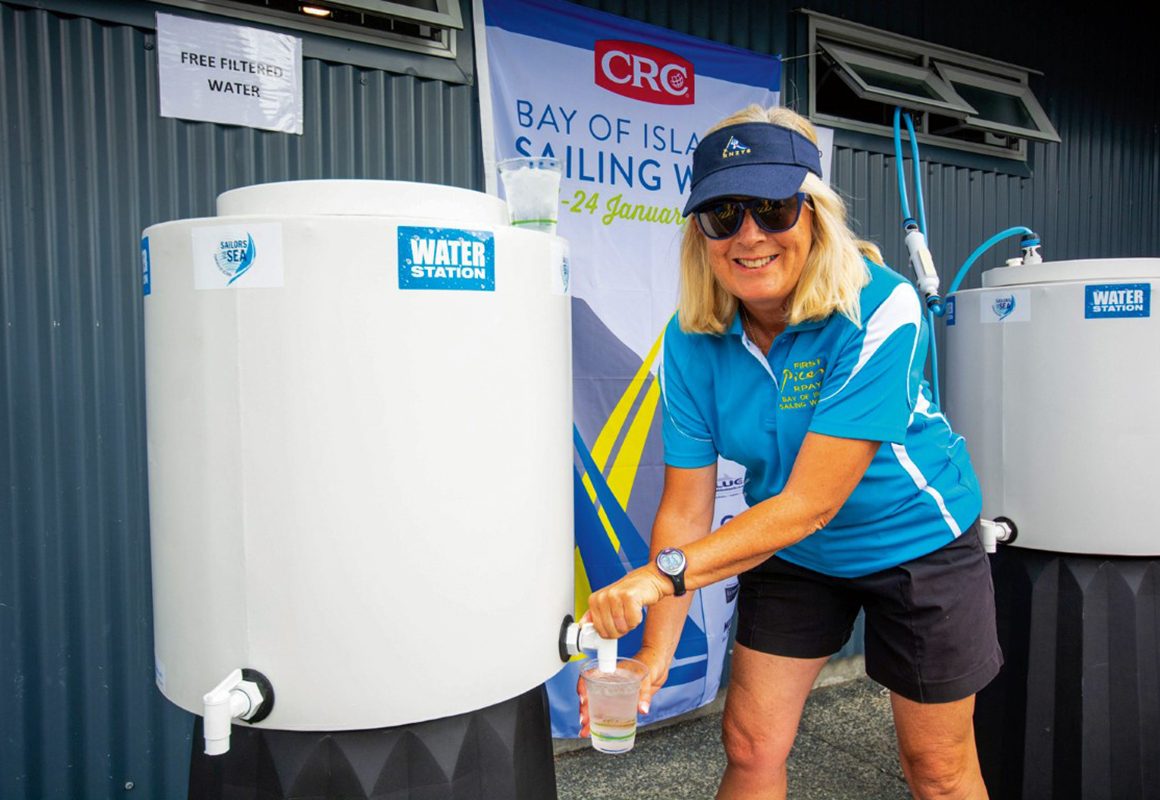
New Zealand’s biggest multiday keelboat sailing event, CRC Bay of Islands Sailing Week, has received a Gold Level Clean Regattas certification for its “extraordinary waste management efforts” during the January 2020 event.
Ocean conservation group Sailors for the Sea operates the Clean Regattas programme, which it says is ‘the world’s leading sustainability certification for on-water events’. CRC Bay of Islands Sailing Week Chairperson Manuela Gmuer-Hornell says the award is a clear indicator of their commitment to operating in an environmentally responsible way.
“We’re all sailors, organisers and participants, and we all love the ocean,” she says, “so it’s important we do our bit to protect it. The beauty of the local area is a big drawcard for us too, so we want to preserve it for the future.”
The regatta’s sustainability initiatives included waste minimisation, carbon reduction, buying local, educating participants and engaging with sustainability partners.
“We looked at every aspect of being more sustainable,” says Gmuer-Hornell. “One of the simpler changes was switching to reusable bottles with free water-refilling stations. Considering that there are probably 1,000 sailors and volunteers drinking at least a couple of bottles of water a day, over three days, that saved 6,000 single-use plastic bottles alone.”
They worked with local community group Russell Recyclers to help with waste minimisation, composting and recycling wherever possible, which resulted in a 75% reduction in waste going to landfill.
The organising committee also used video conferencing for committee meetings (eliminating the need for car travel), created an app to communicate documents digitally instead of printing, and enforced a no-discharge rule for competitors to eliminate pollution from boats entering the water.
The next CRC Bay of Islands Sailing Week is scheduled for 26–29 January, 2021. Organisers say they will be looking for ways to upgrade to Platinum level next year – the highest possible sustainability certification under the Clean Regattas programme.
Photo: Lissa Reydon
OBC LANDS SUPREME AWARD
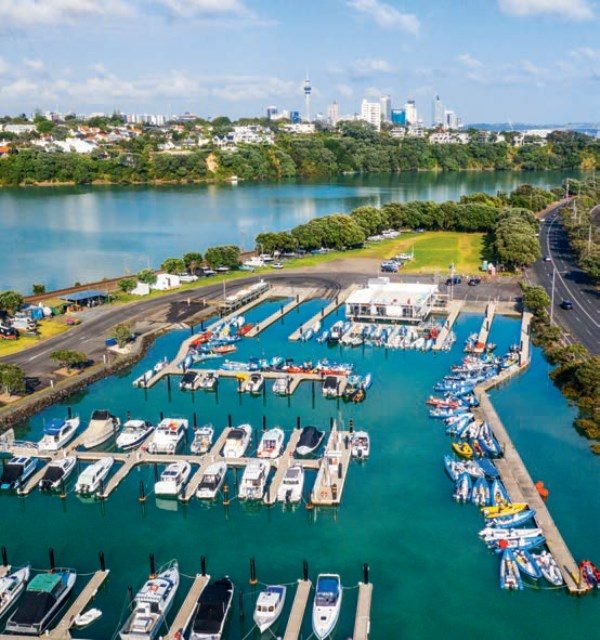
Auckland’s Outboard Boating Club (OBC) has been recognised for its determined commitment to environmental performance with a Supreme Best Practice Award.
It was presented by Keep New Zealand Beautiful – the administrator of the international Blue Flag environmental certification system in New Zealand – and comes just three years after OBC qualified for the prestigious Blue Flag programme.
The Blue Flag programme audits and recognises marinas, beaches and eco-tourism boats in 47 countries around the world.
Keep New Zealand Beautiful’s Christine White says this is the first time it has introduced the Supreme Best Practice Award to recognise a marina, beach or boating operator that has consistently exceeded the international standards of the Blue Flag criteria.
It honours the “outstanding commitment to continuous improvement in environmental, educational and safety criteria. OBC has been recognised for its ongoing commitment to improving its facilities and operational practices across all areas of the Blue Flag criteria.”
Says OBC Commodore Bill Berry: “With ongoing information campaigns and training events, our members and staff know the high standard they must adhere to across our marina, the boat ramps and in the maintenance of their boats. As a result, club members are also increasingly conscious about the way they go about their recreational boating and fishing and we see this as a great benefit of being part of a progressive club.
“The motivation that drives us to do better is the beautiful Hauraki Gulf environment in front of us every day at OBC. However, enjoying the Gulf we also realise that it is an environment that is experiencing significant challenges, especially the impact of pollution. The recent closures of many of its beaches due to poor, polluted water is now a regular occurrence. At the same time, we are also facing the growing threat of climate change which will exacerbate the ecosystem problems of the Waitemata and Hauraki Gulf.”
Blue Flag focusses on five main areas: Environmental education and information, Environmental management, Boating Safety and Service facilities, Water quality and Social Responsibility.


