
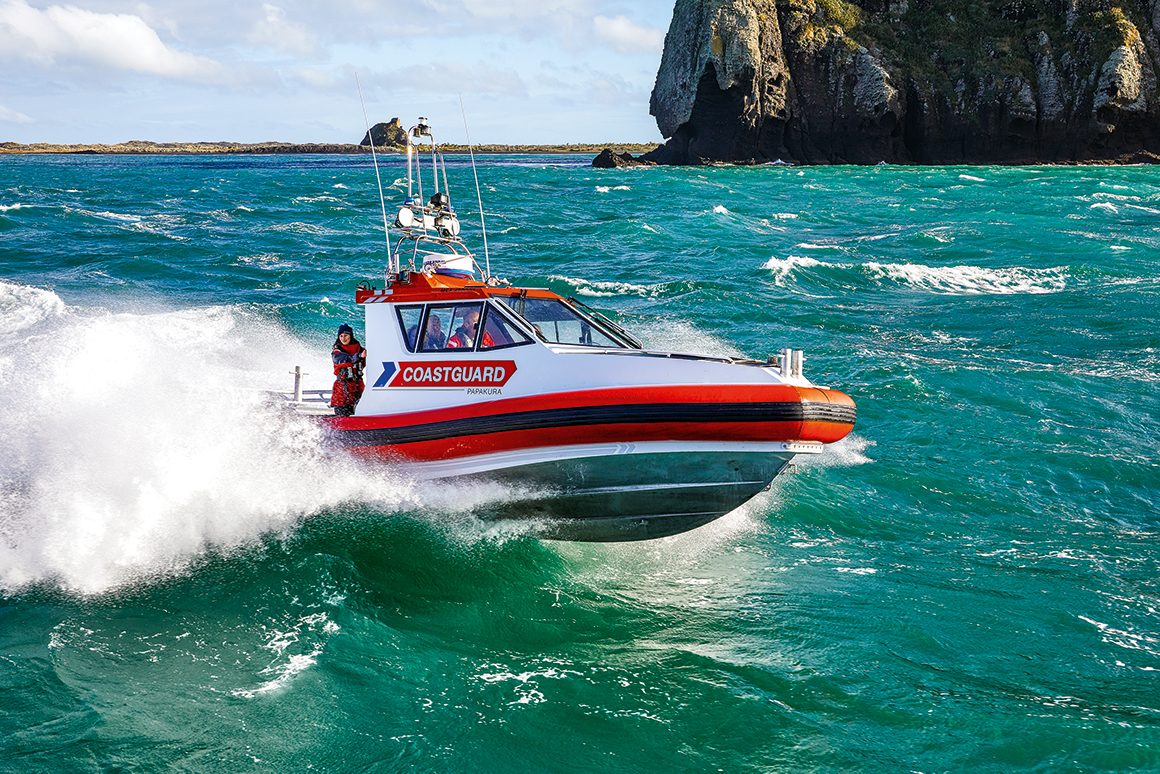
COASTGUARD RE-GEARS
COASTGUARD VOLUNTEERS AND MEMBERS NATIONWIDE HAVE VOTED TO MERGE THE ORGANISATION’S FOUR REGIONAL ENTITIES AND NATIONAL BODY – A STEP DESIGNED TO BOOST EFFICIENCIES AND ADDRESS FALLING VOLUNTEER NUMBERS. THE VOTE TOOK PLACE AT A SPECIAL GENERAL MEETING IN MARCH.
“The need for change is clear,” says Coastguard Chief Executive Callum Gillespie. “Bringing the national body and the four regional entities together will enable us to be more efficient and effective in the development and delivery of strategies to meet challenges we face today and in the future.”
The most pressing of those is addressing Coastguard’s falling volunteer numbers. Like many volunteer-powered organisations, Coastguard’s being impacted by changing trends in volunteering worldwide.
“We are an emergency responder which relies on volunteers,” says Gillespie. “Without them, there would be no Coastguard.
“Last year we undertook a comprehensive survey of our volunteers, and it is evident that we need to take action if we are going to retain our incredible volunteers and attract new people. Integrating the organisation into a strong entity will provide the platform we need to ensure we can continue to serve New Zealand communities and save lives at sea.”
Coastguard created its four regions in 2004 to improving support to its units on the frontline. The decision to merge them, Gillespie believes, will lift the support to units even further.
“We will continue to operate regional teams who will report directly to Coastguard New Zealand rather than through regional boards. We will also be able to create a strong shared services model for HR, finance, technology, operations, marketing and fundraising – enabling us to better support our people, reduce overheads and realise efficiencies of scale previously unavailable.”
Last year Coastguard’s 1,900 search and rescue volunteers gave more than 300,000 hours of their time across operations, training, admin, education and fundraising and brought 6,774 New Zealanders home safely.
“Having the right structure in place to support our volunteers will enable them to focus on doing what they joined Coastguard to do, helping other people and saving lives at sea,” says Gillespie.
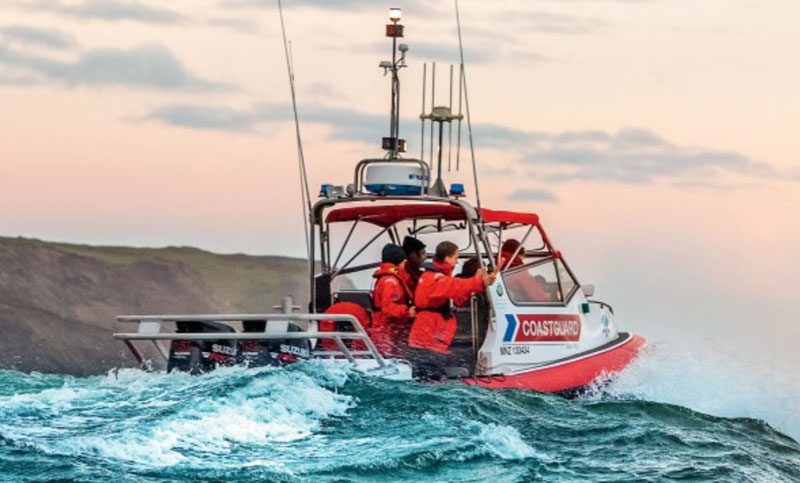
BOATIES BEHAVING MORE SAFELY
The Ipsos 2018 Recreational Boating Survey canvassed adult members of the general public regarding their boating habits. It examined the extent to which the population participates in recreational boating activities, with a focus on safetyrelated attitudes and behaviours, and awareness of Maritime NZ’s recent recreational boating safety campaigns and related activities.
Maritime NZ Deputy Director (and Incoming Chair of the Safer Boating Forum) Sharyn Forsyth says the results are encouraging.
BOATING BY THE NUMBERS 2018
- 1.5 million adults (42% of New Zealanders) were involved in recreational boating last year
- Kayaks remain the most popular craft used by boaties (33%), followed by power boats under 6m (22%), and dinghies (11%)
- Last year 19 people died in recreational boating accidents. Of these, 18 were men – 14 over 40 years (the highest fatality group)
- The percentage of boaties having at least two ways to signal or call for help if needed ‘every time’ has risen to 43% in 2018 from 38% in 2017
- The decision to avoid alcohol ‘every time’ either before or during time on the water has risen from 61% in 2017 to 67% in 2018“It’s fantastic to see that 92% of boaties say that boating safety is personally important to them because attitude influences behaviour. The decade spent by the Safer Boating Forum and councils promoting safer boating is really increasing boaties’ safety awareness.”
Lifejackets remain the most prevalent form of safety device taken on boating trips and the number of boaties wearing their lifejackets on the water all or most of the time remains stable at 75%.
“Most encouraging are the significant increases from last year in the three other risk areas – checking the weather, taking communications and avoiding alcohol before going out on the water.”Boaties checking the weather has risen to 85%; 67% are avoiding alcohol ‘every time’; and 43% of have at least two ways to signal or call for help if needed.


