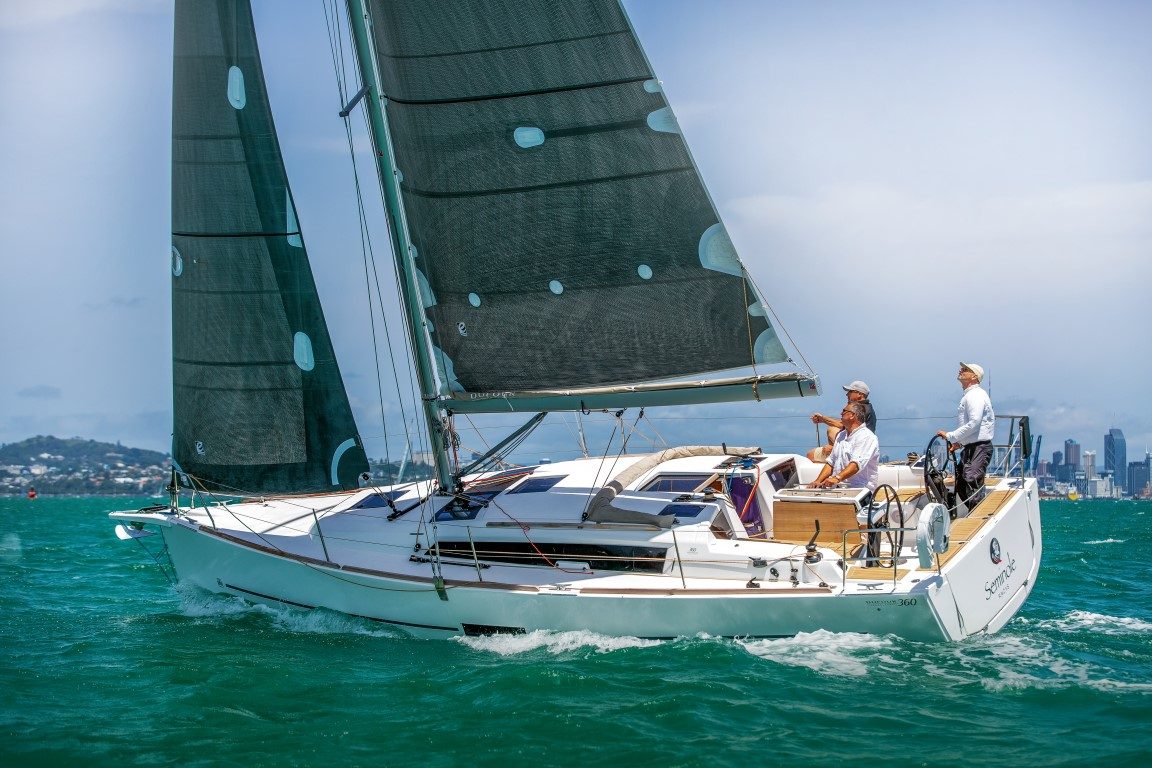
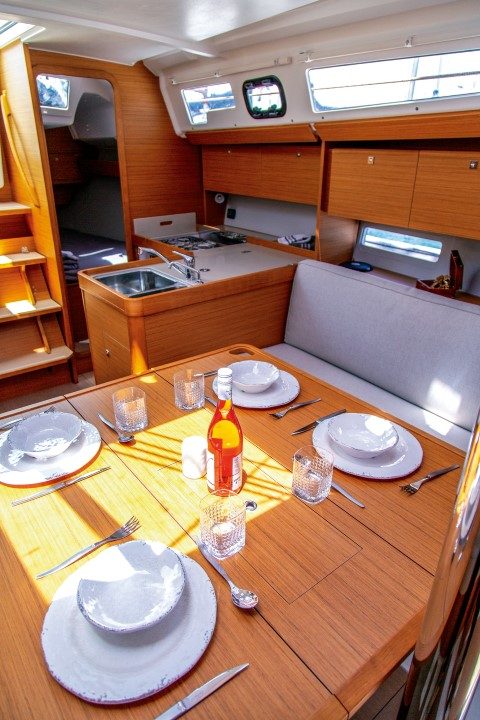
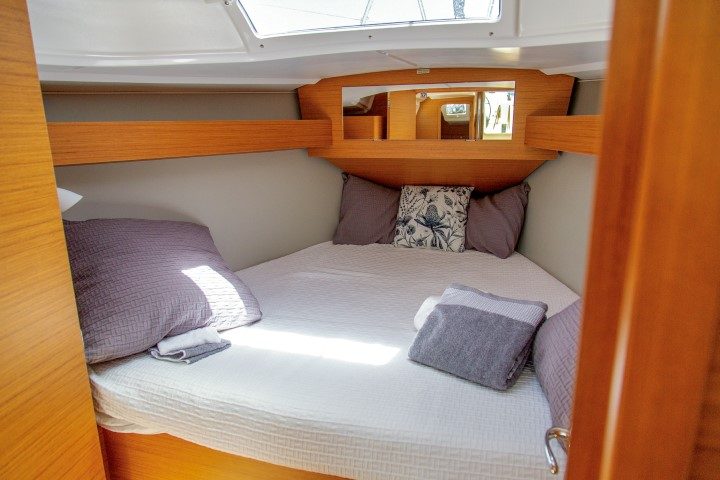
 But the major decision facing a potential owner is the choice between two or three cabins. The galley, saloon and forward cabin remain the same for both models – the difference is aft. The three-cabin model features twin sleeping cabins either side of the cockpit with the head immediately forward of the starboard one, opposite the galley.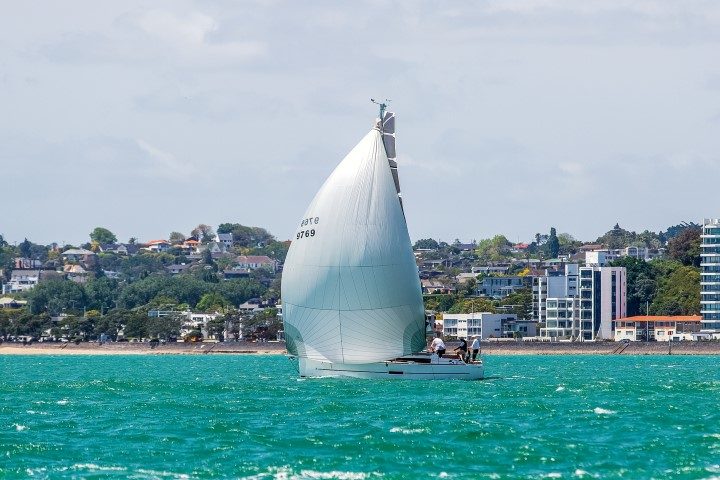
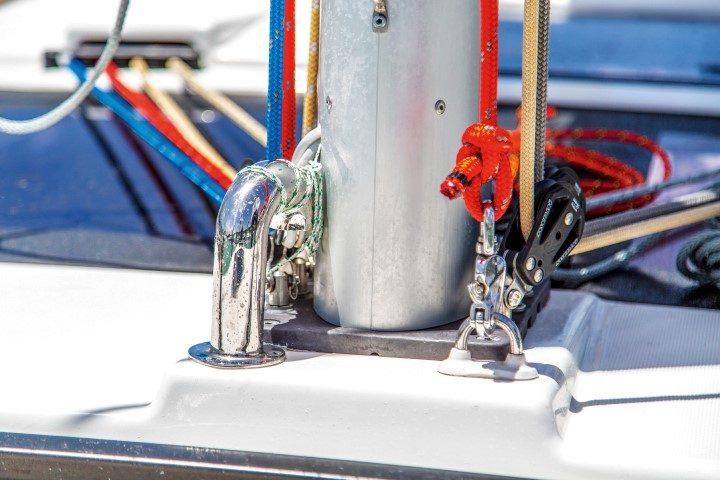
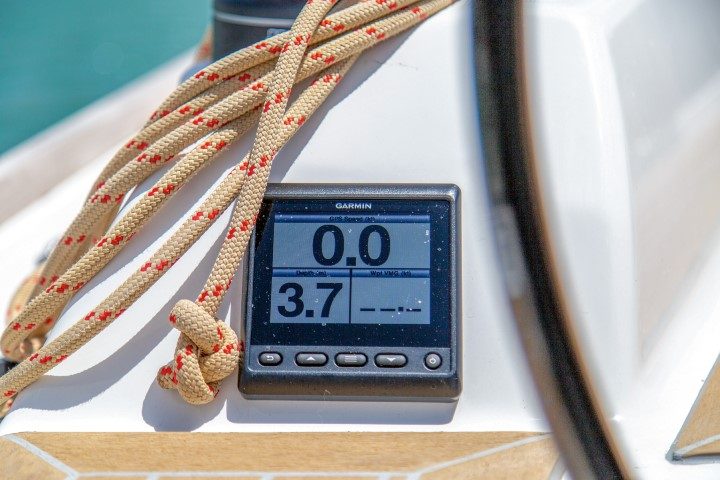
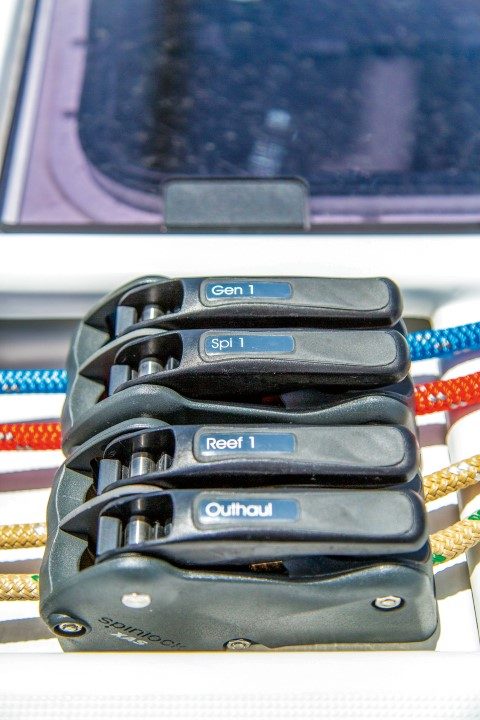 Its sister pod to port contains a magnetic compass, plus the controls for the 12” chartplotter located centrally at the rear of the cockpit table. There are lift-up foot panels in the cockpit floor for bracing yourself at the helm when heeled.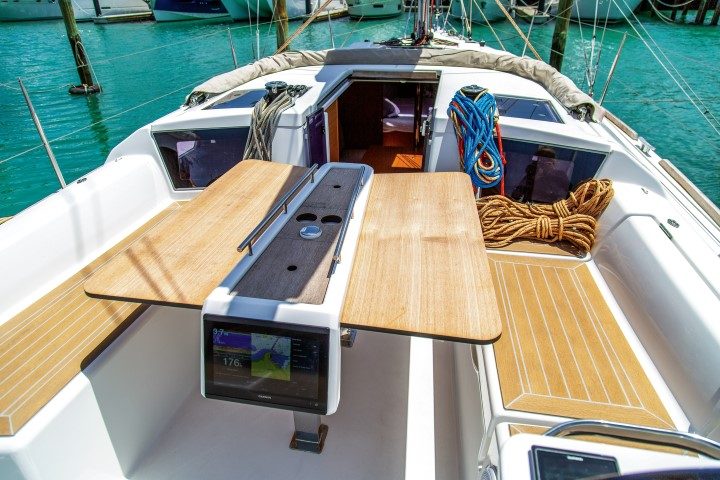
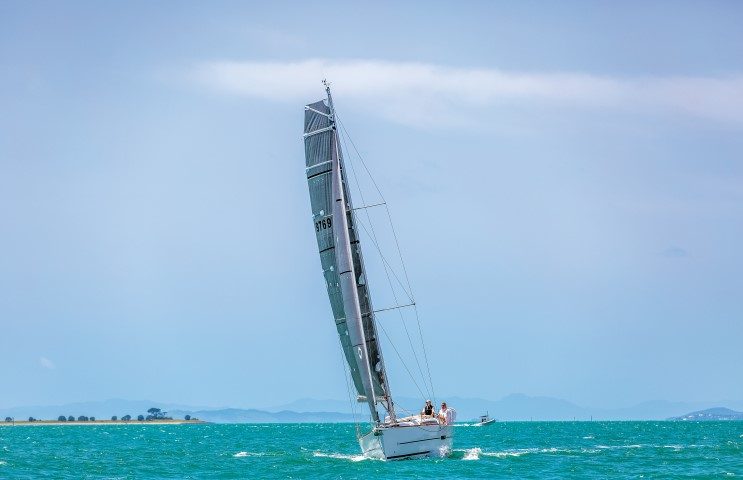
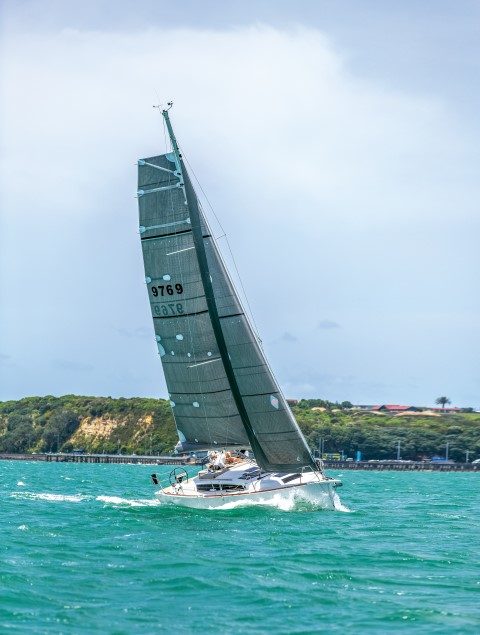 The top two mainsail battens are full length, while the lower two have been kept short to prevent excessive chafe and S bending over the aft swept spreaders. According to Keenan, the square-top main is easier to trim than a standard pin head because the square-top encourages twisting. Despite its impressive area, he feels it adds little to the loads on the mast. The smaller headsail is self-tacking while the larger one sheets to tracks abaft the mast. Both are roller reefing/furling on a Facnor furler and feature vertical leech battens to allow a positive leech for more area and keep the leech shape under control.
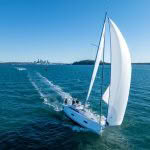

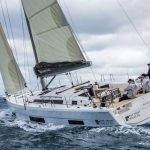
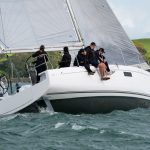
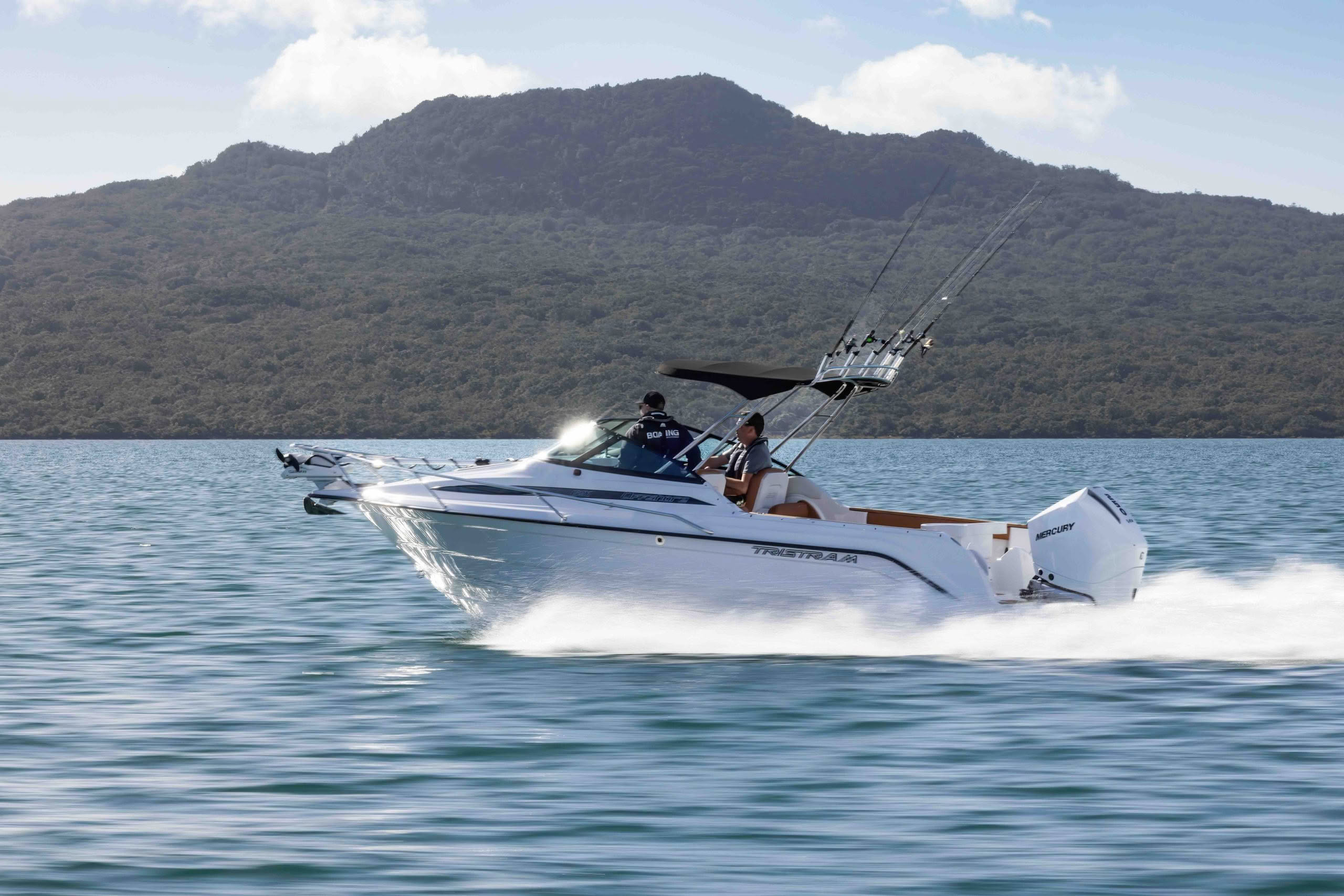
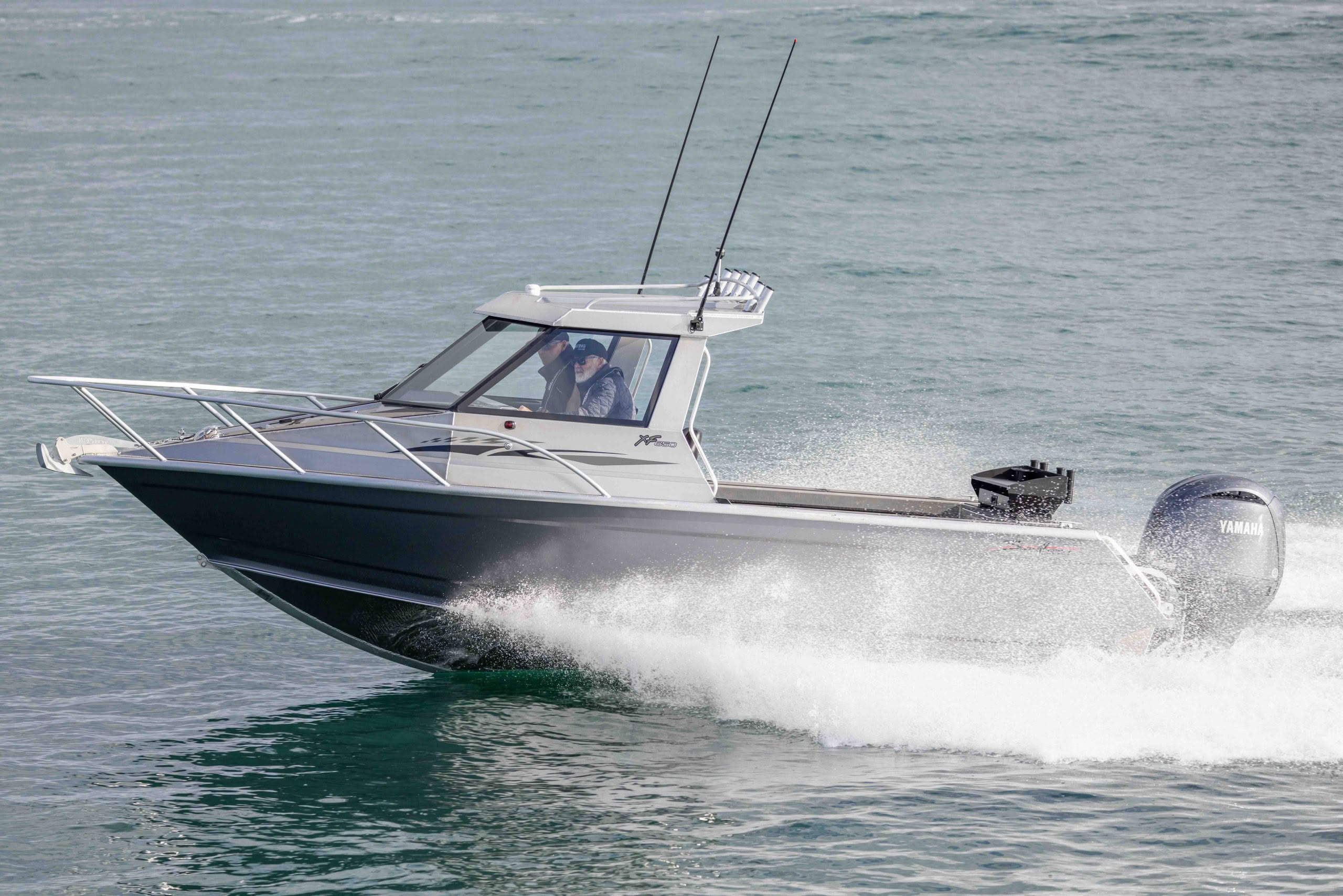
The emphasis for the new model is skewed more towards offshore adventures and sportfishing than many other models in the Tristram range.
MODEL DETAILS
MODEL
Dufour 360 Grand Large
DESIGNER
Felci Yacht Design
BUILDER
Dufour Yachts
PRICE AS TESTED
$400,000
SPECIFICATIONS
LOA
10.73M
LENGTH (Waterline)
9.05M
BEAM
3.54M
DRAFT
1.9M
DISPLACEMENT
5775kg
ENGINE
Volvo Penta 30hp
FUEL CAPACITY
160L
WATER CAPACITY
360L
Mast & Rigging
Z-Spars fractional rig, aluminium and SS
ACCOMMODATION
Two or three cabins
HIGHLIGHTS
- Spacious for a 36-footer
- Responsive handling and strong performance
OBSERVATIONS
- Stylish interior
- Two or three-cabin layout options